
Mechanisms
Levers, pulleys, gears, cams and linkages: how mechanisms change force and movement. Read one part at a time and tap “I know this”. Then test yourself in the quiz.
Know it already? Jump straight to the quiz

Levers and gears
- A crowbar, a lever under a lid’s rim and a spanner are levers. Hold a spanner at the far end.
- Three gears in a row: A clockwise → B anticlockwise → C clockwise again.
- A sprocket is a toothed wheel that drives a chain, as on a bicycle.
Pulleys, linkages and machines
| Mechanism | What it does | Example |
|---|---|---|
| Pulley | Changes direction; lifts a load more easily. The groove stops the rope slipping off | Flagpole; block and tackle |
| Linkage | Rods joined at pivots | A car’s windscreen wipers |
| Reverse-motion linkage | The output moves the opposite way | Toy grabber |
| Car jack | Increases the force | Lifts a car by hand |
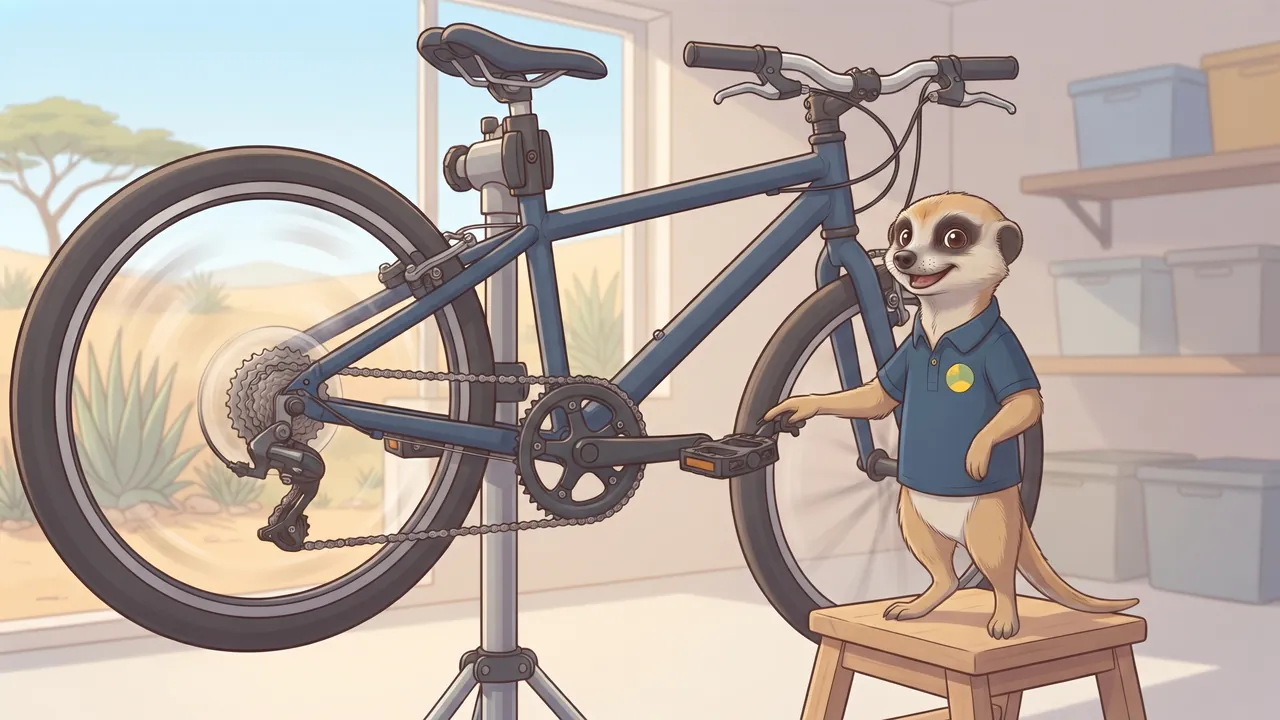
A complex machine is built from simple mechanisms. A bicycle has cranks, a chain with sprockets and levers (brakes). A tower crane uses pulleys, gears and a winding drum. Lubricate a mechanism to reduce friction.
Remember this and test yourself
- A mechanism changes the direction, motion, speed or size of a force.
- Move the fulcrum closer to the load for more lifting force; a long arm needs less effort.
- A big gear driving a small gear: the small one turns faster; meshed gears turn in opposite directions.
- Cam and follower and crank and slider change turning into straight-line motion.
- You never get energy for free: more force means less speed and a longer distance.
Write these points in your book. Read them again the night before the test.

More force = less speed. A mechanism is a swap, not a gift.
Important words
First say what the word means, then turn the card over.
Match column A to column B
Tap a word in column A, then its meaning in column B. You can also start in column B.
True or false?
Read the question and the answer. Is the answer right? Tap True or False.

Now the real quiz!
The quiz has many more questions on this topic. Every question shows straight away whether you are right and explains why.
Take the quiz: Mechanisms- Read one part together and ask your child to tell it back in their own words.
- The ticks (“I know this”) are saved on this device only. We never ask for names or emails.
Follows CAPS for Grade 7 Technology (Technology). Always check your teacher’s notes and textbook too.