
Magnets and electromagnets
Magnets, poles and fields, and how an electromagnet works and where we use it. Read one part at a time and tap “I know this”. Then test yourself in the quiz.
Know it already? Jump straight to the quiz
The electromagnet
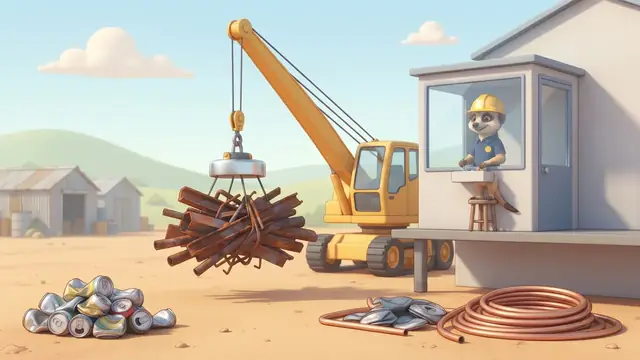
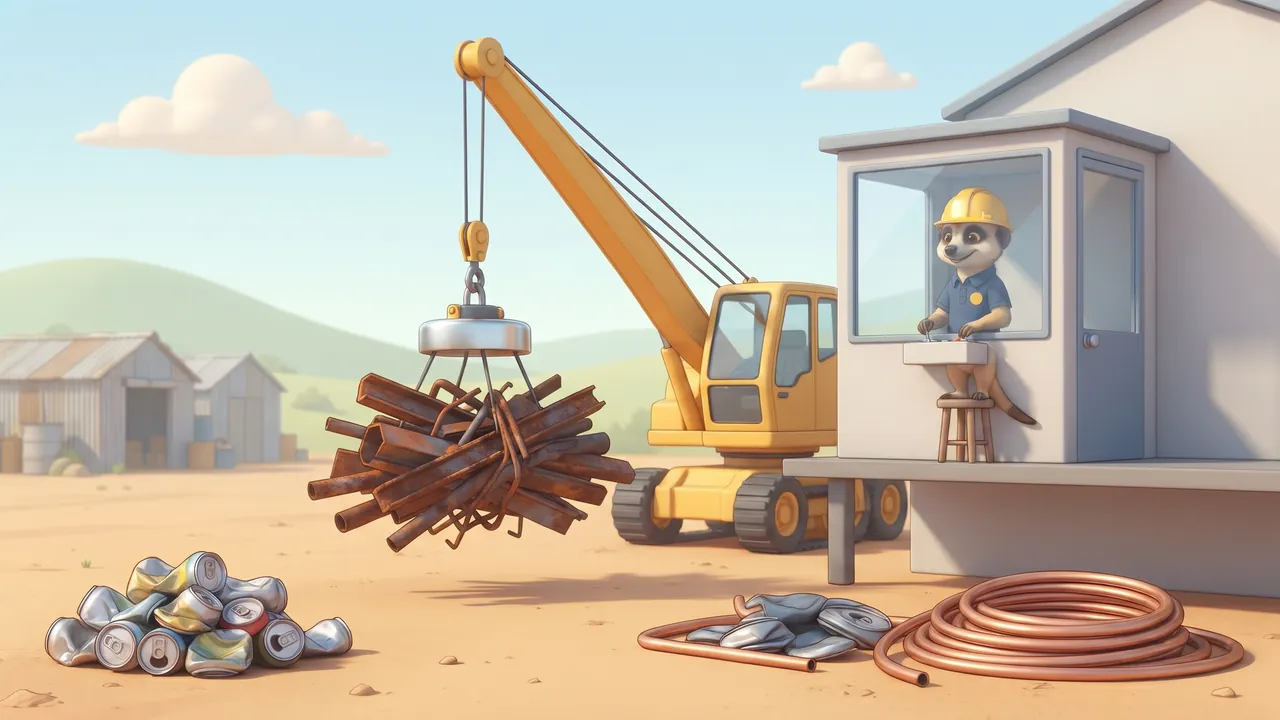
- At a scrapyard an electromagnet is better than a permanent magnet, because you can switch it on and off.
- In a doorbell an electromagnet pulls a small hammer. Loudspeakers and electric motors also have electromagnets.
- The wire is insulated so the current flows through every turn. The unit of current is the ampere.
Magnets and fields
- The magnetic field is the area around a magnet where it exerts force. The field lines show the direction of the force.
- Every magnet has two poles: a north and a south pole. A compass needle points to the magnetic north pole, but near a strong magnet it points at the magnet.
- A permanent magnet loses strength when it is heated or struck hard.

Sprinkle iron filings around a magnet to see the shape of its field.
Coils and a clever test
- A coil of wire carrying a current is called a solenoid. The iron core inside the coil makes the magnetic field stronger; switch off the current, and the magnetic field disappears.
- Careful with the magnet test: some paper clips are iron coated with copper. They look like copper, but stick to a magnet.
Remember this and test yourself
- An electromagnet is wire wound around an iron core; it works only when current flows.
- Stronger: more turns or more current; soft iron is the best core.
- Like poles repel; unlike poles attract. The force is strongest at the poles.
- Magnetic: iron, steel, nickel and cobalt. Not magnetic: copper, aluminium, lead and brass.
- A relay is a switch controlled by an electromagnet.
Write these points in your book. Read them again the night before the test.

Electromagnet: more turns, more pull. No current? No magnet.
Important words
First say what the word means, then turn the card over.
Match column A to column B
Tap a word in column A, then its meaning in column B. You can also start in column B.
True or false?
Read the question and the answer. Is the answer right? Tap True or False.

Now the real quiz!
The quiz has many more questions on this topic. Every question shows straight away whether you are right and explains why.
Take the quiz: Magnets and electromagnets- Read one part together and ask your child to tell it back in their own words.
- The ticks (“I know this”) are saved on this device only. We never ask for names or emails.
Follows CAPS for Grade 7 Technology (Technology). Always check your teacher’s notes and textbook too.