
Hydraulic and pneumatic systems
Hydraulic (liquid) and pneumatic (air) systems, syringe models and where we see them. Read one part at a time and tap “I know this”. Then test yourself in the quiz.
Know it already? Jump straight to the quiz
The syringe model
- Large syringe pushes small syringe: the small one moves further, with less force.
- Two equal syringes: the output plunger moves the same distance, with the same force, as the input plunger. There is no mechanical advantage; the system only passes on the movement (and can change its direction).
- An air bubble in a hydraulic system squashes, so the system goes “spongy”.
- Machines use oil rather than water: oil does not rust parts and it lubricates.
- A pipe or tube carries the liquid from one cylinder to the other.
Where we see them
| Hydraulic | Pneumatic |
|---|---|
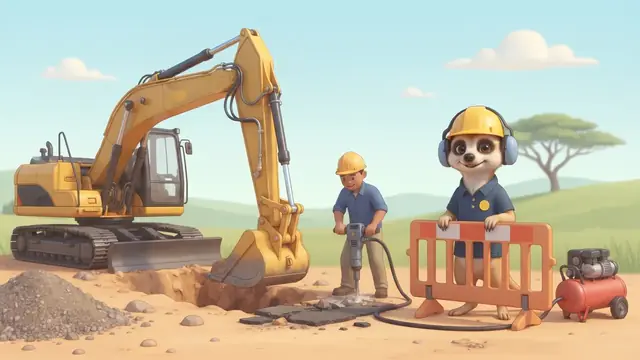
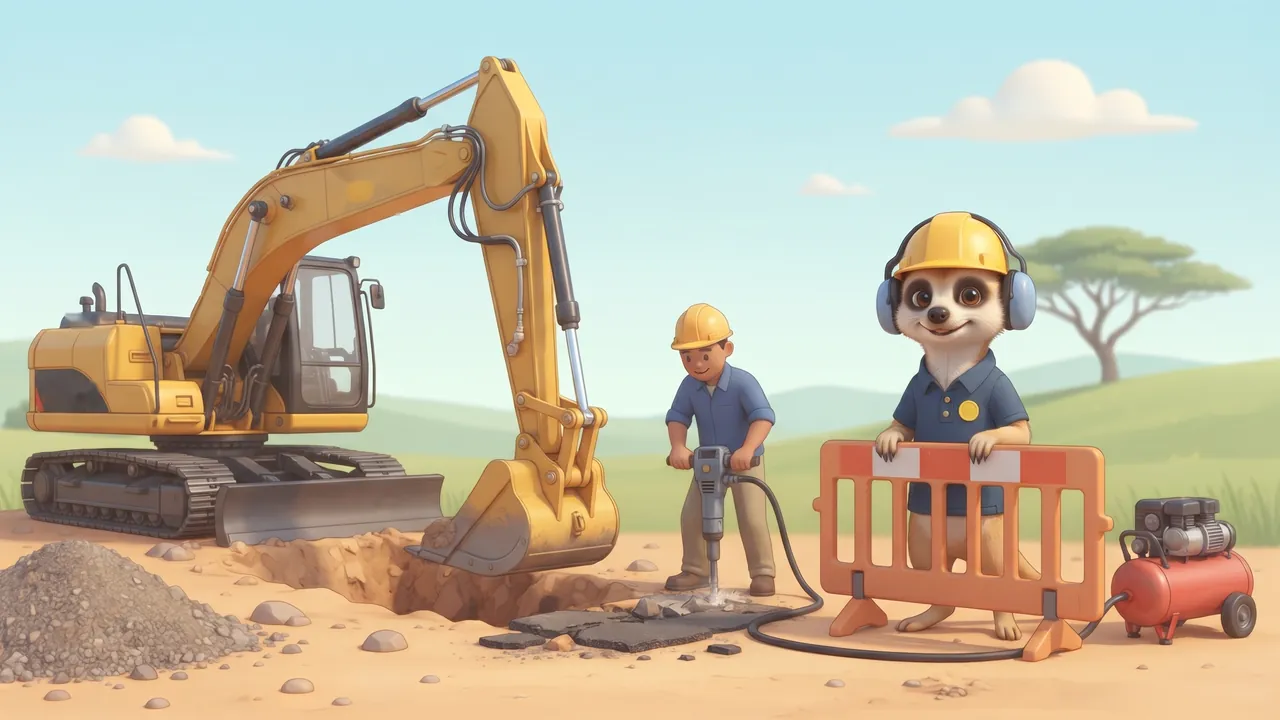
| The arm of an excavator (hydraulic cylinders AND levers) | A jackhammer breaking up a road |
| A tipper truck’s bin | Bus doors that open with a hiss |
| A hydraulic jack: a small push becomes a big force | Air brakes on big trucks; a nail gun on a compressor |
| Advantage | Disadvantage | |
|---|---|---|
| Hydraulic | Big, smooth forces | Leaking oil is messy and pollutes |
| Pneumatic | Air is free; a leak makes no mess | Springy, less exact |
The pulley on a flagpole is neither hydraulic nor pneumatic: it is a mechanical system.
Remember this and test yourself
- Hydraulic: a liquid (oil or water) passes on the force; it cannot be squashed.
- Pneumatic: compressed air; it feels springy, because air can be squashed.
- Small syringe pushes large syringe: the large one moves a shorter distance, with more force.
- Hydraulic is better for lifting very heavy loads smoothly.
- Pressure is force spread over an area.
Write these points in your book. Read them again the night before the test.

Hydraulic = Hard (liquid won’t squash). Pneumatic = Puffy (air squashes).
Important words
First say what the word means, then turn the card over.
Match column A to column B
Tap a word in column A, then its meaning in column B. You can also start in column B.
True or false?
Read the question and the answer. Is the answer right? Tap True or False.

Now the real quiz!
The quiz has many more questions on this topic. Every question shows straight away whether you are right and explains why.
Take the quiz: Hydraulic and pneumatic systems- Read one part together and ask your child to tell it back in their own words.
- The ticks (“I know this”) are saved on this device only. We never ask for names or emails.
Follows CAPS for Grade 7 Technology (Technology). Always check your teacher’s notes and textbook too.