
Emergencies: food, shelter and protective clothing
Emergencies and refugees: shelter, emergency food, food processing and protective clothing. Read one part at a time and tap “I know this”. Then test yourself in the quiz.
Know it already? Jump straight to the quiz
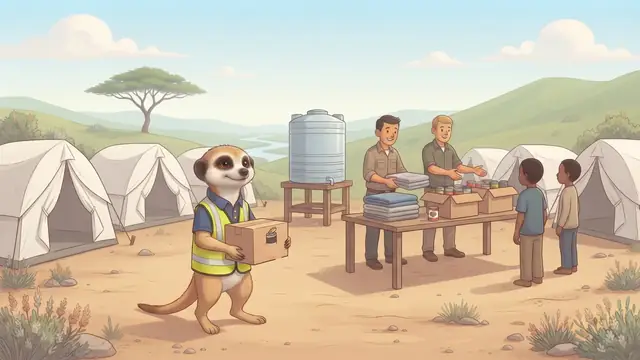
Food
| Nutrient | What it does for the body |
|---|---|
| Carbohydrates | Give energy |
| Proteins | Help the body grow and repair itself |
| Vitamins and minerals | Keep the body healthy and strong |
| Fats and oils | Give a lot of energy and help keep the body warm (e.g. cooking oil, peanut butter) |
- Food processing changes raw food so it is safer or lasts longer. Biltong is salted and dried.
- Evaluate food on flavour, texture and nutritional value. Texture is how it feels in your mouth.
- Hygiene in a camp is essential: germs spread fast where many people live close together.
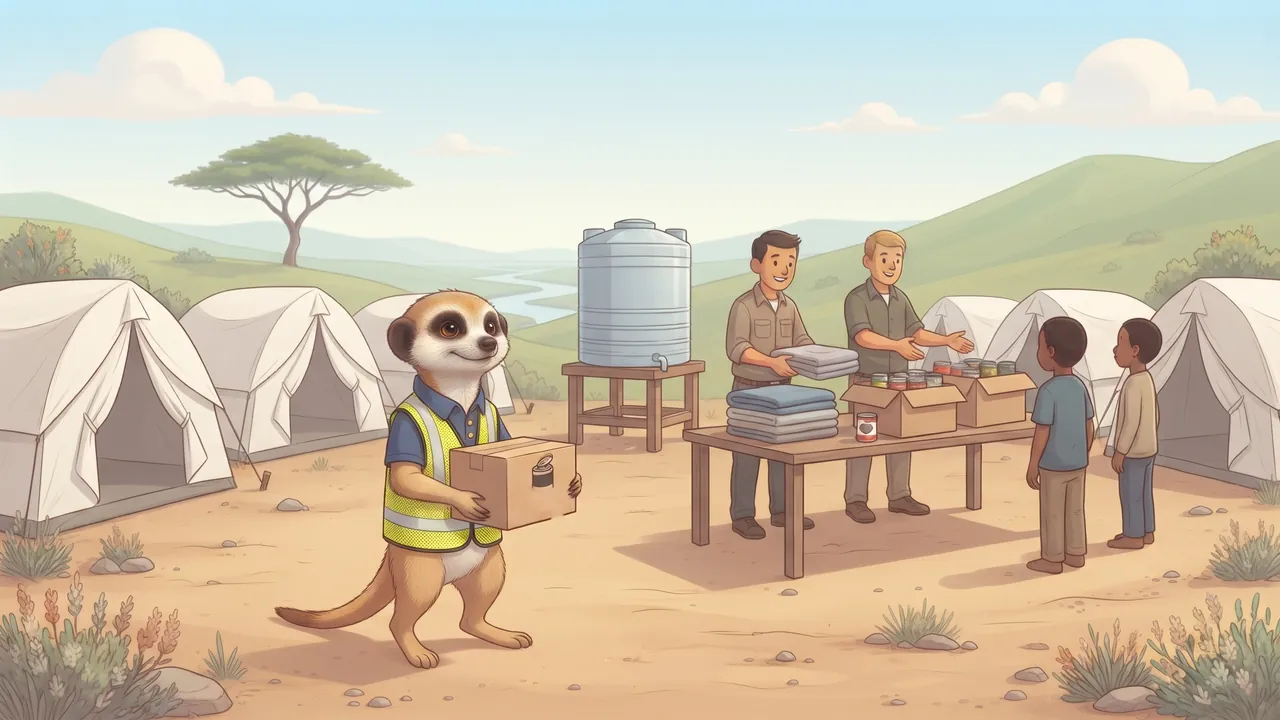
Shelter and clothing
- Indigenous builders use mud bricks, thatch, wooden poles and stone: cheap, nearby and they keep homes cool.
- Shacks of corrugated iron and plastic sheets burn easily and insulate poorly.
- Make material waterproof with wax or oil. Test a model of a shelter first to find problems cheaply.
- Rescue clothing is brightly coloured so the workers can be seen easily.
- Burn test of fabrics (only with a teacher): wool burns slowly, chars and often goes out by itself; cotton catches fire easily and burns quickly to ash; nylon and polyester melt and drip, and the hot plastic sticks to the skin. That is why firefighters wear flame-resistant fabrics.
Remember this and test yourself
- A refugee has had to flee to another country because it is not safe at home (for example, war). People who must leave home because of a disaster such as a flood or drought, but stay in their own country, are displaced people.
- Good emergency shelter: quick to put up, strong and weatherproof, with ventilation against damp.
- Emergency food must keep for a long time without spoiling: dried beans, tinned food, biltong.
- Dry food: bacteria and mould need water to grow.
- Firefighters: flame-resistant and heat-insulating. NSRI: waterproof, windproof, brightly coloured.
Write these points in your book. Read them again the night before the test.

After a disaster: W-F-S — water, food, shelter.
Important words
First say what the word means, then turn the card over.
Match column A to column B
Tap a word in column A, then its meaning in column B. You can also start in column B.
True or false?
Read the question and the answer. Is the answer right? Tap True or False.

Now the real quiz!
The quiz has many more questions on this topic. Every question shows straight away whether you are right and explains why.
Take the quiz: Emergencies: food, shelter and protective clothing- Read one part together and ask your child to tell it back in their own words.
- The ticks (“I know this”) are saved on this device only. We never ask for names or emails.
Follows CAPS for Grade 7 Technology (Technology). Always check your teacher’s notes and textbook too.