
Variation, plant diversity and recycling
Variation within a species, plant groups, and how we sort and recycle waste. Read one part at a time and tap “I know this”. Then test yourself in the quiz.
Know it already? Jump straight to the quiz
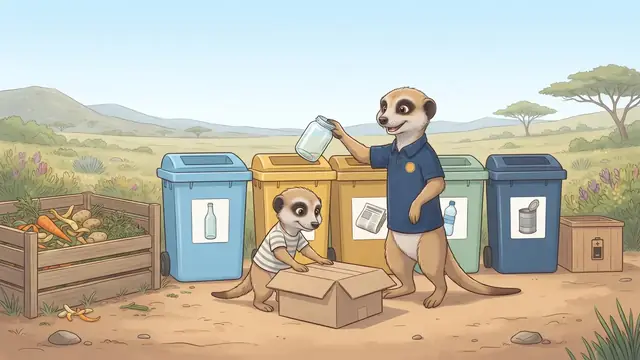
Variation
Measure the height of 30 classmates and you find a range of different heights. Variation is important for a species: some members survive changes better. Two sunflowers from seeds of the same plant: the one that gets more water grows taller. That is the environment.
Plant groups
| Group | Example | Feature |
|---|---|---|
| Mosses | Moss on a rock | No true roots; damp shade |
| Ferns | Tree fern | Spores |
| Gymnosperms | Cycad, pine tree | Seeds in cones, no flowers |
| Angiosperms | King protea, maize, bean | Flowers and seeds |
Maize has parallel veins: a monocot. A bean leaf has net-like veins: a dicot.
Recycle smartly
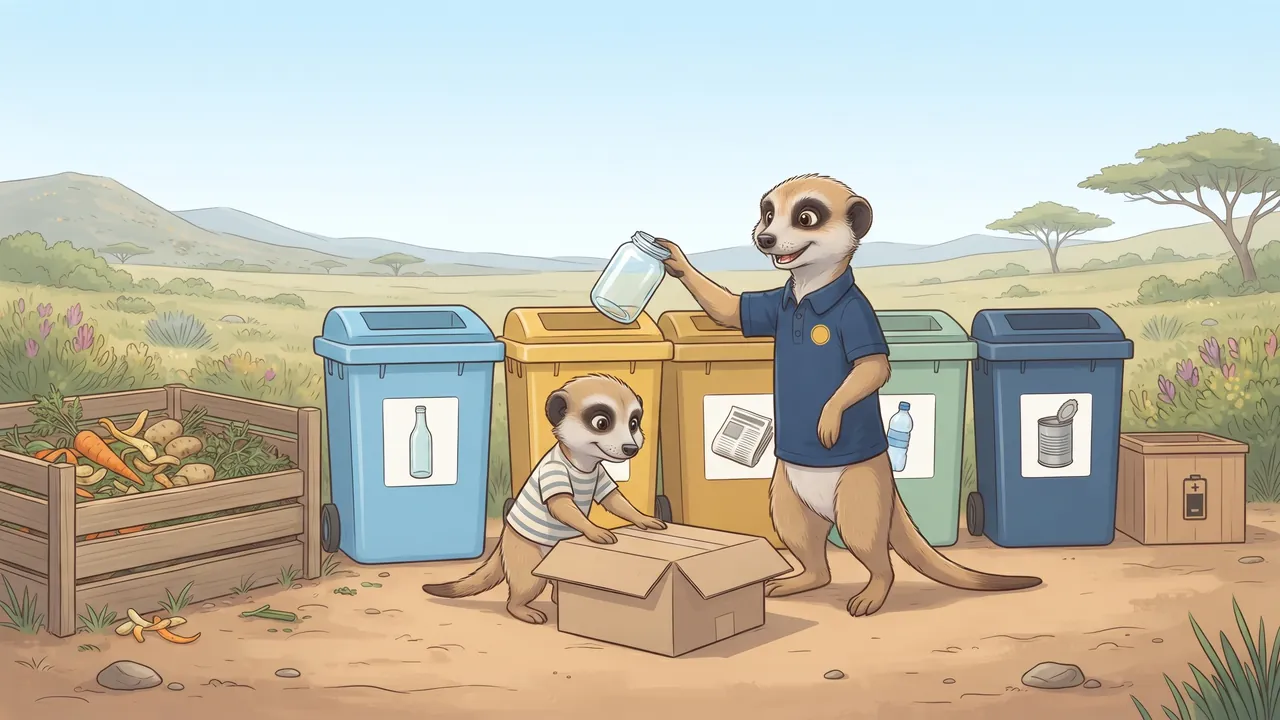
- Sort waste so that each material can be recycled.
- At a recycling plant a strong magnet pulls out steel cans; aluminium is not magnetic.
- The number in the triangle on plastic shows the type of plastic.
- Vegetable peels and garden waste become compost. Batteries do not belong in the normal bin: their chemicals pollute.
- Recycled paper means fewer trees are cut down.
Poor waste management
- It is everyone’s responsibility to dispose of waste properly. Metals, plastics and glass can be recycled; organic waste becomes compost; the rest goes to a landfill site.
- Consequences of poor waste management: polluted water and soil, diseases and health hazards, blocked sewers and stormwater drains, land wasted on landfill sites, and valuable materials that are lost.
Inherited traits: height and tongue rolling
Individuals of the same species can reproduce and make more individuals of that species. All people are one species, Homo sapiens, but we differ from one another: that is variation. Some differences are inherited from the parents, such as height and whether you can roll your tongue (into a U-shape).
- Measure the height of everyone in the class, group the heights (for example 140–144 cm, 145–149 cm) and show them in a bar graph.
- Percentage: if 18 of 30 learners can roll their tongue, that is 18 ÷ 30 × 100 = 60%.
- Height is inherited, but good food and health also play a part.
Remember this and test yourself
- Variation: differences within one species, like tall and short sunflowers or different eye colours.
- Some variation is inherited; some comes from the environment or lifestyle (more water, gymnastics muscles).
- Angiosperms have flowers; gymnosperms (cycads, pines) have seeds without flowers; ferns and mosses use spores.
- Cycads are rare and endangered, and are protected in South Africa.
- Reduce, reuse, recycle; glass can be recycled over and over.
Write these points in your book. Read them again the night before the test.

Reduce, Reuse, Recycle, in that order: the best waste is waste that was never made.
Important words
First say what the word means, then turn the card over.
Match column A to column B
Tap a word in column A, then its meaning in column B. You can also start in column B.
True or false?
Read the question and the answer. Is the answer right? Tap True or False.

Now the real quiz!
The quiz has many more questions on this topic. Every question shows straight away whether you are right and explains why.
Take the quiz: Variation, plant diversity and recycling- Read one part together and ask your child to tell it back in their own words.
- The ticks (“I know this”) are saved on this device only. We never ask for names or emails.
Follows CAPS for Grade 7 Natural Sciences. Always check your teacher’s notes and textbook too.