
The biosphere and ecosystems
The biosphere, biotic and abiotic factors, and how populations, communities and ecosystems fit together. Read one part at a time and tap “I know this”. Then test yourself in the quiz.
Know it already? Jump straight to the quiz
The spheres
| Sphere | What it is |
|---|---|
| Lithosphere | The solid rock and soil of the Earth’s surface |
| Hydrosphere | All the water on Earth |
| Atmosphere | The layer of gases around the Earth |
| Biosphere | Where the three overlap and life is found |
From population to ecosystem
- A producer makes its own food; a grasshopper eating grass is a primary consumer.
- Every living thing needs energy, water, air and nutrients; plants use sunlight to make food.
- Interdependence: living things rely on one another. Remove one species and other populations grow or shrink.
Adaptations and conservation
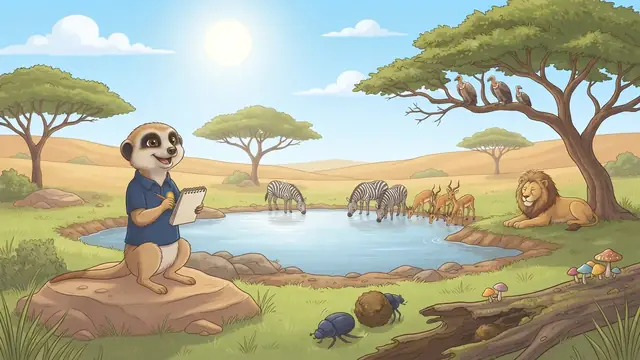
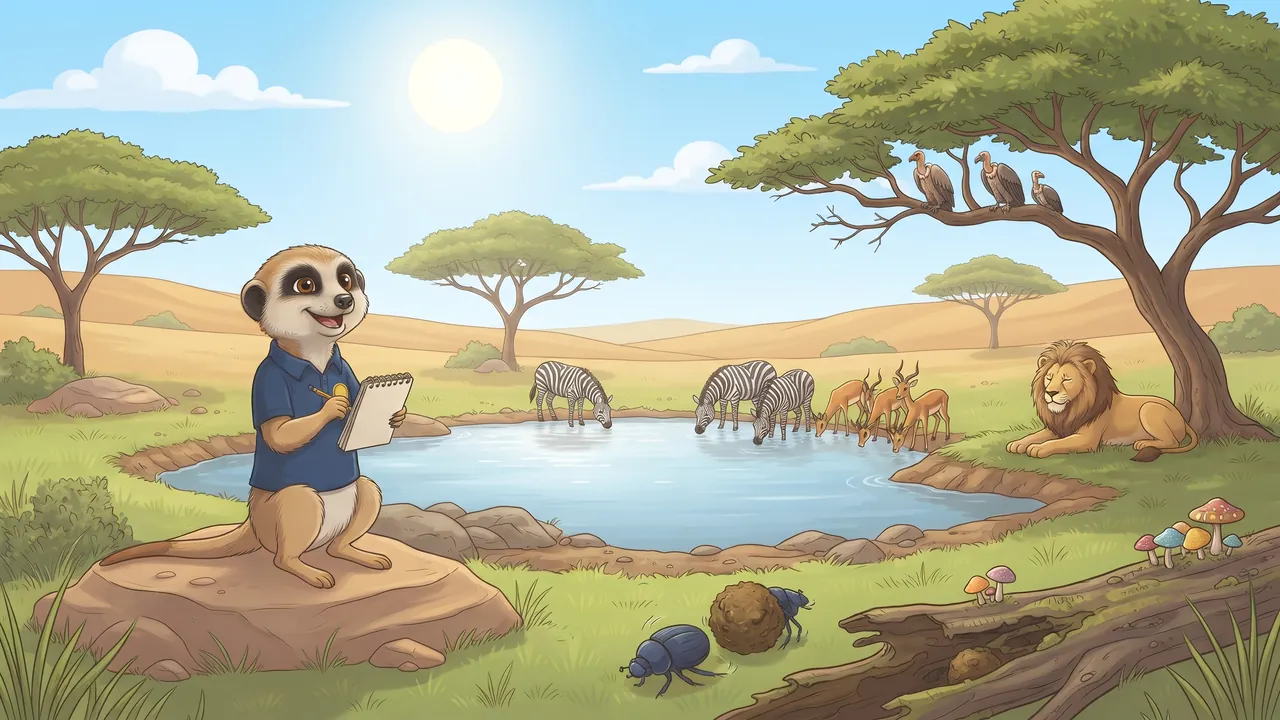
A plant in a very dry area has deep roots and thick, waxy leaves. An invasive species from elsewhere spreads and takes over. People mostly damage ecosystems through pollution and habitat destruction. Conservation means protecting and using resources wisely. A scientist starts fieldwork by observing and recording.
The seven life processes
All living things, from bacteria to elephants, carry out all seven life processes. Living things need energy, gases, water, soil and a suitable temperature, and each is adapted to its environment: a fish has fins to move through water.
| Process | Meaning |
|---|---|
| Nutrition | Get or make food |
| Growth | Get bigger and develop |
| Reproduction | Make new organisms of the same kind |
| Respiration | Release energy from food |
| Excretion | Get rid of waste products |
| Sensitivity | Respond to the environment |
| Movement | Move the whole body or parts of it |
Life in each sphere
- Lithosphere: earthworms, moles, plant roots and many bacteria live in the soil.
- Hydrosphere: fish, whales, crabs and algae live in rivers, lakes and the sea.
- Atmosphere: birds, flying insects and bats move through the air, and pollen and spores float in it.
- The biosphere also includes dead organic matter, such as fallen leaves, dry twigs and the remains of plants and animals. Decomposers break it down and return the nutrients to the soil.
Remember this and test yourself
- The biosphere is the part of the Earth where life is found: the parts of the lithosphere, hydrosphere and atmosphere where they overlap.
- Lithosphere: rock and soil. Hydrosphere: all the water. Atmosphere: the layer of gases.
- Biotic = living; abiotic = non-living (soil, water, light).
- Population (one species) → community (all populations) → ecosystem (community + surroundings).
- Fungi and bacteria return nutrients to the soil; without them dead matter piles up.
Write these points in your book. Read them again the night before the test.

Litho = stone, hydro = water, atmo = vapour/air, bio = life. Where the three overlap, life lives.
Important words
First say what the word means, then turn the card over.
Match column A to column B
Tap a word in column A, then its meaning in column B. You can also start in column B.
True or false?
Read the question and the answer. Is the answer right? Tap True or False.

Now the real quiz!
The quiz has many more questions on this topic. Every question shows straight away whether you are right and explains why.
Take the quiz: The biosphere and ecosystems- Read one part together and ask your child to tell it back in their own words.
- The ticks (“I know this”) are saved on this device only. We never ask for names or emails.
Follows CAPS for Grade 7 Natural Sciences. Always check your teacher’s notes and textbook too.