
Acids, bases and indicators
Acids, bases and indicators, the pH scale, neutralisation and acid rain. Read one part at a time and tap “I know this”. Then test yourself in the quiz.
Know it already? Jump straight to the quiz
Acid or base?
| Indicator | Acid | Neutral | Base |
|---|---|---|---|
| Blue litmus | Turns red | Stays blue | Stays blue |
| Red litmus | Stays red | Stays red | Turns blue |
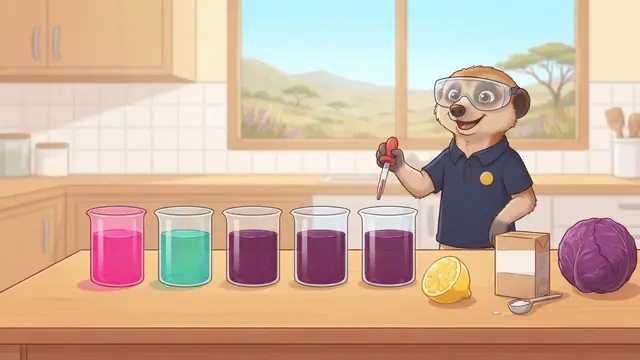
An indicator shows whether something is acidic or basic. Red cabbage juice is a home-made indicator: it is purple in neutral substances, turns red or pink in acids, and turns blue-green to yellow in bases. Universal indicator is better than litmus, because it also shows how strong the acid or base is.
Neutralisation
- Neutralisation: when an acid and a base are mixed in the right amounts, they cancel each other out and form a neutral substance (a salt and water).
- Toothpaste is slightly basic and neutralises the acid on your teeth.
- Farmers add lime to very acidic soil: lime is basic and neutralises the acid.
- Our stomach contains hydrochloric acid; sodium hydroxide is a base used in making soap.
Acid rain and safety
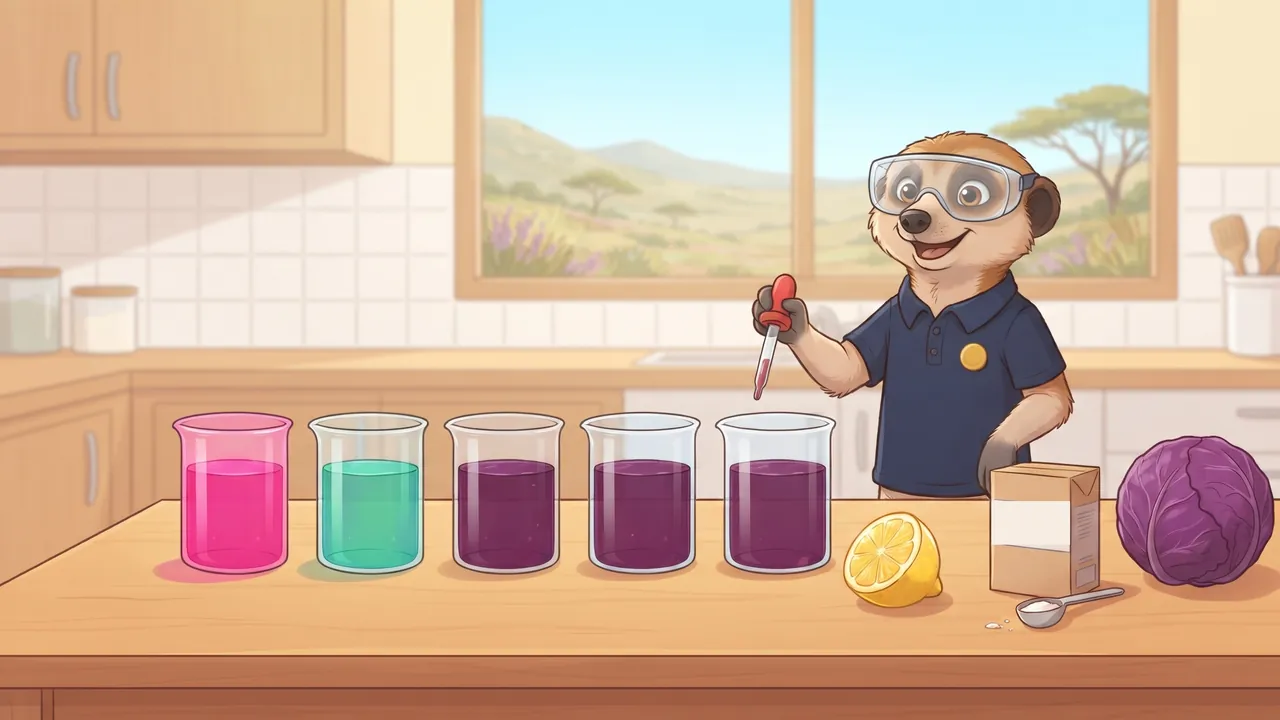
Acid rain forms when gases from burning fuels dissolve in rainwater. It harms plants, soil and lake life. Many acids and bases burn the skin: always wear safety goggles.
Taste and properties
The tongue senses four main tastes: salty, sweet, sour and bitter. This helped people survive: a ripe apple tastes sweet, an unripe one sour. But never taste any chemical: many are dangerous.
| Acid | Base | |
|---|---|---|
| Examples | Lemon juice, vinegar, tartaric acid, pool acid | Bicarbonate of soda, washing powder, soap, bleach |
| Taste | Sour | Bitter |
| Feel on the skin | Rough | Slippery |
| Red litmus | Stays red | Turns blue |
| Blue litmus | Turns red | Stays blue |
Neutral substances (pure water, salt water, sugar water, cooking oil) change neither litmus paper. A base that dissolves in water is called an alkali. Always use both colours of litmus.
Remember this and test yourself
- An acid tastes sour and turns blue litmus red (vinegar, lemon juice).
- A base feels slippery and turns red litmus blue (bicarbonate of soda, soap).
- The pH scale: below 7 acid, 7 neutral, above 7 basic.
- Acid + base in the right amounts: they neutralise each other (farmers add lime to acidic soil).
- Never taste or touch an unknown chemical; rinse a splash with lots of water.
Write these points in your book. Read them again the night before the test.

Litmus: Acid turns blue to red (“Acid = Alarm red”). Base turns red to Blue. pH 7 = neutral, like water.
Important words
First say what the word means, then turn the card over.
Match column A to column B
Tap a word in column A, then its meaning in column B. You can also start in column B.
True or false?
Read the question and the answer. Is the answer right? Tap True or False.

Now the real quiz!
The quiz has many more questions on this topic. Every question shows straight away whether you are right and explains why.
Take the quiz: Acids, bases and indicators- Read one part together and ask your child to tell it back in their own words.
- The ticks (“I know this”) are saved on this device only. We never ask for names or emails.
Follows CAPS for Grade 7 Natural Sciences. Always check your teacher’s notes and textbook too.