
Settlements and why they grow
Why settlements start and grow in a place, their shapes, and urban problems and planning. Read one part at a time and tap “I know this”. Then test yourself in the quiz.
Know it already? Jump straight to the quiz
Why a settlement starts here
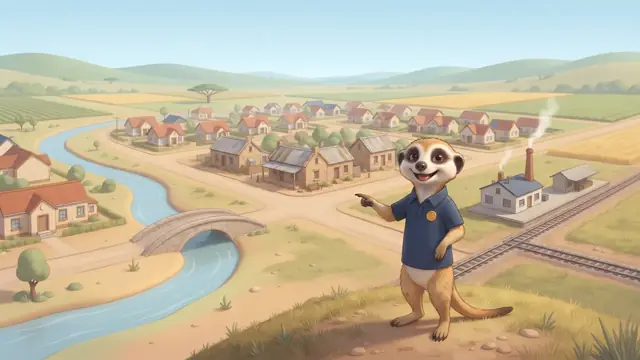
Site factors explain why a settlement started in a particular place: water, transport, minerals or a harbour. Johannesburg came into being because gold was discovered; Durban and Cape Town grew because they are harbours.
- Towns arise at crossroads: transport brings trade and people. A town on a national road grows from passing traffic.
- A mining town grows around a mine; a market town is where farmers buy and sell goods.
- A town declines when its main industry closes; young people leave for work and study.
The shape of settlements
| Pattern | What it looks like |
|---|---|
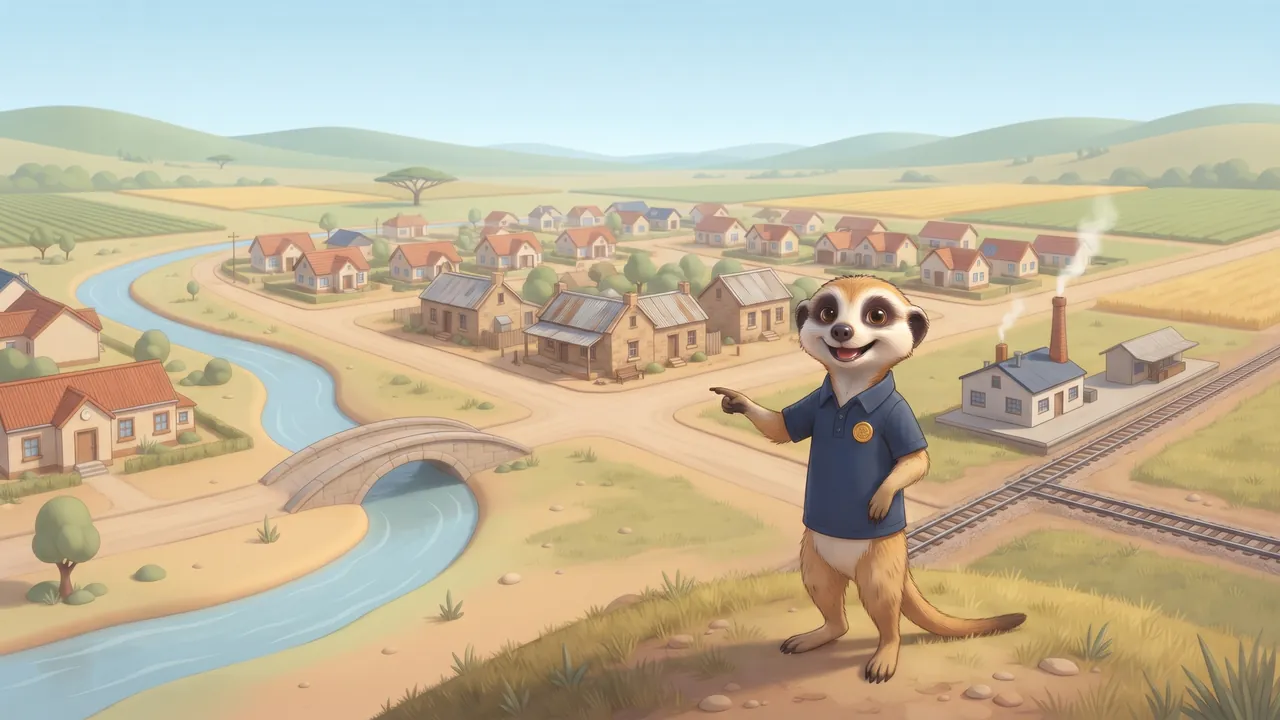
| Clustered | Buildings grouped closely together |
| Dispersed | Farmhouses spread far apart |
| Linear | Houses set out along a road or river |
Cities: problems and planning
- The central business district is the heart of a city’s business; suburbs are residential; factories stand in an industrial area.
- An informal settlement is put up without formal planning; clean water and sanitation are the most important service for a growing settlement.
- Urban decay: an area becomes neglected. Urban renewal: it is repaired.
- Urban sprawl swallows farmland; a green belt around the city limits it.
- People sometimes build on a floodplain because the land is cheap and near work.
The main aim of town planning is to manage growth in an orderly way.
Remember this and test yourself
- Site factors explain why a settlement started in a place: Johannesburg (gold), Durban and Cape Town (harbours).
- Shapes: clustered (buildings close together), dispersed (farmhouses far apart), linear (along a road).
- A city has a central business district, suburbs and an industrial area; a market town is where farmers buy and sell.
- Urban decay is neglect; urban renewal repairs it. Urban sprawl swallows farmland.
- A green belt limits unchecked sprawl; town planning manages growth in an orderly way.
Write these points in your book. Read them again the night before the test.

Clustered = a bunch of grapes. Dispersed = stars in the sky. Linear = beads on a string along the road.
Important words
First say what the word means, then turn the card over.
Match column A to column B
Tap a word in column A, then its meaning in column B. You can also start in column B.
True or false?
Read the question and the answer. Is the answer right? Tap True or False.

Now the real quiz!
The quiz has many more questions on this topic. Every question shows straight away whether you are right and explains why.
Take the quiz: Settlements and why they grow- Read one part together and ask your child to tell it back in their own words.
- The ticks (“I know this”) are saved on this device only. We never ask for names or emails.
Follows CAPS for Grade 7 Social Sciences (Geography). Always check your teacher’s notes and textbook too.