
Natural resources in South Africa
South Africa’s natural resources: minerals and diamonds, water and soil, and how we manage them sustainably. Read one part at a time and tap “I know this”. Then test yourself in the quiz.
Know it already? Jump straight to the quiz
Minerals and mining
South Africa is known worldwide for gold and platinum; we hold the largest platinum reserves. Coal is our largest source of electricity. Oil and gas are non-renewable, because they take millions of years to form.
| Benefits | Consequences |
|---|---|
| Jobs | Soil and water pollution |
| Export income | Toxins from mine dumps leach into rivers |
| Towns grow | Acid mine drainage from old mines |
How diamonds reach us
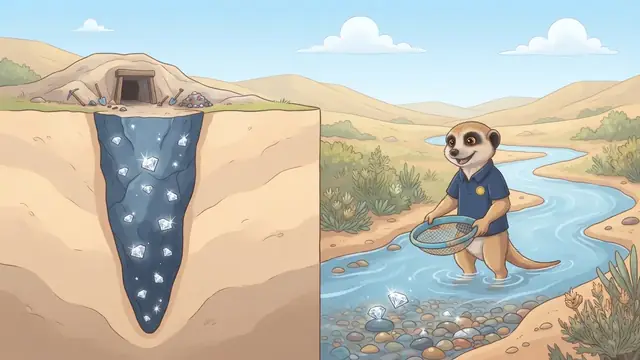
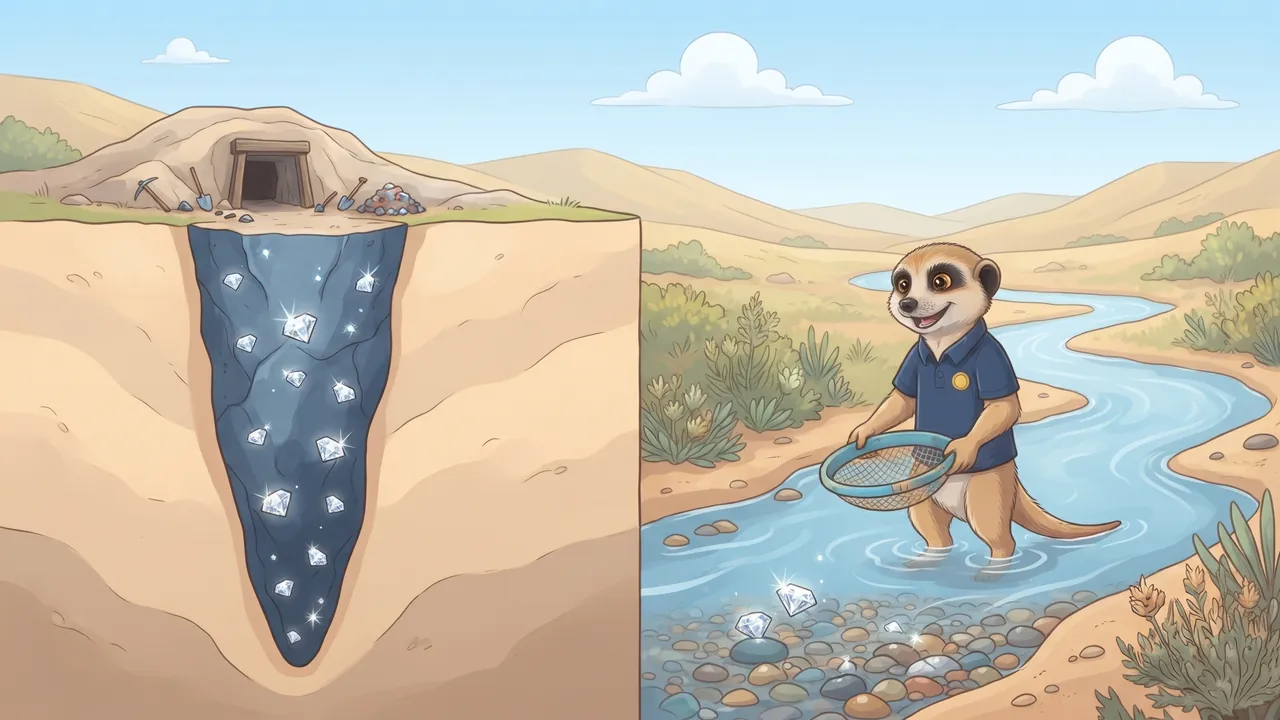
A kimberlite pipe is a tube of old volcanic rock that brought diamonds up from deep inside the Earth. It is the primary source, because the diamonds are still in the rock they arrived in. Erosion breaks the rock down and rivers carry the diamonds away: these are alluvial deposits. Kimberley grew around the most famous diamond mine of all.
Water and soil
- Water is scarce and unevenly spread: the east gets more rain. A water transfer scheme moves water from one river to another.
- Irrigation lets crops grow without relying on rain. The Gariep Dam holds the most water.
- The biggest threats to farmland are soil erosion and urban spread; overgrazing leaves the veld bare.
Sustainable use leaves enough for the future. A resource management plan balances use with recovery.
Renewable or non-renewable
Natural resources are things from nature that people use: water, air, soil, forests, and animal and marine life. Renewable resources are replaced by nature: sun, wind and water, and forests and fish if we use them wisely. Non-renewable resources run out once they are used: coal, oil and gold. Examples of misuse:
- Air: coal power stations on the Mpumalanga Highveld pollute the air.
- Forests: indigenous forests, such as those at Knysna, were cut down in the past much faster than they could grow back.
- Soil: overgrazing leaves the soil bare, so it erodes.
- Animal and marine life: overfishing and poaching (e.g. of perlemoen (abalone) and rhinos) make species disappear.
Remember this and test yourself
- South Africa is known for gold and platinum (we hold the largest platinum reserves); coal makes most electricity.
- Kimberlite pipes are old volcanic rock: the primary source of diamonds. Rivers wash out alluvial diamonds.
- Mining: jobs and export income, but soil and water pollution and acid mine drainage; after closing the land must be rehabilitated.
- Water is unevenly spread (the east gets more rain); a water transfer scheme moves water between rivers.
- Solar energy is our largest renewable resource; timber, fish and game are renewable if we use them sustainably.
Write these points in your book. Read them again the night before the test.

Diamonds: primary in the pipe, alluvial in the river.
Important words
First say what the word means, then turn the card over.
Match column A to column B
Tap a word in column A, then its meaning in column B. You can also start in column B.
True or false?
Read the question and the answer. Is the answer right? Tap True or False.

Now the real quiz!
The quiz has many more questions on this topic. Every question shows straight away whether you are right and explains why.
Take the quiz: Natural resources in South Africa- Read one part together and ask your child to tell it back in their own words.
- The ticks (“I know this”) are saved on this device only. We never ask for names or emails.
Follows CAPS for Grade 7 Social Sciences (Geography). Always check your teacher’s notes and textbook too.