
Glaciers, weathering and erosion
Weathering, erosion and deposition: how glaciers, rivers, wind and plants shape the land. Read one part at a time and tap “I know this”. Then test yourself in the quiz.
Know it already? Jump straight to the quiz
Weathering
Weathering is when rock breaks down where it lies.
| Physical weathering | Chemical weathering |
|---|---|
| The rock breaks up but stays the same rock | The rock changes by reacting with water or acids |
| Freeze-thaw: water in a crack freezes, expands and splits the rock | Limestone slowly dissolves in rainwater that contains a little acid |
| Exfoliation: outer layers peel off like an onion | Iron in the rock rusts in water and air, and the rock crumbles |
| Plant roots grow into cracks and push the rock apart |
Erosion and deposition
Erosion is when water, wind or ice carries away rock and soil. Deposition is when the material is laid down again, like a delta at a river mouth. Wind shapes sand dunes in the desert.
- In the upper course a river cuts a deep, narrow V-shaped valley.
- In the lower course the valley is wide, with meanders (large bends).
- A donga is a deep gully cut by running water. The biggest cause: removing the plant cover.
Farmers fight erosion by planting trees and working across the slope, so the fertile topsoil does not wash away.
Glaciers
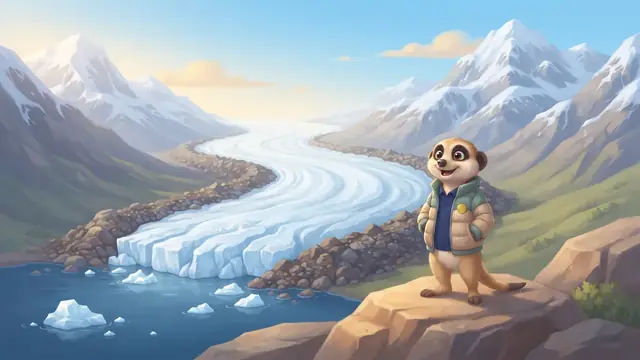
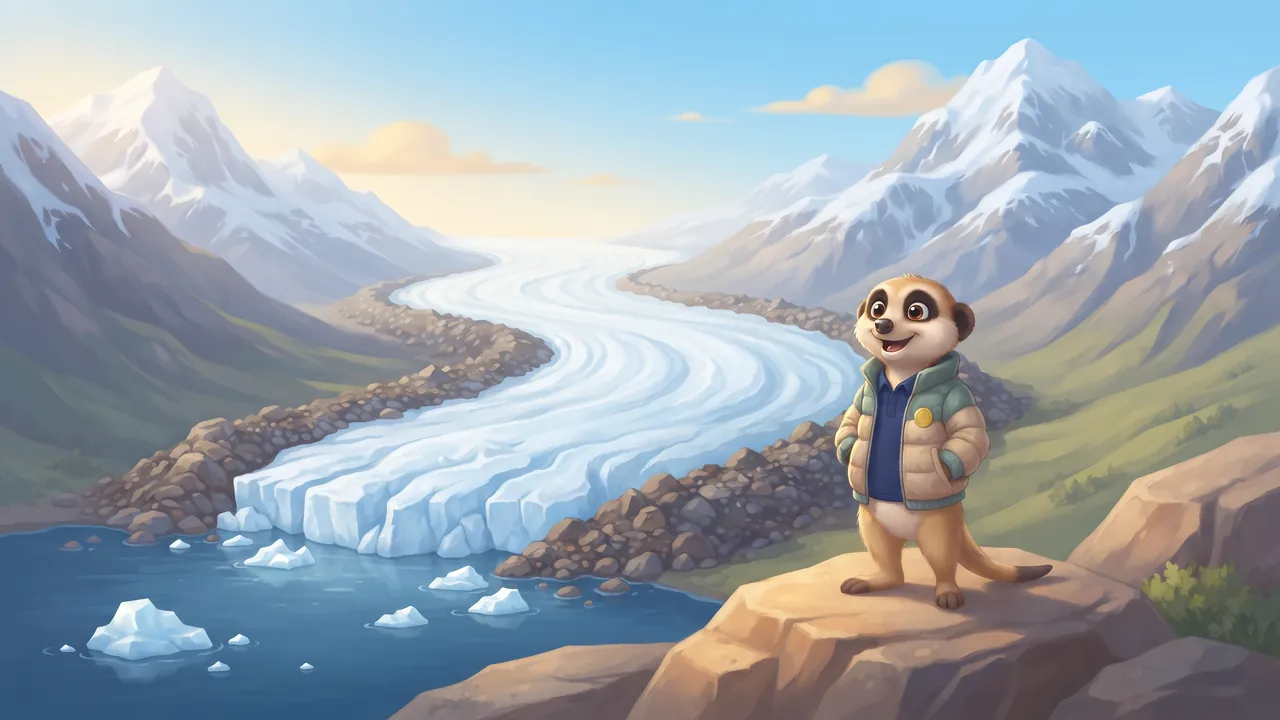
A glacier is a huge mass of ice that moves slowly, usually less than a metre a day. It forms high in mountains and at the poles, where snow builds up and is compressed into ice. A glacier carves a U-shaped valley and leaves rock and gravel behind: a moraine. Ice that breaks off and floats is an iceberg. As the climate warms, glaciers melt and retreat.
Remember this and test yourself
- Weathering breaks rock down where it lies; erosion carries rock and soil away; deposition lays it down again.
- Physical weathering: ice in cracks (freeze-thaw), exfoliation, plant roots. Chemical weathering: water or acids change the rock.
- A glacier is a slow-moving mass of ice that carves U-shaped valleys and leaves moraines.
- Rivers: a deep V-shaped valley in the upper course, a wide valley with meanders in the lower course, a delta at the mouth.
- Bare soil erodes fastest and forms dongas; plant trees and work across the slope.
Write these points in your book. Read them again the night before the test.

Weathering = the rock wears down where it lies. Erosion = the pieces escape. Deposition = they are dropped.
Important words
First say what the word means, then turn the card over.
Match column A to column B
Tap a word in column A, then its meaning in column B. You can also start in column B.
True or false?
Read the question and the answer. Is the answer right? Tap True or False.

Now the real quiz!
The quiz has many more questions on this topic. Every question shows straight away whether you are right and explains why.
Take the quiz: Glaciers, weathering and erosion- Read one part together and ask your child to tell it back in their own words.
- The ticks (“I know this”) are saved on this device only. We never ask for names or emails.
Follows CAPS for Grade 7 Social Sciences (Geography). Always check your teacher’s notes and textbook too.