
Conservation, parks and population statistics
Conservation and South Africa’s national parks, poaching, and how we calculate population statistics. Read one part at a time and tap “I know this”. Then test yourself in the quiz.
Know it already? Jump straight to the quiz
Why conservation?
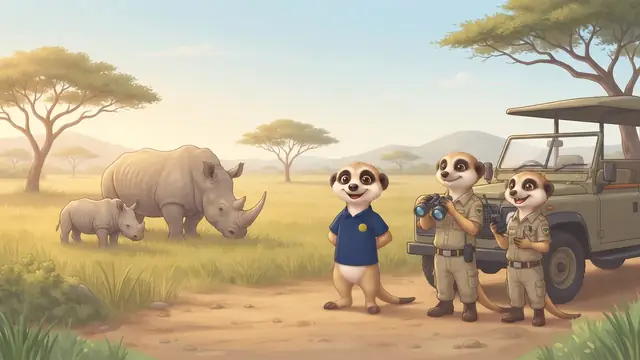
Conservation protects animals, plants and their habitats, so species do not become extinct. When forests are cut down, animals lose their habitat and food. Conservation areas protect plants, animals and habitats, are used for research and education, and earn money from tourism.
| Park | To remember |
|---|---|
| Kruger National Park | Our largest and best-known conservation area (Limpopo and Mpumalanga) |
| Kgalagadi Transfrontier Park | Across the border with Botswana (Northern Cape) |
| Addo Elephant National Park | Named after an animal (Eastern Cape) |
| Table Mountain National Park | The furthest south of these (Western Cape) |
| iSimangaliso Wetland Park | A wetland that is a World Heritage Site (KwaZulu-Natal) |
A transfrontier park stretches across country borders.
Community conservation projects let local people protect nature and share the benefits, such as jobs and income from tourism.
- The Makuleke community got their land in the far north of the Kruger National Park back in 1998; they use it for conservation and tourist lodges together with SANParks.
- The Nama people of the Richtersveld own the land of the Richtersveld park and help to manage it.
- Working for Water gives local people jobs clearing water-thirsty alien plants.
Rangers and poachers
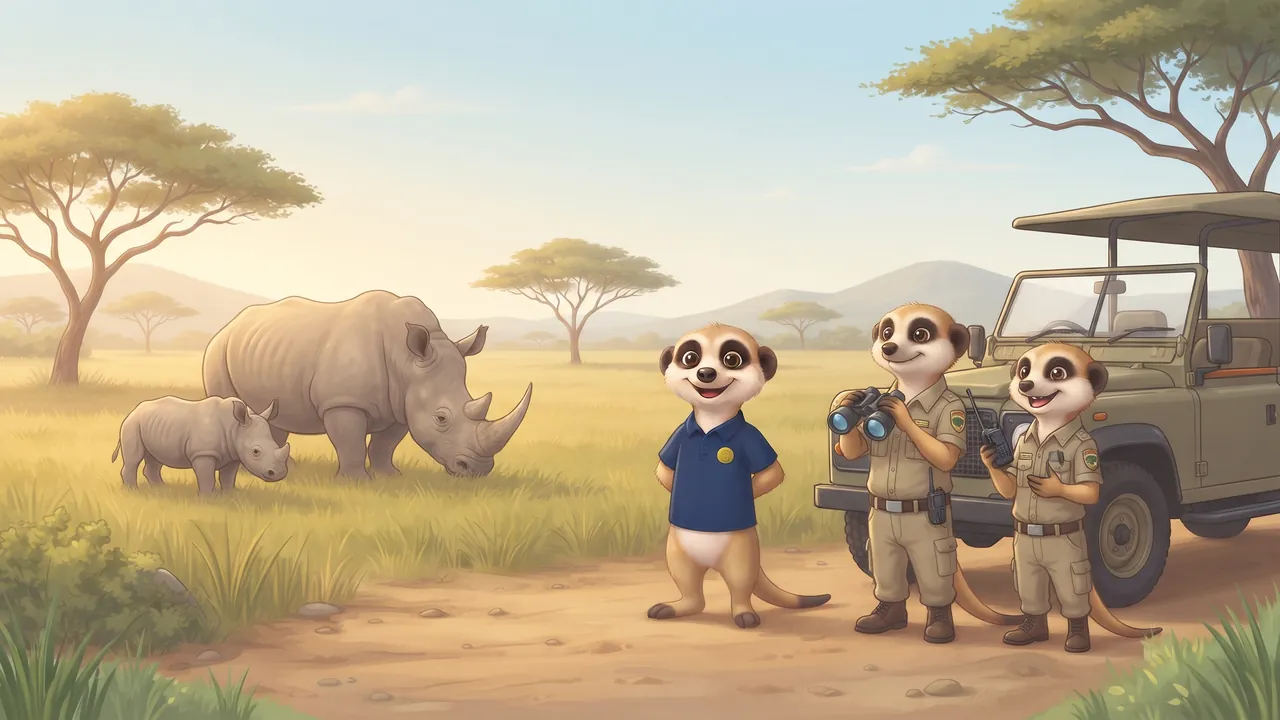
Poaching is the illegal hunting of wildlife. Rhinos are poached for their horns; the wild dog is another threatened species. A ranger’s most important work is protecting animals and stopping poachers.
| Tourism: good | Tourism: bad |
|---|---|
| Brings money that pays for conservation | Too many tourists disturb animals and damage habitats |
Population statistics
- Birth rate: births per 1 000 people per year. Death rate: deaths per 1 000 per year.
- Natural increase = birth rate − death rate. If the death rate is higher, there is a natural decrease.
- A high death rate goes with a lower life expectancy. Poverty (poor nutrition, little health care) raises the death rate and lowers life expectancy.
- A population can still grow while the birth rate falls, as long as the birth rate stays higher than the death rate, or enough people move in.

Governments keep population statistics to plan schools, clinics and housing.
Remember this and test yourself
- Conservation protects animals, plants and their habitats from extinction.
- The Kruger National Park is our largest and best-known park; Kgalagadi is a transfrontier park with Botswana.
- Poaching is the illegal hunting of wildlife: rhinos are poached for their horns. Wild dogs are also threatened.
- Tourism brings money for conservation, but too many tourists disturb animals.
- Natural increase = birth rate − death rate (per 1 000); a young population’s pyramid is wide at the bottom and narrow at the top.
Write these points in your book. Read them again the night before the test.

The Kruger is the king of our parks (largest). Natural increase = B − D.
Important words
First say what the word means, then turn the card over.
Match column A to column B
Tap a word in column A, then its meaning in column B. You can also start in column B.
True or false?
Read the question and the answer. Is the answer right? Tap True or False.

Now the real quiz!
The quiz has many more questions on this topic. Every question shows straight away whether you are right and explains why.
Take the quiz: Conservation, parks and population statistics- Read one part together and ask your child to tell it back in their own words.
- The ticks (“I know this”) are saved on this device only. We never ask for names or emails.
Follows CAPS for Grade 7 Social Sciences (Geography). Always check your teacher’s notes and textbook too.