
Rocky shores and coastal ecosystems
The intertidal zone, how rocky-shore animals are adapted, ocean currents and protecting our coast. Read one part at a time and tap “I know this”. Then test yourself in the quiz.
Know it already? Jump straight to the quiz
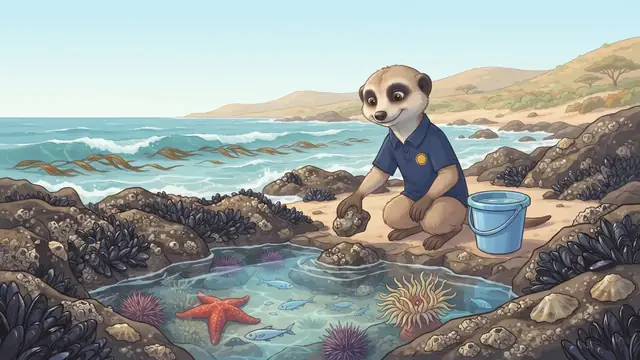
Life between the tides
The tide changes about every six hours, so animals in the intertidal zone are covered by sea water for part of the day and left in the sun and wind for the rest. The higher up the shore an animal lives, the longer it is out of the water. A rock pool is sea water trapped in the rocks at low tide; it can get very hot and salty.
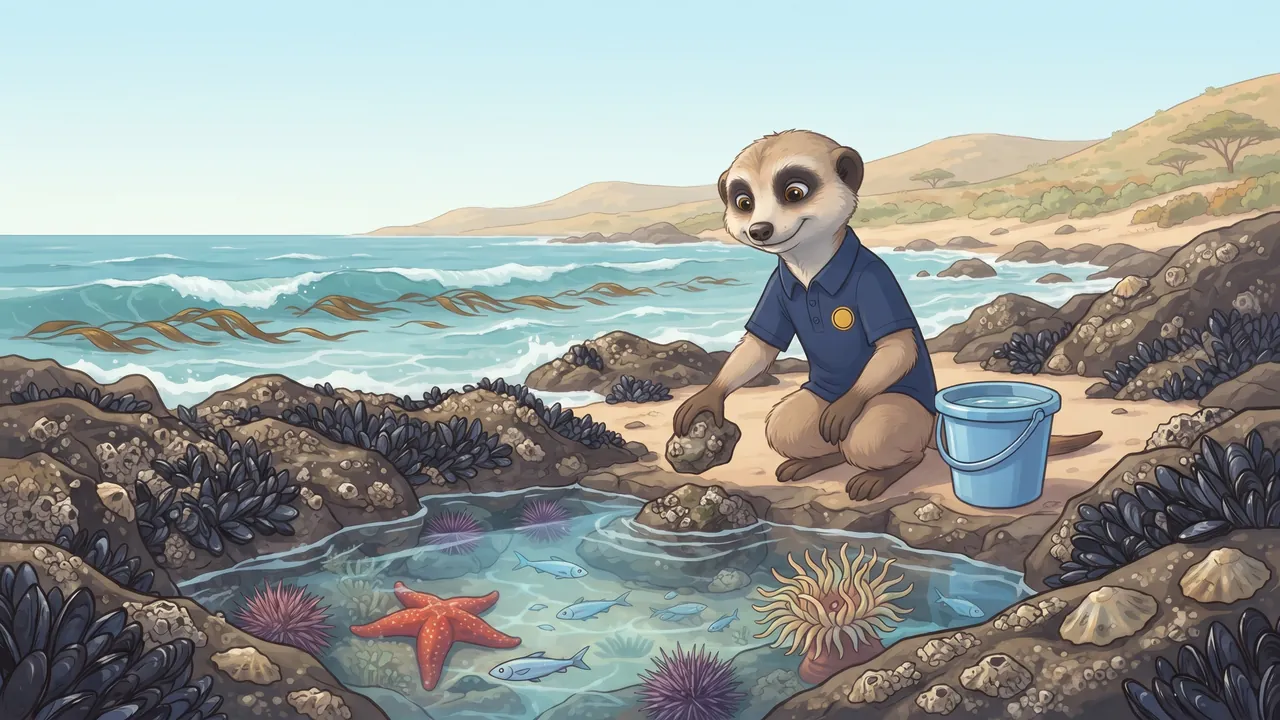
Adaptations
| Animal or plant | How it survives |
|---|---|
| Limpet | Clamps tight onto the rock when the tide goes out |
| Mussels | Grow packed together to hold water and resist waves; filter food |
| Barnacles | Close their hard plates tightly |
| Sea star | Tube feet; eats mussels |
| Kelp | Large brown seaweed: shelter for rock lobster, abalone, sea urchins |
Seaweed is the producer in the rocky-shore food web.
Currents and protection
- The cold Benguela current’s nutrients feed tiny sea plants, and so all the west coast’s life.
- Plastic: animals swallow it or get tangled in it.
- There is a limit on how many mussels you may collect, so that enough are left to breed.
- If you turn over a rock in a rock pool, put it back exactly as it was.
Rocky shores matter to people too: for fishing, tourism and research.
Remember this and test yourself
- The intertidal zone lies between high and low tide; the tide comes about twice a day.
- Animals must survive water, then sun and air: a limpet clamps tight, barnacles close their plates.
- Mussels filter food from the water; a sea star eats mussels and walks on tiny tube feet.
- The cold Benguela current (west coast) is rich in nutrients; the warm Agulhas current flows down the east coast.
- A marine protected area limits fishing; do not take too many shellfish.
Write these points in your book. Read them again the night before the test.

Benguela = Brrr, cold (west coast). Agulhas = Aah, warm (east coast).
Important words
First say what the word means, then turn the card over.
Match column A to column B
Tap a word in column A, then its meaning in column B. You can also start in column B.
True or false?
Read the question and the answer. Is the answer right? Tap True or False.

Now the real quiz!
The quiz has many more questions on this topic. Every question shows straight away whether you are right and explains why.
Take the quiz: Rocky shores and coastal ecosystems- Read one part together and ask your child to tell it back in their own words.
- The ticks (“I know this”) are saved on this device only. We never ask for names or emails.
Follows CAPS for Grade 6 Natural Sciences and Technology. Always check your teacher’s notes and textbook too.