
Moon phases, space vehicles and design
Moon phases and eclipses, spacecraft and rovers, the SKA, and constraints and specifications. Read one part at a time and tap “I know this”. Then test yourself in the quiz.
Know it already? Jump straight to the quiz
Phases and eclipses
- The Sun always lights half of the Moon; the phases show how much of that lit half we see from Earth. The Earth’s shadow does not cause the phases.
- Solar eclipse: the Moon covers the Sun (new moon).
- Not every month: the Moon’s orbit is slightly tilted.
- Never look directly at a solar eclipse.
Space vehicles
| Vehicle | Fact |
|---|---|
| Apollo 11 | 1969: first people on the Moon |
| Curiosity | NASA rover, 2012 in Gale Crater on Mars |
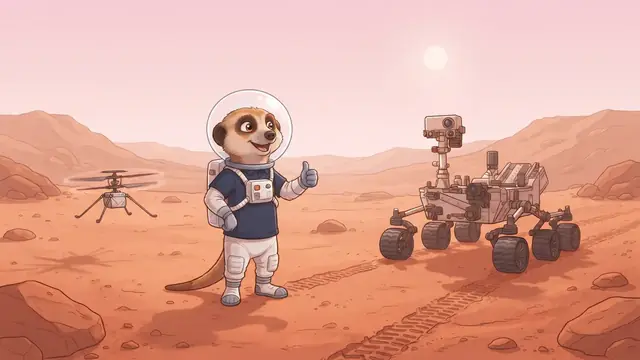
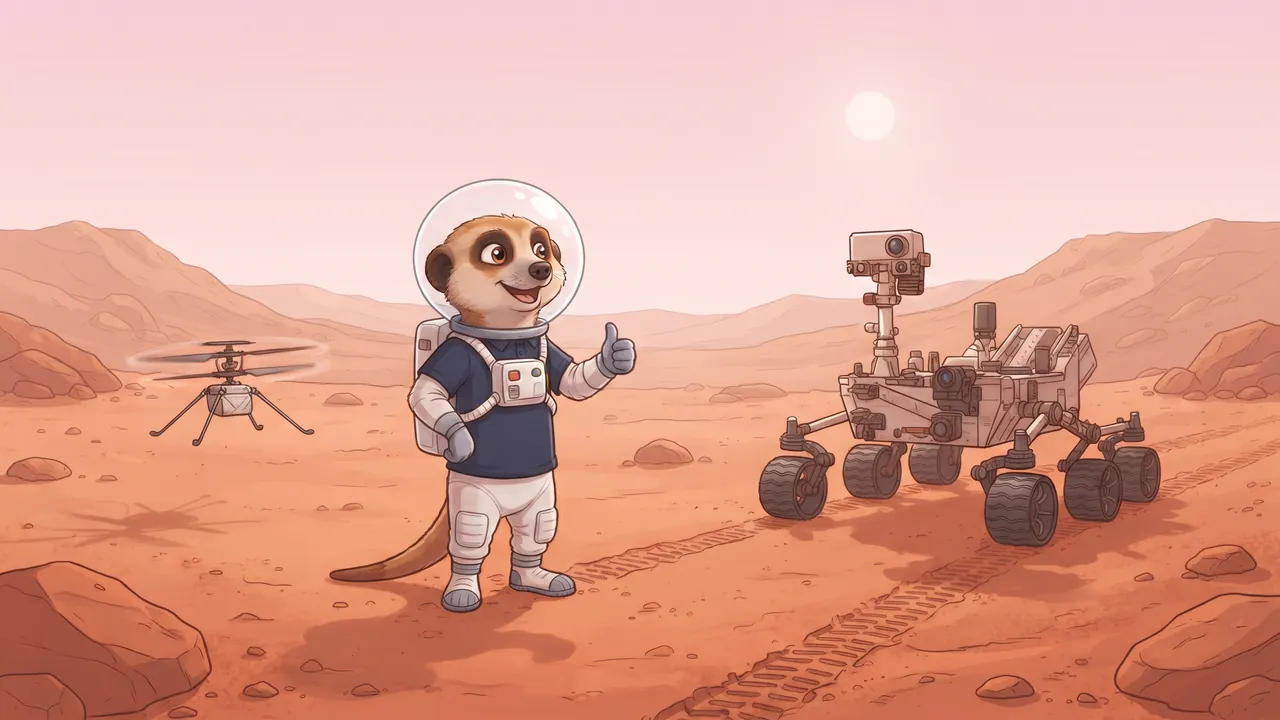
| Perseverance + Ingenuity | 2021 on Mars; the helicopter flew in Mars’s thin air |
- A rover needs special wheels to grip loose sand and rocks; Moon and Mars rovers differ because of gravity and dust.
- Mars rovers are controlled by a computer: a radio signal takes minutes to reach Mars.
- Robots are safer and cheaper than people; they look for signs of water and past life.
- A spacesuit supplies oxygen and protects against heat and cold: the Moon has no air.
The SKA and design
Artificial satellites help with phones, weather and GPS maps. The SKA, being built in the Karoo and in Australia, will gather radio waves from space; many dishes and antennas will work together as one huge telescope.
| Constraint (limit) | Specification (requirement) |
|---|---|
| “We have only R50.” | “It must carry 2 kg.” |
We evaluate a design to see whether it meets the specifications.
Remember this and test yourself
- A solar eclipse can only happen at new moon; a lunar eclipse at full moon.
- A rover explores a surface; a lander touches down; an orbiter circles above and takes photos.
- Apollo 11 (1969): Neil Armstrong was first on the Moon; 12 people have walked on it.
- The SKA (Square Kilometre Array) is a giant radio telescope being built in the Karoo in South Africa and in Australia: many dishes and antennas will work together as one. MeerKAT’s 64 dishes will become part of it.
- A constraint limits (“only R50”); a specification requires (“it must carry 2 kg”).
Write these points in your book. Read them again the night before the test.

New moon = solar eclipse. Full moon = lunar eclipse. Constraint = “I may not”; specification = “I must”.
Important words
First say what the word means, then turn the card over.
Match column A to column B
Tap a word in column A, then its meaning in column B. You can also start in column B.
True or false?
Read the question and the answer. Is the answer right? Tap True or False.

Now the real quiz!
The quiz has many more questions on this topic. Every question shows straight away whether you are right and explains why.
Take the quiz: Moon phases, space vehicles and design- Read one part together and ask your child to tell it back in their own words.
- The ticks (“I know this”) are saved on this device only. We never ask for names or emails.
Follows CAPS for Grade 6 Natural Sciences and Technology. Always check your teacher’s notes and textbook too.