
Generating electricity
How power stations generate electricity, renewable sources, and South Africa’s energy choices. Read one part at a time and tap “I know this”. Then test yourself in the quiz.
Know it already? Jump straight to the quiz
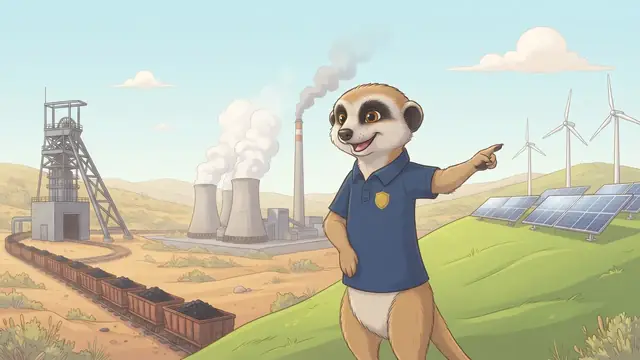
How a power station works
| Power station | What turns the turbine |
|---|---|
| Coal | Steam from water heated by coal |
| Wind | The wind turns blades |
| Hydro (at a dam) | Falling water |
| Nuclear (Koeberg) | Steam from heat from uranium |
| Solar (solar panels) | No turbine: solar cells change sunlight straight into electricity |
At a coal power station: coal burns → water boils → steam turns the turbine → the turbine turns the generator → electricity goes through cables to our homes. Inside the generator magnets spin past coils of wire, and that makes the current.
Renewable or not?
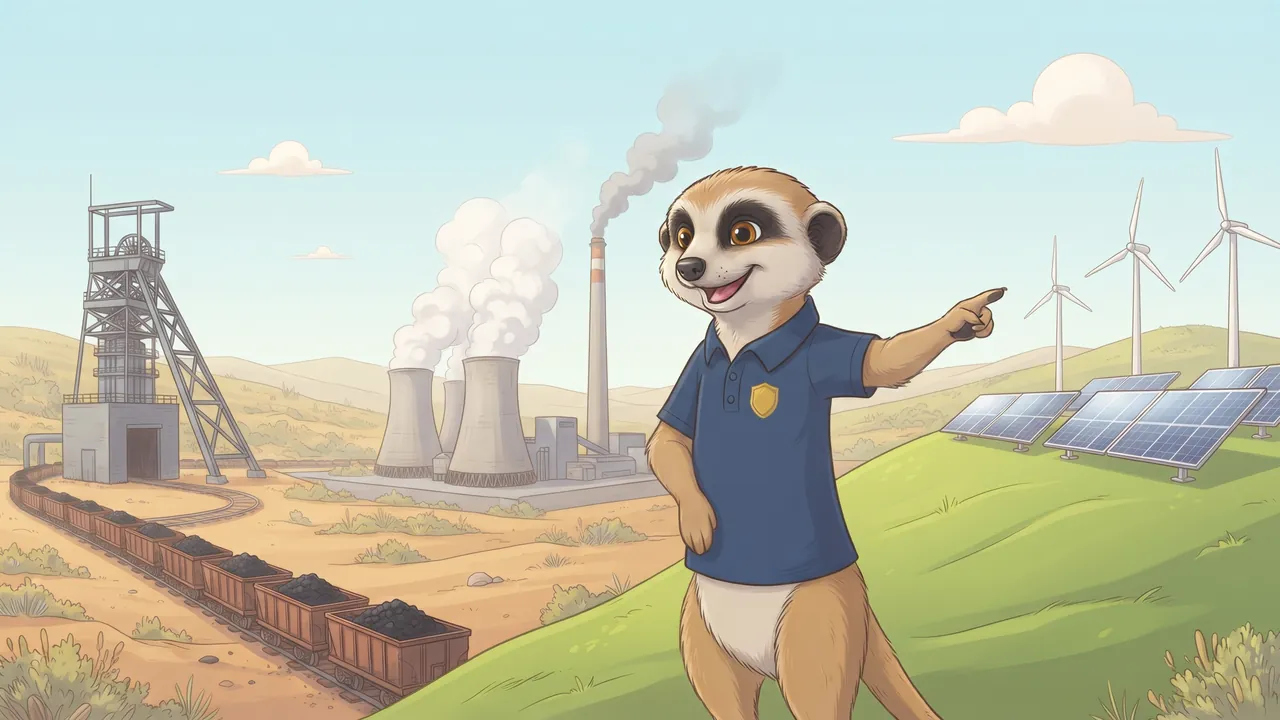
Countries encourage renewable energy because it does not run out and pollutes less. A wind farm gives off no air pollution. South Africa gets lots of sunshine all year, but solar power does not work at night. We are changing only slowly, because existing stations and jobs depend on coal.
Save and be smart
- A filament bulb turns most of its energy into heat instead of light.
- Energy efficiency means less energy is wasted.
- An off-grid house runs on solar panels and batteries, without the national grid.
- A power cut is serious for a hospital: life-support equipment needs power.
Remember this and test yourself
- Most of South Africa’s electricity comes from coal: coal makes steam that turns a turbine.
- Coal pollutes and runs out; carbon dioxide contributes most to global warming.
- Renewable: wind, solar, water (hydro), tidal, geothermal.
- Koeberg near Cape Town is a nuclear power station; uranium is not a fossil fuel.
- At every conversion some energy becomes heat; energy is also lost in the network (transmission loss).
Write these points in your book. Read them again the night before the test.

Most power stations have the same heart: something turns the turbine (steam, wind or water). Solar panels are different: they change sunlight straight into electricity, with no turbine.
Important words
First say what the word means, then turn the card over.
Match column A to column B
Tap a word in column A, then its meaning in column B. You can also start in column B.
True or false?
Read the question and the answer. Is the answer right? Tap True or False.

Now the real quiz!
The quiz has many more questions on this topic. Every question shows straight away whether you are right and explains why.
Take the quiz: Generating electricity- Read one part together and ask your child to tell it back in their own words.
- The ticks (“I know this”) are saved on this device only. We never ask for names or emails.
Follows CAPS for Grade 6 Natural Sciences and Technology. Always check your teacher’s notes and textbook too.