
Energy transfer and rocket systems
Energy chains, input and output, and how a rocket works. Read one part at a time and tap “I know this”. Then test yourself in the quiz.
Know it already? Jump straight to the quiz
Energy chains
- A radio on batteries: chemical → electrical → sound.
- Kick a ball: energy goes from your leg to the ball.
- A wind-up toy car: the energy comes from you, when you wound it up.
Energy cannot be destroyed; it only changes form.
How a rocket works
Fuel burns and becomes hot gases that shoot out at the bottom. The gases push the rocket up. Let go of a blown-up balloon: the air rushes out and pushes the balloon forward, just like a rocket.
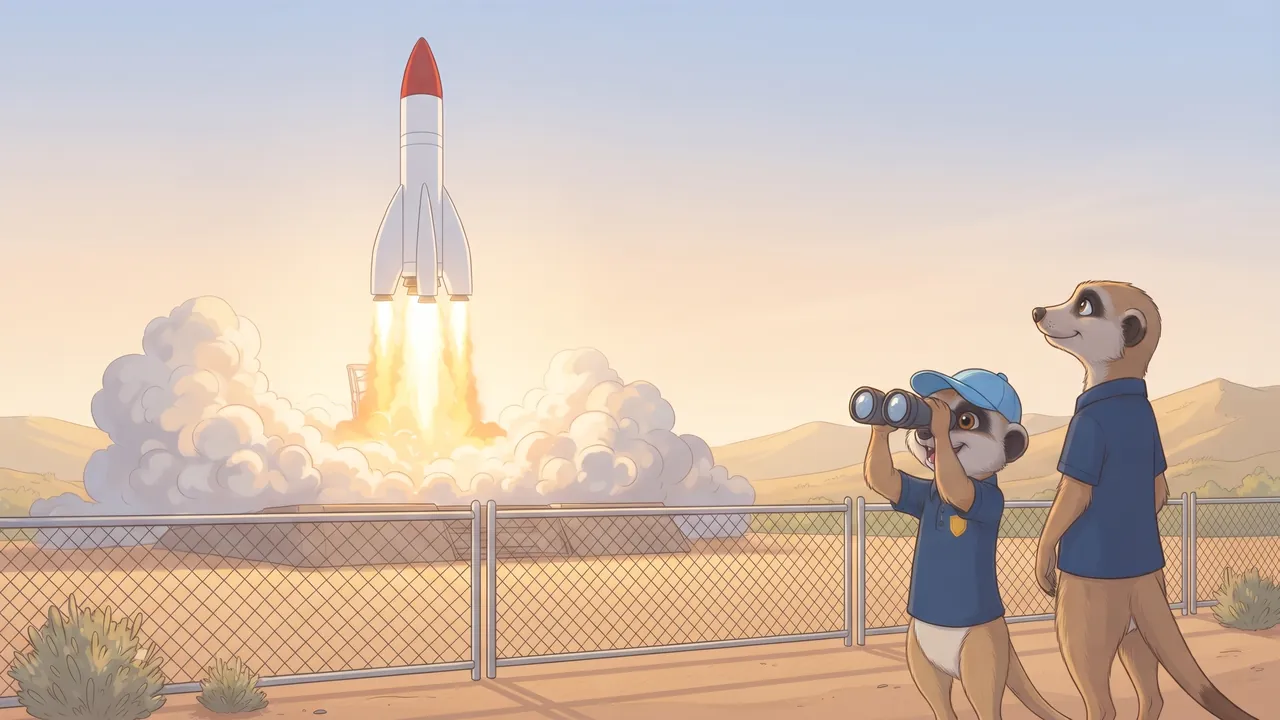
- Chemical energy in the fuel becomes heat and movement.
- A rocket needs a lot of fuel to beat the Earth’s gravity.
- A water-bottle rocket rises because water is forced out the bottom.
- Rockets carry satellites, astronauts and space probes into space. Satellites help with TV, cellphones, weather forecasts and GPS.
- Balloon-rocket test: thread a straw onto a long string, tape a blown-up balloon to the straw and let go. For a fair test you change only the size of the balloon (how much air); the string, straw and tape stay the same.
- A balloon with more air usually travels further, because the air rushes out for longer and pushes it for longer.
People in space
| Who | What |
|---|---|
| Yuri Gagarin | First person in space (1961) |
| Neil Armstrong | First person on the Moon (1969) |
| Mark Shuttleworth | South African in space (2002) |

Launch model rockets only outside, well back, with an adult.
Remember this and test yourself
- An energy chain shows how energy goes from one thing to the next: Sun → grass → cow → person.
- A torch’s input is energy from the batteries; the useful output is light.
- Energy that is not useful, like heat from a light bulb, is wasted energy.
- A rocket rises because hot gases are pushed out below.
- The rocket has a nose cone on top and fins below to fly straight.
Write these points in your book. Read them again the night before the test.

Rocket from top to bottom: nose cuts the air, body carries the fuel, fins keep it straight, flames push it up.
Important words
First say what the word means, then turn the card over.
Match column A to column B
Tap a word in column A, then its meaning in column B. You can also start in column B.
True or false?
Read the question and the answer. Is the answer right? Tap True or False.

Now the real quiz!
The quiz has many more questions on this topic. Every question shows straight away whether you are right and explains why.
Take the quiz: Energy transfer and rocket systems- Read one part together and ask your child to tell it back in their own words.
- The ticks (“I know this”) are saved on this device only. We never ask for names or emails.
Follows CAPS for Grade 4 Natural Sciences and Technology. Always check your teacher’s notes and textbook too.