
Transport on water
Transport on water: from rafts and canoes to sailing ships, steamships and cargo ships. Read one part at a time and tap “I know this”. Then test yourself in the quiz.
Know it already? Jump straight to the quiz
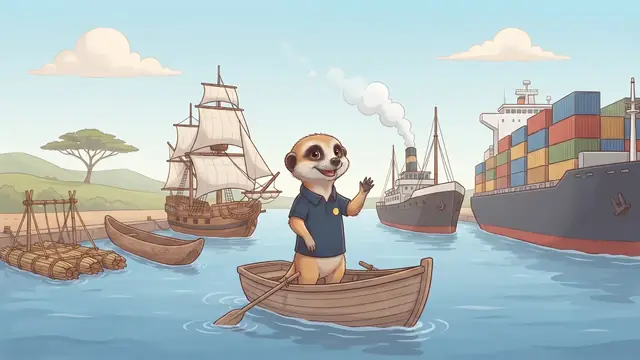
From muscle to engines
People began moving goods over water because boats could carry heavy loads more easily. Centuries ago spices, silk and gold were traded by ship. Trade is the buying and selling of goods. Robert Fulton’s steamboat, the Clermont (1807, USA), was the first successful steamboat service. Steamships did not need wind, so they could keep to a timetable.
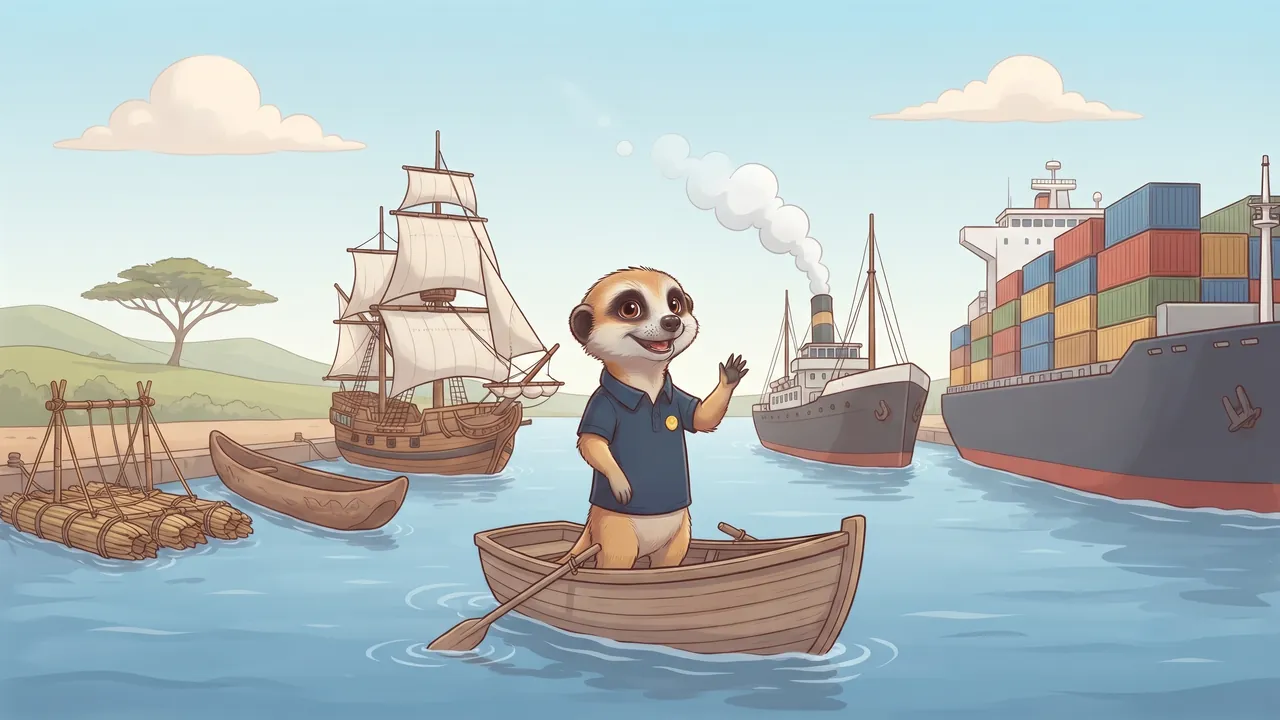
The harbour
- A harbour is where ships dock and load. A crane lifts heavy cargo on and off ships.
- A cargo ship carries goods and runs on oil or diesel.
- Modern vessels: container ships, oil tankers, ferries, cruise ships and tugboats, which pull big ships safely into the harbour.
The first sailing ships
| Ship | What makes it special |
|---|---|
| Chinese junk | Sails with bamboo strips that keep them stiff |
| Arab dhow | A triangular sail; traded across the Indian Ocean |
| Caravel | Small and fast; Portuguese explorers sailed around Africa in it |
| British tall ship | Many masts and sails; could carry large cargoes and many people |
| Clipper | Long, narrow and very fast; raced tea and wool across the sea |
Remember this and test yourself
- A vessel is any boat or ship that carries things over water; the raft is the oldest.
- Canoe and rowing boat: muscle power. Sailing ship: wind in the sail. Then: steam engines.
- A dhow is an Arab sailing ship with triangular sails; a junk is a Chinese sailing ship with ribbed sails.
- An iceberg is dangerous because most of it is hidden below the water. The Titanic, a huge passenger liner, hit an iceberg and sank on its first voyage, from England to New York, in April 1912.
- Most world trade travels by ship today.
Write these points in your book. Read them again the night before the test.

Boats used muscle, wind, steam, oil: like growing up from rowing to riding.
Important words
First say what the word means, then turn the card over.
Match column A to column B
Tap a word in column A, then its meaning in column B. You can also start in column B.
True or false?
Read the question and the answer. Is the answer right? Tap True or False.

Now the real quiz!
The quiz has many more questions on this topic. Every question shows straight away whether you are right and explains why.
Take the quiz: Transport on water- Read one part together and ask your child to tell it back in their own words.
- The ticks (“I know this”) are saved on this device only. We never ask for names or emails.
Follows CAPS for Grade 4 Social Sciences (History). Always check your teacher’s notes and textbook too.