
The telegraph, the typewriter and the computer
The telegraph and Morse code, the typewriter, and how computers became smaller and faster. Read one part at a time and tap “I know this”. Then test yourself in the quiz.
Know it already? Jump straight to the quiz
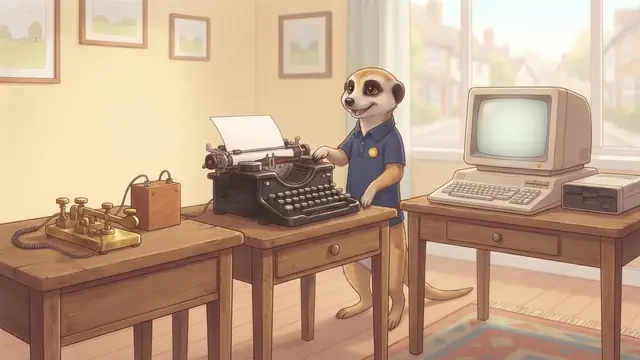
The typewriter
- The “ding!” of the bell: you are nearly at the end of the line. Mistakes were fixed with correction fluid or by retyping.
- Typed letters were neat and easy to read; with carbon paper between two sheets you could make a copy.
- Advantage over a computer: it needs no electricity. The computer and printer replaced it in offices.
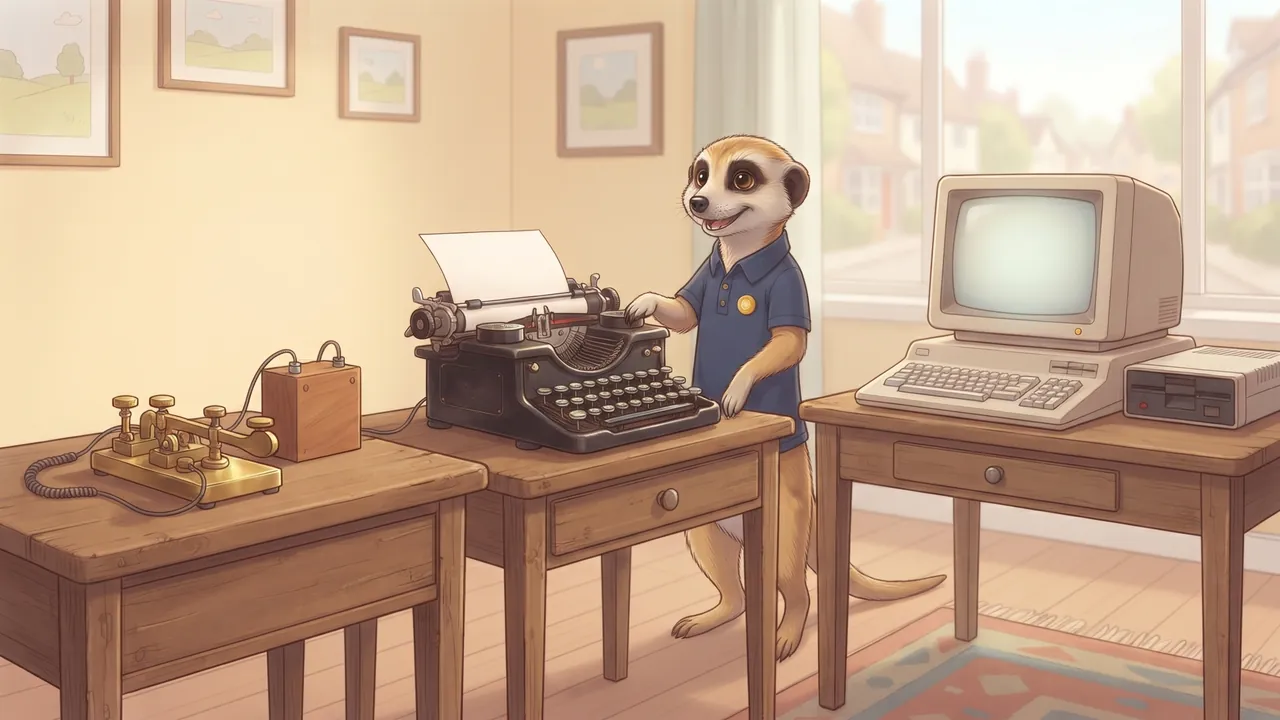
The computer
The first computers were used by big government offices and universities. A personal computer (PC) can be used by one person on a desk. Modern computers are smaller, faster and cheaper, and the internet connects them worldwide. Learners can find facts and type neatly. Order: telegraph, typewriter, personal computer, smartphone.
Remember this and test yourself
- A telegraph operator taps short and long signals on a key; a dot is a short signal. SOS is ··· — — — ···.
- Telegrams were short, because you paid for every word. Wires ran along railway lines, and later a cable on the seabed to Europe.
- Christopher Sholes helped design the first successful typewriter; an ink ribbon puts the ink on the paper.
- Charles Babbage is the “father of the computer”; the first electronic computers (1940s) filled a whole room.
- Keyboard = input device; printer = output device; a smartphone is also a small computer.
Write these points in your book. Read them again the night before the test.

Computers shrank from room to pocket: room-sized, desk, laptop, phone.
Important words
First say what the word means, then turn the card over.
Match column A to column B
Tap a word in column A, then its meaning in column B. You can also start in column B.
True or false?
Read the question and the answer. Is the answer right? Tap True or False.

Now the real quiz!
The quiz has many more questions on this topic. Every question shows straight away whether you are right and explains why.
Take the quiz: The telegraph, the typewriter and the computer- Read one part together and ask your child to tell it back in their own words.
- The ticks (“I know this”) are saved on this device only. We never ask for names or emails.
Follows CAPS for Grade 4 Social Sciences (History). Always check your teacher’s notes and textbook too.