
Songs and dance as communication
Songs, dance, drums and praise poems as ways to pass on messages and history. Read one part at a time and tap “I know this”. Then test yourself in the quiz.
Know it already? Jump straight to the quiz
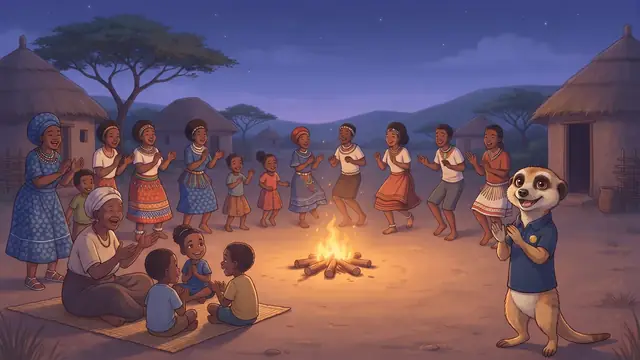
Messages without words
- A dance can act out a story; communities danced at weddings and harvest festivals. After a good harvest a whole village sang and danced.
- We know the San trance dance from the rock art they painted. Indlamu is a Zulu dance with high kicks.
- Ululating (a high trilling sound) shows joy; a lullaby shows love and comfort.

Songs today
Workers sang together to stay in rhythm and cheerful. Freedom songs united people in the struggle against apartheid. In call-and-response singing a leader sings a line and the group answers. Game songs taught children counting, rules and manners. Drawback: songs reach only people nearby and can change; a recording sounds the same every time.
Remember this and test yourself
- Before writing, history was passed on through songs, stories and dance; rhythm and repetition help memory.
- A praise poem (izibongo) praises a leader’s deeds and family; an imbongi performs it.
- Mineworkers developed the gumboot dance: they could not talk, so boot slaps sent signals.
- Each drum rhythm sent a different message far; a loud, fast beat at night could mean danger.
- Nkosi Sikelel’ iAfrika was written by Enoch Sontonga in 1897 and is part of our anthem.
Write these points in your book. Read them again the night before the test.

Before writing a song was a book: rhythm helps you remember.
Important words
First say what the word means, then turn the card over.
Match column A to column B
Tap a word in column A, then its meaning in column B. You can also start in column B.
True or false?
Read the question and the answer. Is the answer right? Tap True or False.

Now the real quiz!
The quiz has many more questions on this topic. Every question shows straight away whether you are right and explains why.
Take the quiz: Songs and dance as communication- Read one part together and ask your child to tell it back in their own words.
- The ticks (“I know this”) are saved on this device only. We never ask for names or emails.
Follows CAPS for Grade 4 Social Sciences (History). Always check your teacher’s notes and textbook too.