
The national electricity supply and conservation of energy
How South Africa generates and distributes electricity, the national grid, load shedding and saving energy. Read one part at a time and tap “I know this”. Then test yourself in the quiz.
Know it already? Jump straight to the quiz
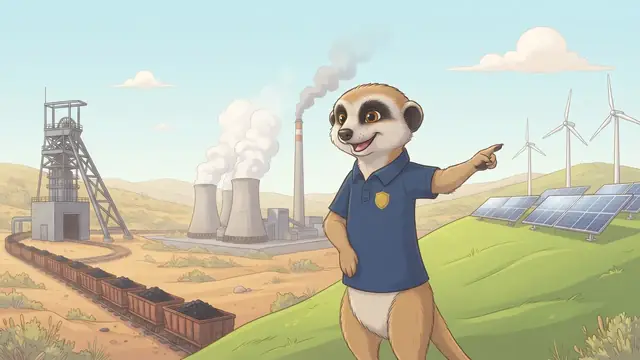
From power station to home
Eskom produces most of South Africa’s electricity. Most coal power stations are in Mpumalanga, close to the coal mines. Thick insulated cables carry electricity safely into homes. A prepaid meter lets you pay for electricity before you use it. Never climb an electricity pylon: the lines can give a deadly shock.
Energy chains
| Power station | Energy chain |
|---|---|
| Coal | Chemical → heat → kinetic (turbine) → electrical |
| Wind | Wind’s kinetic → blades’ kinetic → electrical |
| Hydro | Falling water → turbine → electrical |
| Solar | Light → electrical |
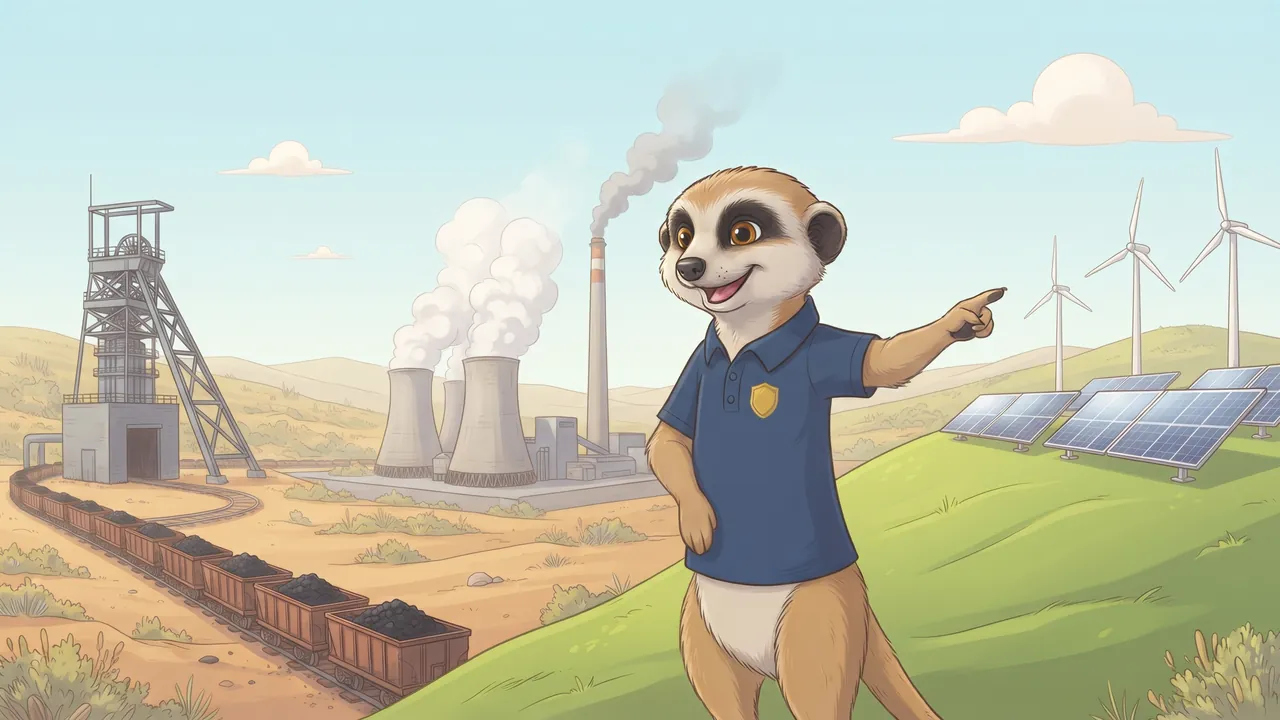
Conservation of energy
- A light bulb uses 100 J and gives 10 J of light: the other 90 J became heat.
- A falling ball: its potential energy becomes kinetic.
- A kettle is designed to change electrical energy into heat.
- Switch off lights when you are not using them.
Remember this and test yourself
- Most of South Africa’s electricity comes from coal-fired power stations; Koeberg near Cape Town is nuclear.
- Steam spins the turbines; the generator changes movement into electricity.
- Step-up transformers raise the voltage (less heat loss); step-down transformers lower it for safe use.
- The national grid is a network of power lines; load shedding is planned power cuts, area by area in turn, when people need more than is produced, so that the whole grid does not collapse.
- In every energy change some always ends up as heat; the total stays the same.
Write these points in your book. Read them again the night before the test.

Step up for the open road (high voltage, little loss). Step down for dropping off at your home (safe voltage).
Important words
First say what the word means, then turn the card over.
Match column A to column B
Tap a word in column A, then its meaning in column B. You can also start in column B.
True or false?
Read the question and the answer. Is the answer right? Tap True or False.

Now the real quiz!
The quiz has many more questions on this topic. Every question shows straight away whether you are right and explains why.
Take the quiz: The national electricity supply and conservation of energy- Read one part together and ask your child to tell it back in their own words.
- The ticks (“I know this”) are saved on this device only. We never ask for names or emails.
Follows CAPS for Grade 7 Natural Sciences. Always check your teacher’s notes and textbook too.