
Properties of materials
The properties of materials, and how boiling point and melting point help identify a substance. Read one part at a time and tap “I know this”. Then test yourself in the quiz.
Know it already? Jump straight to the quiz
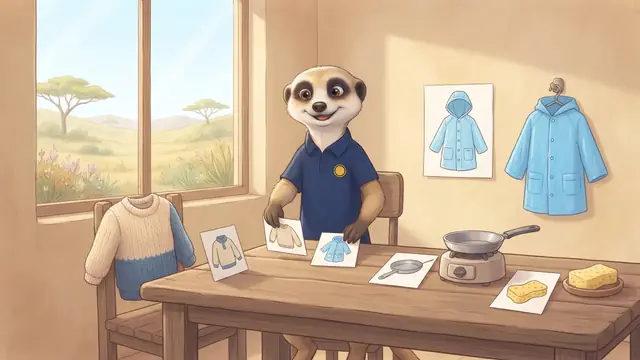
Properties
| Property | Meaning | Use |
|---|---|---|
| Malleable | Can be hammered flat | Gold leaf, aluminium cans |
| Ductile | Can be drawn into wire | Copper wire |
| Elastic | Stretches and returns | Trampoline mat |
| Stiff (rigid) | Does not bend | Bricks for walls |
| Strong | Hard to break or tear | Steel beams in bridges |
| Transparent | Light passes through | Glass windows |
| High thermal conductivity | Conducts heat well | Stainless steel pots |
Choose the right material
- Pots of stainless steel: conduct heat and resist rust. Handles of plastic or wood: poor heat conductors.
- Aluminium for cooldrink cans: light, malleable and does not rust.
- Rubber is a very good electrical insulator; wires in a circuit must have high electrical conductivity.
Boiling points identify substances
The boiling point is the temperature where a liquid becomes a gas. Measure it with a thermometer. If you measure an unknown liquid’s boiling point and look it up in a table, you can tell which substance it is. Ice-cream melts quickly on a hot day because it warms up to its melting point.
Materials and the environment
Making and using materials always affects the environment.
- Mining destroys habitats and can pollute water.
- Burning coal for energy pollutes the air and causes acid rain.
- Making paper means cutting down trees and using lots of water.
- Plastic does not break down for many years and harms animals on land and in the sea.
- We help when we reduce, reuse and recycle.
Remember this and test yourself
- Brittle: breaks easily. Elastic: stretches and springs back. Flexible: bends without breaking. Stiff: does not bend.
- Malleable: can be beaten flat (gold leaf). Ductile: can be drawn into wire.
- Copper: conducts well and makes thin wires; the plastic around it is an insulator.
- Water boils at 100 °C at sea level.
- Each pure substance has its own boiling point and melting point: this helps to identify it.
Write these points in your book. Read them again the night before the test.

Malleable = you can mallet it flat. Ductile = you can duct it into a wire.
Important words
First say what the word means, then turn the card over.
Match column A to column B
Tap a word in column A, then its meaning in column B. You can also start in column B.
True or false?
Read the question and the answer. Is the answer right? Tap True or False.

Now the real quiz!
The quiz has many more questions on this topic. Every question shows straight away whether you are right and explains why.
Take the quiz: Properties of materials- Read one part together and ask your child to tell it back in their own words.
- The ticks (“I know this”) are saved on this device only. We never ask for names or emails.
Follows CAPS for Grade 7 Natural Sciences. Always check your teacher’s notes and textbook too.