
Sources and history
Sources and history: source criticism, bias, the past through others’ eyes, and myths. Read one part at a time and tap “I know this”. Then test yourself in the quiz.
Know it already? Jump straight to the quiz
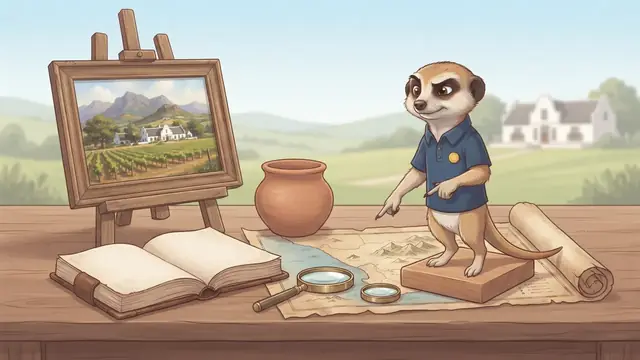
Evaluating sources
| Source | What to remember |
|---|---|
| An excavated gold object | A primary object source |
| A trekker’s diary from 1837 | Primary source on the Great Trek |
| A slave ship’s logbook | Gives figures and dates |
| A photograph | Not always the whole truth: someone chooses the frame |
| A speech or letter | The leader’s own words |
Use more than one source to compare and spot one-sidedness; independent sources that agree make a claim more reliable. Check the date to know if the source is from the time. Two countries tell the same war differently, because each tells its side. Archives keep old documents for researchers; archaeologists study objects and remains.
Time
Remember this and test yourself
- First question for any source: who made it and why? Studying how a source was made is source criticism.
- A slave trader’s register counts people as cargo; a survivor’s testimony tells a life.
- Much African history was long told through European eyes, because Europeans left the written sources.
- A VOC official’s diary about the Khoikhoi shows only the Company’s side.
- A myth or legend is a traditional story about the past that may not be completely true.
Write these points in your book. Read them again the night before the test.

Ask every source the 5 W’s: Who? What? When? Where? Why?
Important words
First say what the word means, then turn the card over.
Match column A to column B
Tap a word in column A, then its meaning in column B. You can also start in column B.
True or false?
Read the question and the answer. Is the answer right? Tap True or False.

Now the real quiz!
The quiz has many more questions on this topic. Every question shows straight away whether you are right and explains why.
Take the quiz: Sources and history- Read one part together and ask your child to tell it back in their own words.
- The ticks (“I know this”) are saved on this device only. We never ask for names or emails.
Follows CAPS for Grade 7 Social Sciences (History). Always check your teacher’s notes and textbook too.