
African towns and cities of the interior, c1700–1820s
Tswana stone-walled towns of the interior (c1700–1820s): Dithakong, Kaditshwene, the kgotla and the Difaqane. Read one part at a time and tap “I know this”. Then test yourself in the quiz.
Know it already? Jump straight to the quiz
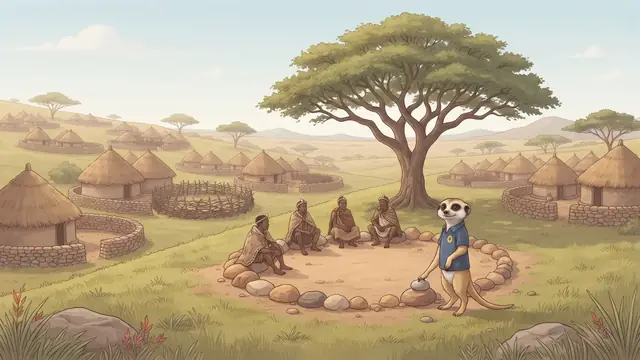
Town life
- A cattle byre stood at the centre of each homestead; bogadi (lobola) is cattle from the groom’s family to the bride’s.
- Women did most of the crop farming: sorghum, millet, beans and melons. Crafts: smithing, pottery, tanning and beadwork; trade in iron tools, copper, skins and grain.
- Towns near a spring or river; firewood, grazing and good soil limited the size. The chief led, judged disputes and united people.
Sources and meaning
Missionaries such as John Campbell wrote about the towns; read them carefully, because visitors misunderstood and had their own aims. Archaeologists study wall foundations, pottery, slag, bones and seeds. Colonial writers long claimed the interior was “empty”, because they came late and ignored the towns. The stonework shows large, planned building: organised towns before colonial rule.
Remember this and test yourself
- Tswana-speaking communities built large stone-walled towns in the 1700s, with stones stacked without mortar.
- Dithakong (near Kuruman, described by John Campbell in 1813) and Kaditshwene (Hurutshe capital, 1820) were large; Kaditshwene had about as many people as Cape Town, or more.
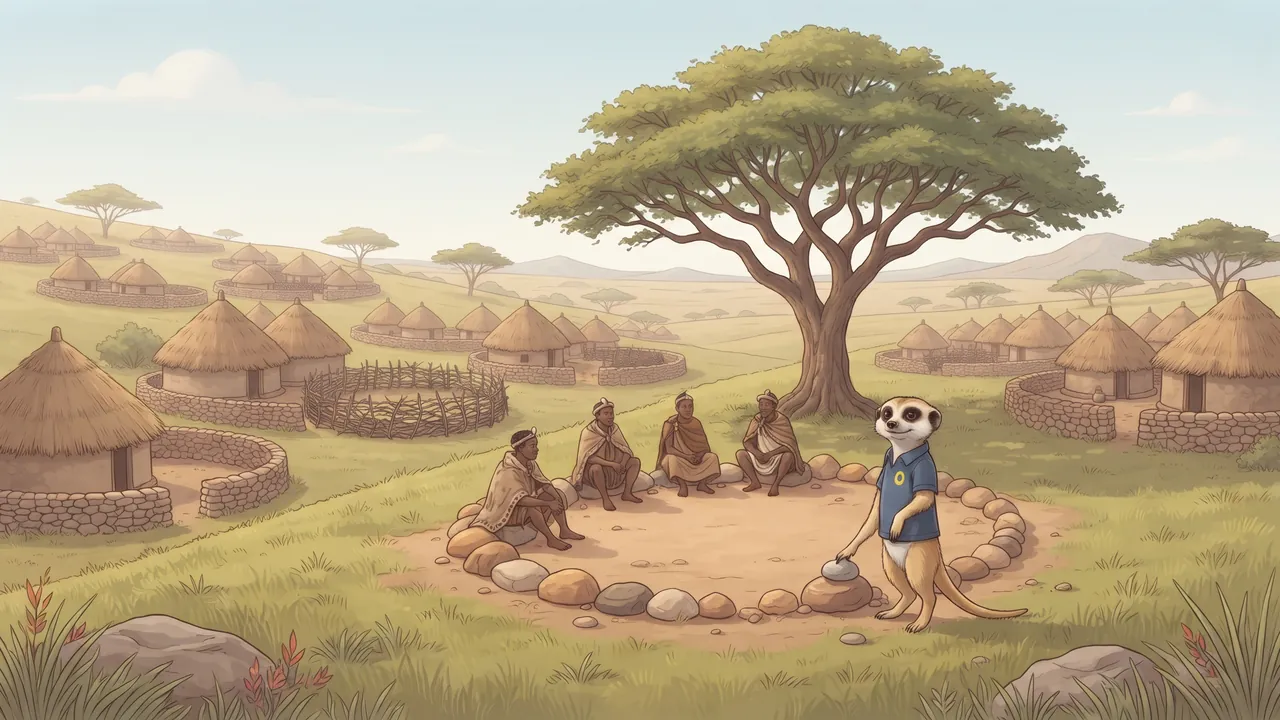
- The kgotla was the public meeting and court place; a big town was divided into wards, each with a headman.
- Marothodi near Pilanesberg shows large-scale iron and copper working.
- The wars of the Difaqane (Mfecane) disrupted many towns in the 1820s.
Write these points in your book. Read them again the night before the test.

The kgotla is the town’s meeting room and court in one: talk, listen, decide.
Important words
First say what the word means, then turn the card over.
Match column A to column B
Tap a word in column A, then its meaning in column B. You can also start in column B.
True or false?
Read the question and the answer. Is the answer right? Tap True or False.

Now the real quiz!
The quiz has many more questions on this topic. Every question shows straight away whether you are right and explains why.
Take the quiz: African towns and cities of the interior, c1700–1820s- Read one part together and ask your child to tell it back in their own words.
- The ticks (“I know this”) are saved on this device only. We never ask for names or emails.
Follows CAPS for Grade 7 Social Sciences (History). Always check your teacher’s notes and textbook too.