
Population change and economic status
How a country’s wealth affects its population: births, life expectancy, migration and the poverty cycle. Read one part at a time and tap “I know this”. Then test yourself in the quiz.
Know it already? Jump straight to the quiz
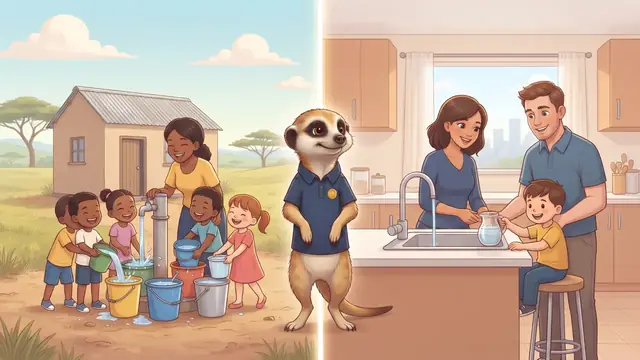
Rich and poor countries
A country’s economic status is how wealthy the country and its people are. We often compare it with the average income per person. Many people without electricity, clean water or jobs is a sign of low economic status.
| Richer countries | Poorer countries |
|---|---|
| Lower birth rate, smaller families | Higher birth rate |
| Higher life expectancy: good care, food and water | More children fall ill and die young |
| Pensions: parents do not need their children’s support | Children help with work and care for parents |
When a poor country’s economy improves, the death rate usually falls first. Japan has many elderly people and few children: few workers must support many pensioners.
Migration and money
Population change = natural increase + immigrants − emigrants. 10 000 + 1 000 − 4 000 = growth of 7 000.
- People from neighbouring countries move to Gauteng to find work and earn more.
- When young adults move to the city, children and elderly people stay behind in the village. Migrant workers send money home for food, school fees and health care.
- A brain drain is when skilled people, such as doctors, emigrate. The country loses doctors, teachers and engineers.
The poverty cycle
The poverty cycle: poor families cannot pay for school, so the children also stay poor. Education helps break the cycle, because educated people get better-paid jobs. In a city children cost a lot (school fees, transport, housing), so families there usually have fewer children.
Remember this and test yourself
- Economic status is how wealthy a country and its people are; we compare the average income per person.
- Richer countries: lower birth rate, higher life expectancy. Poorer countries with a falling death rate grow fastest.
- Population change = natural increase + immigration − emigration: 10 000 + 1 000 − 4 000 = 7 000.
- A brain drain is when skilled people emigrate; migrant workers send money home.
- The poverty cycle: poor families cannot pay for school, so the children also stay poor. Education breaks it.
Write these points in your book. Read them again the night before the test.

The poverty cycle breaks at the school door.
Important words
First say what the word means, then turn the card over.
Match column A to column B
Tap a word in column A, then its meaning in column B. You can also start in column B.
True or false?
Read the question and the answer. Is the answer right? Tap True or False.

Now the real quiz!
The quiz has many more questions on this topic. Every question shows straight away whether you are right and explains why.
Take the quiz: Population change and economic status- Read one part together and ask your child to tell it back in their own words.
- The ticks (“I know this”) are saved on this device only. We never ask for names or emails.
Follows CAPS for Grade 7 Social Sciences (Geography). Always check your teacher’s notes and textbook too.