
Conservation and sustainability
Sustainability and conservation, climate change, reduce-reuse-recycle, and rivers as a resource. Read one part at a time and tap “I know this”. Then test yourself in the quiz.
Know it already? Jump straight to the quiz
Living sustainably
Sustainability means meeting today’s needs without harming tomorrow. Conservation means protecting resources and using them wisely. Your total impact on the Earth is your ecological footprint.
- Reuse: an empty jar to store buttons; a reusable bag means less plastic waste.
- Switch appliances off at the wall: on standby they still draw power.
- Buy local food, make compost and recycle water.
Climate change
Burning fossil fuels releases the most greenhouse gases, and in South Africa electricity from coal is the largest source. The result is global warming: more extreme droughts and floods, and unpredictable rainfall for farmers. Clean energy, such as solar and wind power, releases almost no greenhouse gases while it makes electricity.
An environmental impact assessment (EIA) is a legal requirement to limit harm in advance.
Protect the soil
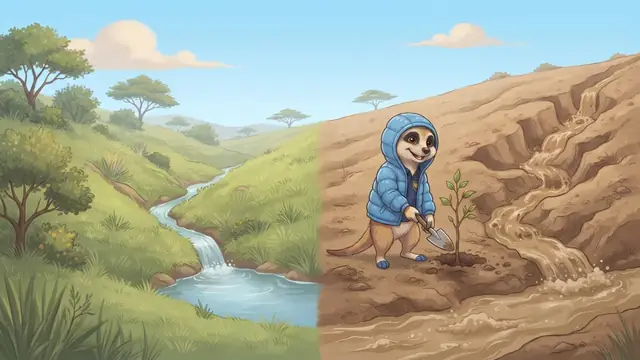
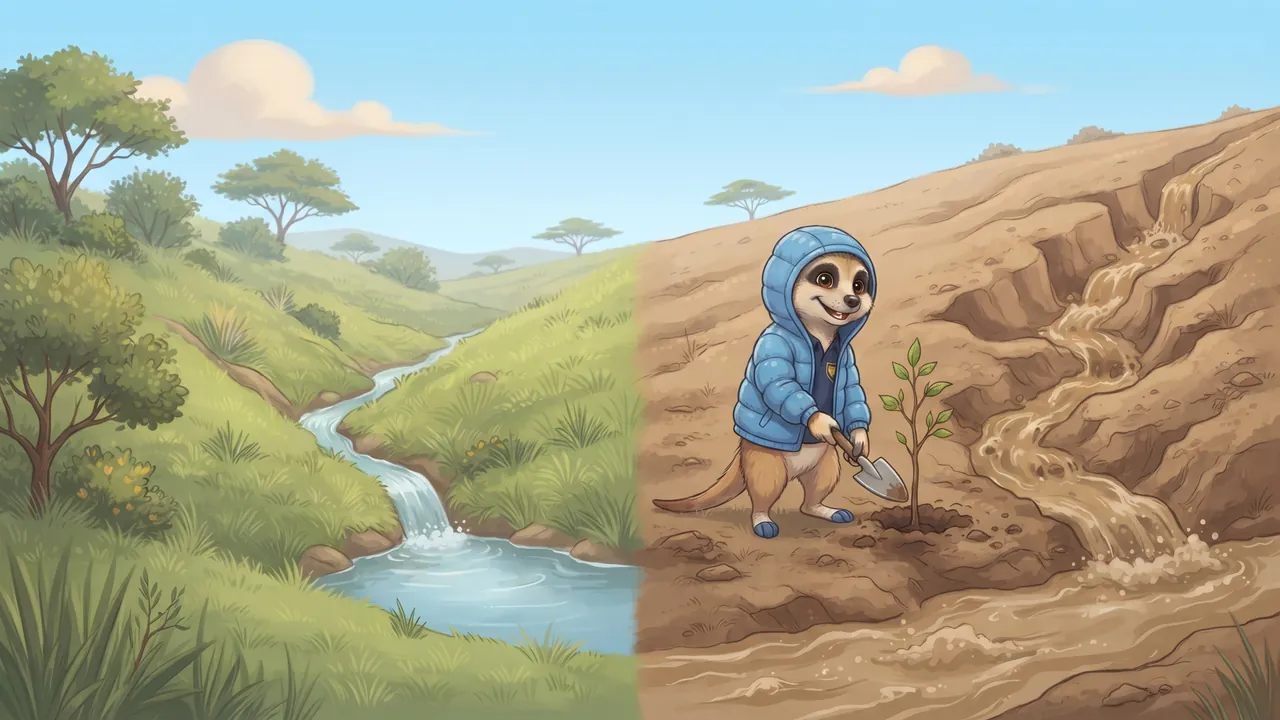
- Soil erosion: the fertile topsoil washes away. Keep plant cover on the land.
- Contour ploughing follows the slope’s contours and slows water running down.
- Desertification is the loss of vegetation leading to desert conditions.
- The Cape Floral Region is a World Heritage Site because of its special plants.
Rivers as a resource
A river basin is all the land that drains into one river. The high ground between two river basins is the watershed. A river’s discharge is the volume of water passing a point each second. The Nile is Africa’s longest river, but the Congo carries the most water.
Remember this and test yourself
- Sustainability: meeting today’s needs without harming tomorrow. Conservation: protecting and using resources wisely.
- Electricity from coal is South Africa’s largest source of greenhouse gas; it leads to more extreme droughts and floods.
- Reduce first, then reuse (an empty jar for buttons), then recycle.
- Contour ploughing slows water running down the slope; desertification is loss of vegetation leading to desert conditions.
- A river basin is all the land that drains into one river; the Congo carries the most water, the Nile is the longest.
Write these points in your book. Read them again the night before the test.

Best first: reduce (use less), then reuse, and only then recycle.
Important words
First say what the word means, then turn the card over.
Match column A to column B
Tap a word in column A, then its meaning in column B. You can also start in column B.
True or false?
Read the question and the answer. Is the answer right? Tap True or False.

Now the real quiz!
The quiz has many more questions on this topic. Every question shows straight away whether you are right and explains why.
Take the quiz: Conservation and sustainability- Read one part together and ask your child to tell it back in their own words.
- The ticks (“I know this”) are saved on this device only. We never ask for names or emails.
Follows CAPS for Grade 7 Social Sciences (Geography). Always check your teacher’s notes and textbook too.