
Sectors, economic growth and VAT
Formal and informal businesses, economic growth, and how to calculate VAT. Read one part at a time and tap “I know this”. Then test yourself in the quiz.
Know it already? Jump straight to the quiz

Formal and informal
| Formal | Informal | |
|---|---|---|
| Registered? | Yes, and pays tax | No |
| Bank loan | Easier to borrow and grow | Struggles to borrow |
| Example | A supermarket | Vetkoek at the taxi rank |
A retail business sells directly to the public; a manufacturing business turns raw materials into finished products.
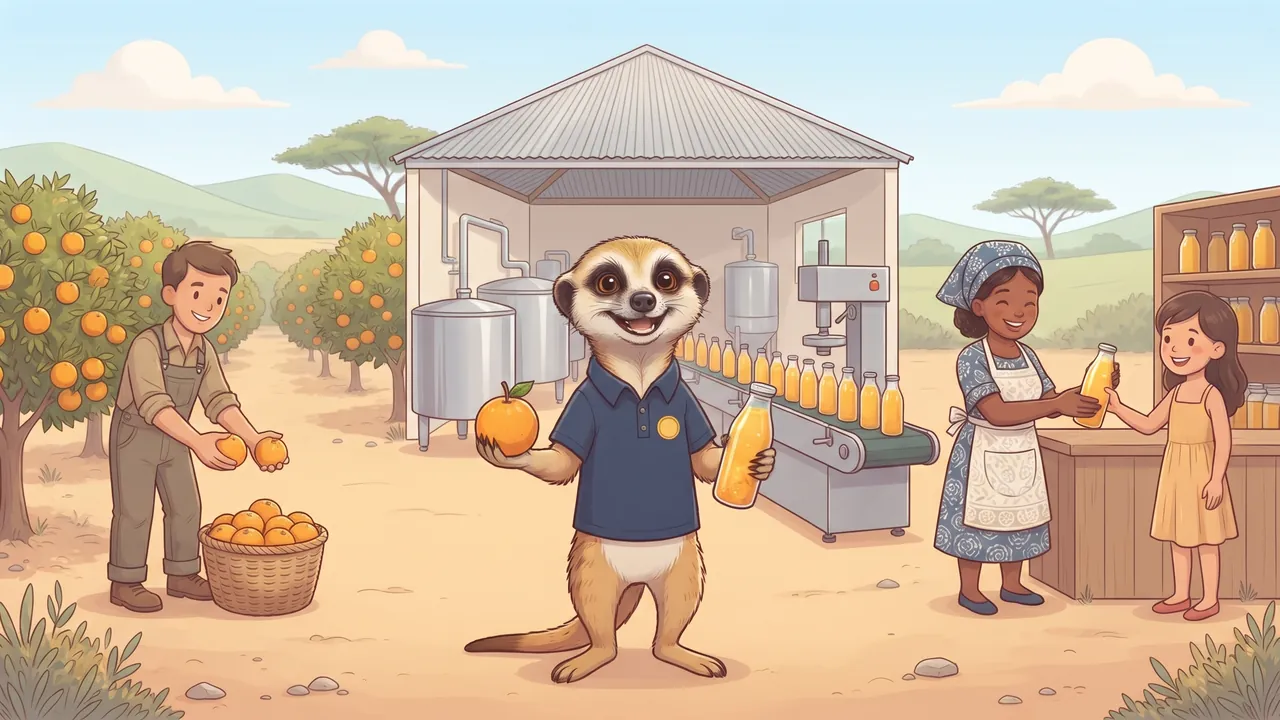
Economic growth
- Government helps growth by building roads, schools and power stations.
- Banks help growth by lending money to businesses.
- Technology raises productivity: more is made in the same time.
- When one sector collapses, the sectors that depend on it suffer too.
- A growing economy creates jobs for young people.
Calculating VAT
| What you want to know | How | Example |
|---|---|---|
| VAT on a price without VAT | price × 15 ÷ 100 | R1 200 → R180 VAT |
| Price with VAT | price × 115 ÷ 100 | R80 → R92 |
| VAT inside a price with VAT | price × 15 ÷ 115 | R69 → R9 VAT |
| Price without VAT | price × 100 ÷ 115 | R92 → R80 |
When VAT is already included, the full price is 115 parts: that is why 15/115 and not 15/100.
Businesses as producers and consumers
| Type | Formal | Informal |
|---|---|---|
| Trading (buys and resells) | A supermarket | A street vendor selling fruit |
| Manufacturing (makes products) | A bread factory | Someone who sews clothes at home and sells them |
| Service (does work for customers) | A bank | A hairdresser working from home |
Every business is a producer: it makes goods or provides services for customers. It is also a consumer: it buys goods and services from other businesses. A vetkoek seller (informal) buys flour and oil from a wholesaler (formal) and sells vetkoek to taxi passengers. In this way formal and informal businesses depend on each other.
Remember this and test yourself
- A formal business is registered and pays tax; an informal one is not (vetkoek at the taxi rank).
- Positive growth: the country produces more than last year. Negative growth: jobs are lost.
- VAT (value added tax) is 15% in South Africa; the buyer finally pays it.
- Add VAT: price × 15 ÷ 100. R200 → R30 VAT → R230.
- Take out VAT when it is included: price × 15 ÷ 115. R69 → R9 VAT.
Write these points in your book. Read them again the night before the test.

Add VAT: × 15/100. Take out VAT: × 15/115. Is VAT already in the price? Then the price is 115 parts.
Important words
First say what the word means, then turn the card over.
Match column A to column B
Tap a word in column A, then its meaning in column B. You can also start in column B.
True or false?
Read the question and the answer. Is the answer right? Tap True or False.

Now the real quiz!
The quiz has many more questions on this topic. Every question shows straight away whether you are right and explains why.
Take the quiz: Sectors, economic growth and VAT- Read one part together and ask your child to tell it back in their own words.
- The ticks (“I know this”) are saved on this device only. We never ask for names or emails.
Follows CAPS for Grade 7 Economic and Management Sciences (EMS). Always check your teacher’s notes and textbook too.