
Vasco da Gama and the sea route to the East
Vasco da Gama’s voyage to India, spices, scurvy, monsoon winds and the results of the sea route. Read one part at a time and tap “I know this”. Then test yourself in the quiz.
Know it already? Jump straight to the quiz
The voyage
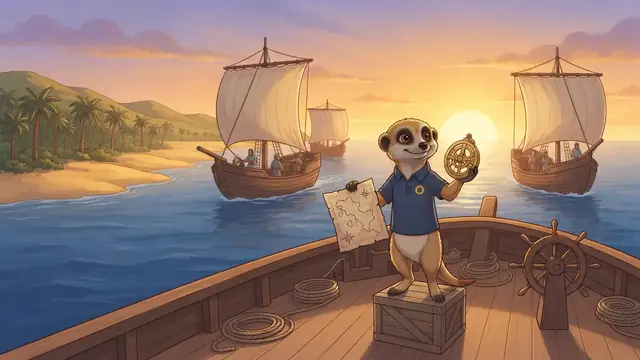
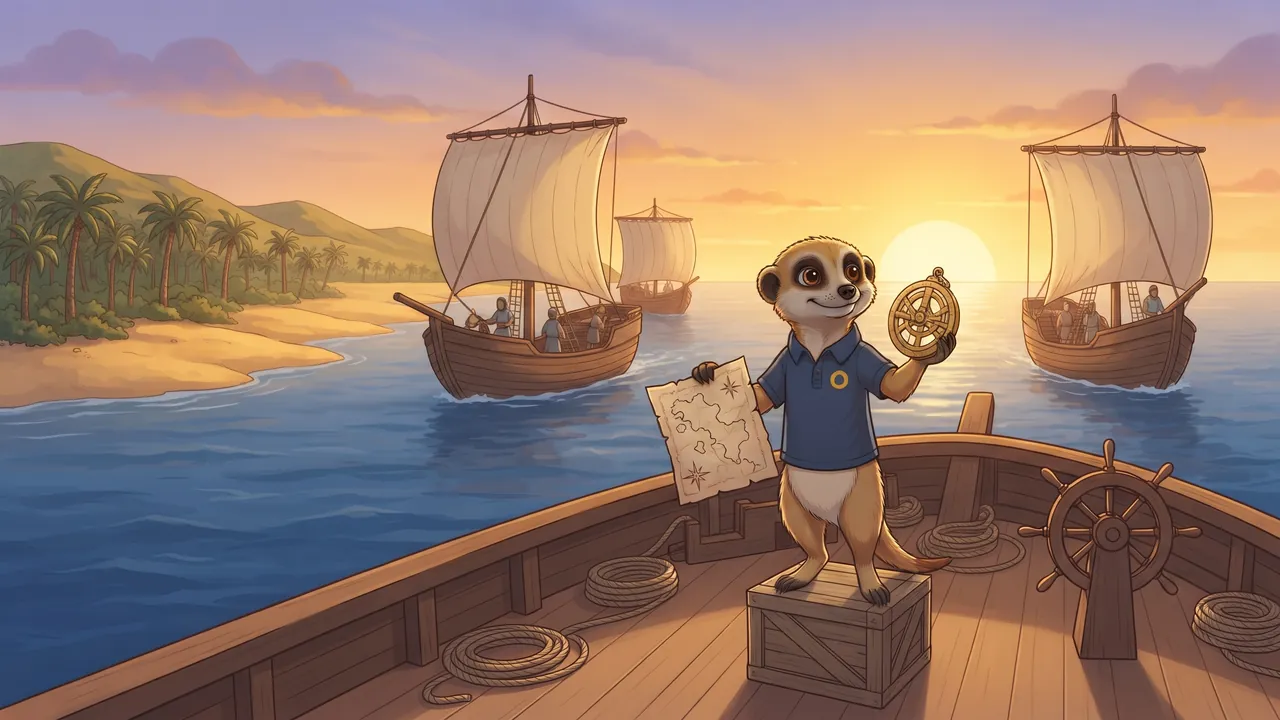
- The compass shows direction; the astrolabe works out how far north or south you are.
- Da Gama’s charts made the route easier for later sailors. An explorer travels to learn about new places.
- November 1497: at St Helena Bay he met Khoikhoi; at first they traded, then a fight broke out.
- At Mossel Bay his men traded with the Khoikhoi for cattle.
- Christmas 1497: he named the east coast Natal (Portuguese for Christmas).
- He stopped at Mozambique, Mombasa and Malindi; at Malindi a local pilot guided him across the Indian Ocean to Calicut.
Results
The voyages “made the world smaller”: far places were linked by trade. But there was also violence and the loss of land.
- Portugal took control of much of the spice trade and built forts and trading posts along the coasts of Africa and India.
- The Portuguese took over Swahili ports such as Kilwa and Mombasa by force, and the old Indian Ocean trade was disrupted.
- Later the Dutch, English and French also sailed this route. The Cape became a stopping place, and in time the Khoikhoi lost land and cattle.
The VOC and life on a ship
The VOC (Dutch East India Company) was founded in the Netherlands in 1602. It was a big trading company that sent ships to Batavia (now Jakarta in Indonesia) to buy spices. A voyage took about eight months. Because the Cape lies halfway, the VOC started a refreshment station here in 1652 under Jan van Riebeeck: fresh water, vegetables and meat for the ships.
- Men and young boys slept in small, stuffy spaces, along with rats and lice.
- Food: hard ship’s biscuit, salted meat and dried peas; the drinking water in the barrels went bad.
- Without fresh fruit many got scurvy, and many sailors died at sea.
- Sailors worked in four-hour shifts (watches); the ship’s bell rang every half hour.
- The rules were strict and the punishments harsh.
Remember this and test yourself
- Da Gama sailed for Portugal from Lisbon in July 1497 and reached Calicut (India) in May 1498, about ten months later. The whole voyage there and back took about two years (1497–1499).
- Portugal wanted to buy spices (pepper, cinnamon) without middlemen; spices were expensive because they travelled far through many traders.
- Scurvy comes from a lack of vitamin C; storms, illness and no fresh water were dangers.
- Local pilots who knew the winds guided them across the Indian Ocean; a monsoon changes direction with the seasons.
- Portugal grew rich and built trading posts and forts; the old overland routes lost trade.
Write these points in your book. Read them again the night before the test.

Left ’97, arrived ’98: Da Gama’s voyage jumps from one year to the next.
Important words
First say what the word means, then turn the card over.
Match column A to column B
Tap a word in column A, then its meaning in column B. You can also start in column B.
True or false?
Read the question and the answer. Is the answer right? Tap True or False.

Now the real quiz!
The quiz has many more questions on this topic. Every question shows straight away whether you are right and explains why.
Take the quiz: Vasco da Gama and the sea route to the East- Read one part together and ask your child to tell it back in their own words.
- The ticks (“I know this”) are saved on this device only. We never ask for names or emails.
Follows CAPS for Grade 6 Social Sciences (History). Always check your teacher’s notes and textbook too.