
Indian Ocean trade: Swahili, dhows and sacred kings
Indian Ocean trade: Swahili traders, dhows and monsoon winds, and sacred kingship at Mapungubwe. Read one part at a time and tap “I know this”. Then test yourself in the quiz.
Know it already? Jump straight to the quiz
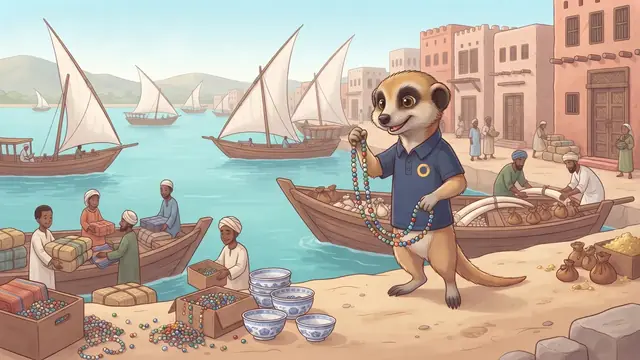
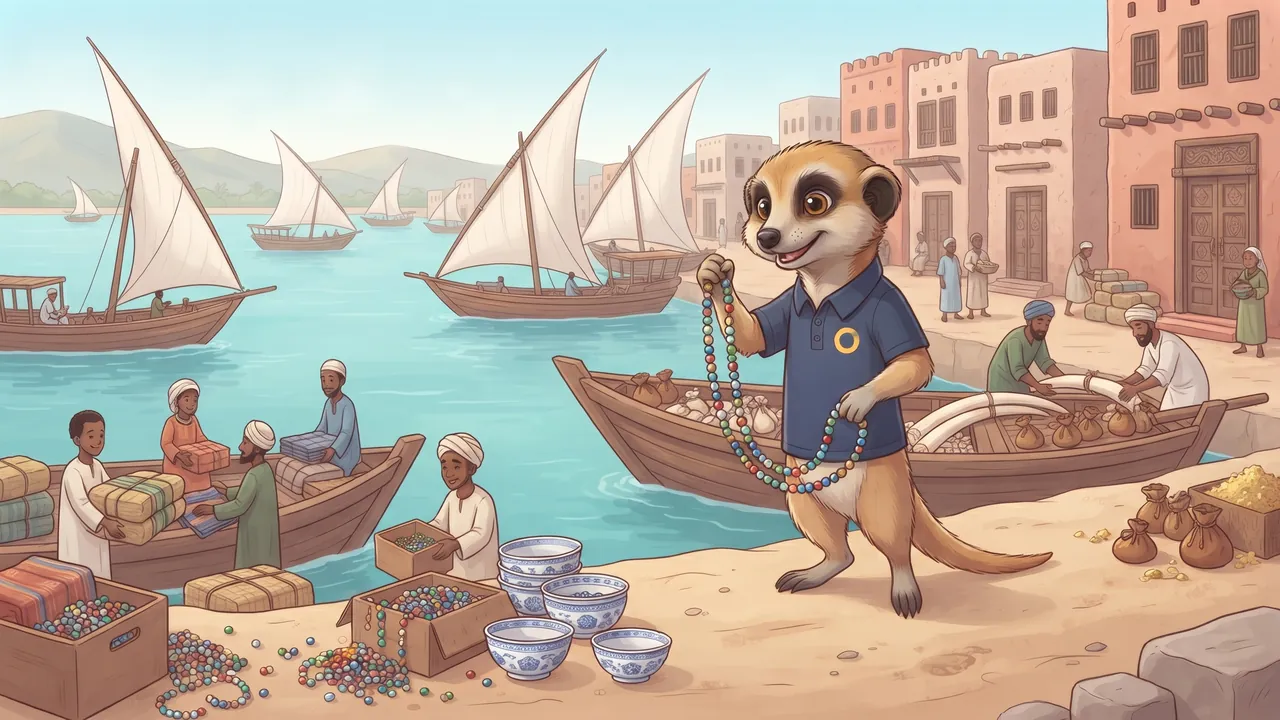
The trade network
| Exports from the interior | Imports from overseas |
|---|---|
| Gold and ivory | Glass beads, cloth and porcelain |
Chinese porcelain at Mapungubwe proves trade with far lands. The Silk Road was an old land route from China. Globalisation: countries linked through trade and ideas. Europeans used pepper to flavour and preserve food. When Da Gama sailed up the east coast he found busy ports run by Swahili traders. A caravel is a small, fast Portuguese ship; a compass needle points north.
The Order of Mapungubwe
The Order of Mapungubwe is South Africa’s highest award; Nelson Mandela was the first to receive it, in 2002.
Remember this and test yourself
- Order in the Limpopo valley: Schroda → K2 → Mapungubwe Hill.
- Sacred leadership: the king lived on top, closer to the ancestors, whom he was believed to speak to.
- The Swahili were traders on Africa’s east coast; their language, Swahili, is an African language with many Arabic words. Kilwa (island off Tanzania) grew rich from gold.
- A dhow has a triangular sail. From about November to March the north-east monsoon blows dhows from Arabia and India to East Africa; from about April to September the south-west monsoon blows them back home.
- After Mapungubwe, Great Zimbabwe (stone walls without cement) rose: two different places.
Write these points in your book. Read them again the night before the test.

The monsoon is a two-way street: out on one wind, home on the other.
Important words
First say what the word means, then turn the card over.
Match column A to column B
Tap a word in column A, then its meaning in column B. You can also start in column B.
True or false?
Read the question and the answer. Is the answer right? Tap True or False.

Now the real quiz!
The quiz has many more questions on this topic. Every question shows straight away whether you are right and explains why.
Take the quiz: Indian Ocean trade: Swahili, dhows and sacred kings- Read one part together and ask your child to tell it back in their own words.
- The ticks (“I know this”) are saved on this device only. We never ask for names or emails.
Follows CAPS for Grade 6 Social Sciences (History). Always check your teacher’s notes and textbook too.