
European explorers
European explorers: why they sailed, Dias and Da Gama, their instruments and the consequences. Read one part at a time and tap “I know this”. Then test yourself in the quiz.
Know it already? Jump straight to the quiz
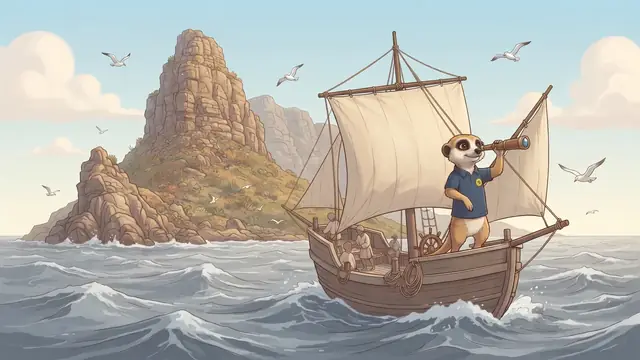
At sea
| Instrument or word | What it does or is |
|---|---|
| Compass | Shows direction |
| Astrolabe | Works out the latitude (how far north or south) |
| Hourglass | Measures time on board |
| Navigator | Plans the route; sailors learnt to use winds and currents |
| Ship’s log | The captain’s notes: a primary source |
| Padrão | A stone pillar topped with a cross, put up by Portuguese explorers to mark places and claim them for Portugal (Dias put one up at Kwaaihoek in 1488) |
Sailors got scurvy from a lack of fresh fruit. Portugal kept its sea maps secret so rivals could not use the route. The Post Office Tree at Mossel Bay was used to leave letters for other ships. Christopher Columbus sailed west from Spain in 1492 and reached the Americas.
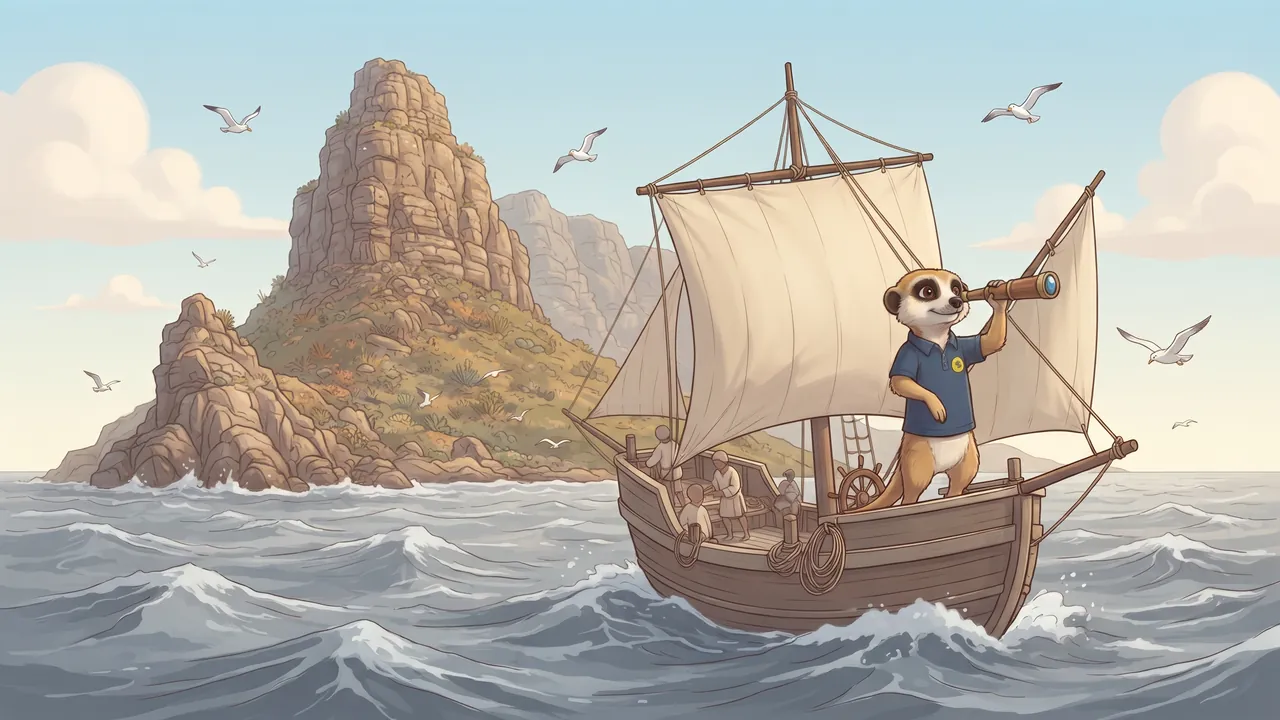
Consequences
Indigenous people’s land and way of life were disrupted. We use the word “discover” carefully, because people already lived there.
Dias and the Khoikhoi, 1488
Dias left Lisbon in 1487. In a storm his ships sailed around the southern tip of Africa without seeing land. In February 1488 they landed at Mossel Bay to get fresh water, and met Khoikhoi herders with their cattle there. Nobody understood the other’s language. When the sailors took water from the spring without asking, the Khoikhoi tried to chase them away, and the meeting ended in a fight.
Dias sailed to near the Great Fish River before his tired crew forced him to turn back. On the way back he saw the Cape and called it the Cape of Storms; the king of Portugal later named it the Cape of Good Hope.
Why Europe could now explore
| Reason | What it means |
|---|---|
| Religion | Portugal wanted to spread the Christian faith to new lands |
| Trade and profit | Buying spices, silk and gold without middlemen |
| Fame and power | Kings wanted to make their countries great and rich |
| Curiosity | People wanted to know what lay beyond the lands and seas they knew |
| Costly land routes | Spices came overland through many middlemen: Arab and Venetian merchants, and after 1453 also the Ottoman Turks, who had taken Constantinople. Each one pushed up the price. A sea route around Africa would let Portugal buy directly |
| New knowledge | Maps, mathematics and astronomy; much of it came from the Arab world, such as the numerals 0 to 9 (first from India) and better astrolabes |
| Inventions | Gunpowder and the magnetic compass were invented in China and reached Europe along trade routes |
| The caravel | A small, fast ship; its triangular sail was borrowed from the Arab dhow, so it could sail at an angle into the wind |
The Renaissance brought new ideas, and many of them came from elsewhere.
Remember this and test yourself
- Europe wanted a sea route to the East for spices and silk, without middlemen.
- Portugal was first; Prince Henry the Navigator paid for voyages; they used the caravel.
- Bartolomeu Dias landed at Mossel Bay in 1488, met Khoikhoi herders and called the Cape the “Cape of Storms”.
- Vasco da Gama completed the sea route to India.
- Later, in 1652, the Dutch (VOC) started a refreshment station at the Cape, where passing ships could get fresh water, vegetables and meat. The Portuguese did not settle at the Cape.
Write these points in your book. Read them again the night before the test.

Dias = Did it first: sailed round the Cape (1488). Gama = Got to India (1498).
Important words
First say what the word means, then turn the card over.
Match column A to column B
Tap a word in column A, then its meaning in column B. You can also start in column B.
True or false?
Read the question and the answer. Is the answer right? Tap True or False.

Now the real quiz!
The quiz has many more questions on this topic. Every question shows straight away whether you are right and explains why.
Take the quiz: European explorers- Read one part together and ask your child to tell it back in their own words.
- The ticks (“I know this”) are saved on this device only. We never ask for names or emails.
Follows CAPS for Grade 6 Social Sciences (History). Always check your teacher’s notes and textbook too.