
Democracy, rights and national symbols
Democracy and elections, the Children’s Charter and children’s rights, activists and judges, and the flag and coat of arms. Read one part at a time and tap “I know this”. Then test yourself in the quiz.
Know it already? Jump straight to the quiz
Children’s rights and responsibilities
| Right | Responsibility |
|---|---|
| Education | Go to school and work hard |
| Safety | Don’t hurt or tease others |
| Giving your opinion | Listen to others too |
| Food and shelter | Don’t waste food; help at home |
| Basic health care | Wash hands and stay clean |
From birth every child has the right to a name and nationality, and protection from work that harms health or schooling. The best interests of the child come first. The UN Convention on the Rights of the Child protects children in almost every country. Include a child who is left out.
Laws, judges and activists
- Rules and laws protect everyone’s rights equally. A constitutional judge checks that laws follow the Constitution and protects rights against unfair laws.
- An activist works actively for change and brings injustice to public attention.
- Unity and diversity: people differ but belong together. The flag stands for unity and diversity.
Two builders of our democracy
| Fatima Meer | Pius Langa | |
|---|---|---|
| Born | 1928 in Durban | 1939 in Bushbuckridge, Mpumalanga |
| Work | Sociologist and lecturer at the University of Natal; writer | Worked by day and studied law part-time; advocate who worked for human rights |
| Contribution | Fought apartheid; helped found the Federation of South African Women (1954); started education projects; wrote the first authorised life story of Nelson Mandela | One of the first judges of the Constitutional Court (1994); Chief Justice 2005–2009; protected equality before the law |
| Challenge | The apartheid government banned her: she could not travel freely or address groups | Had to work and study at the same time for years |
Our national symbols since 1994
| Symbol | What to know |
|---|---|
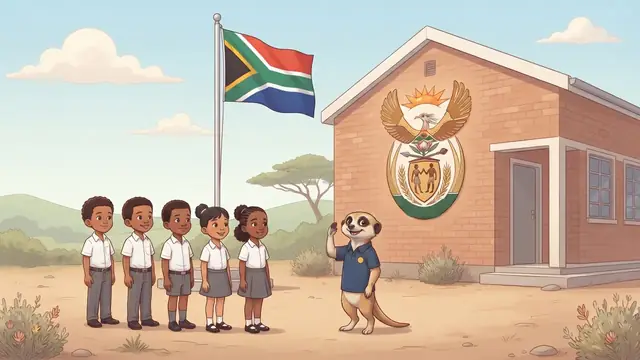
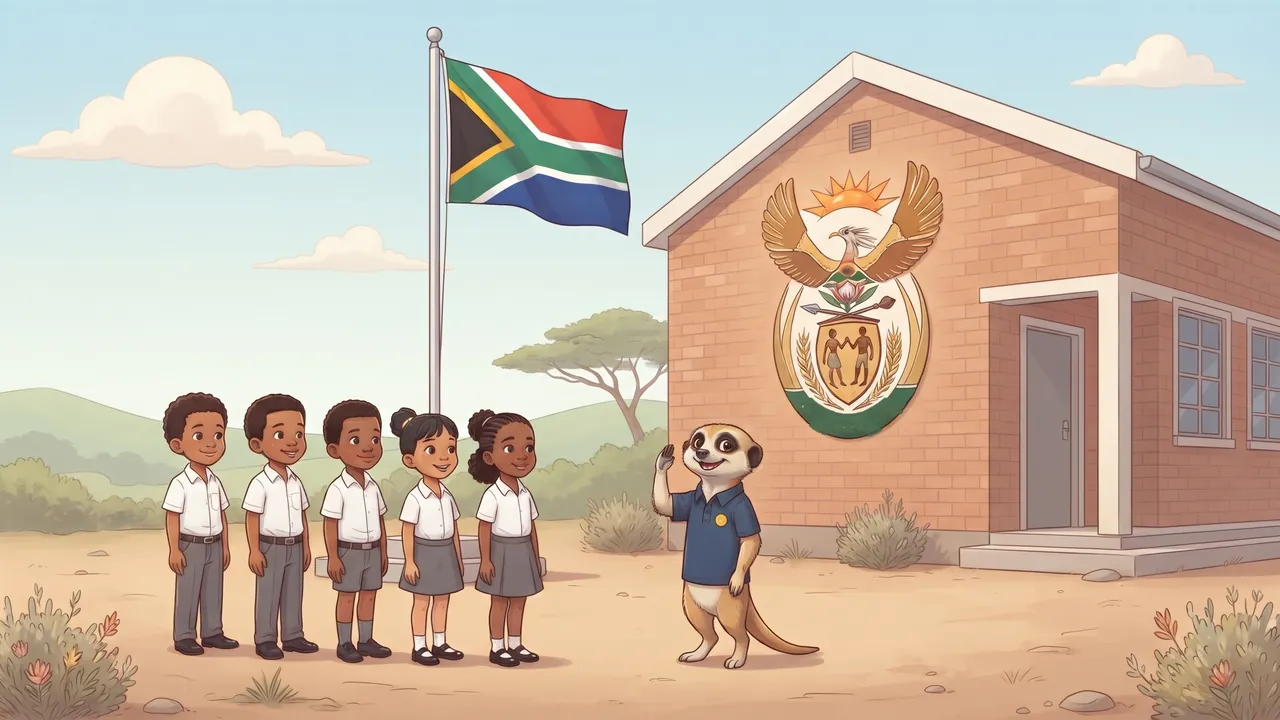
| National flag | First raised on 27 April 1994; designed by Frederick Brownell. The Y shape shows different groups coming together and moving forward together. The colours have no official meaning. |
| Coat of arms | Since 27 April 2000. The rising sun (life and light), the secretary bird with spread wings (protection), the protea (beauty), ears of wheat (growth and food), elephant tusks (wisdom and strength), a shield with two Khoisan figures greeting each other (unity), and a spear and knobkierie laid down (peace). |
| National anthem | Since 1997 one song: parts of Nkosi Sikelel’ iAfrika (written by Enoch Sontonga in 1897) and Die Stem van Suid-Afrika (words by C.J. Langenhoven), in five languages. |
Remember this and test yourself
- A political party is a group with shared ideas; parties get seats in Parliament in proportion to their votes.
- Citizenship: belonging to a country. Any citizen who meets the rules may stand for election.
- The Children’s Charter (1992, drawn up by children) and Section 28 of the Bill of Rights protect children (under 18).
- Pius Langa was Chief Justice of the Constitutional Court from 2005 to 2009; Fatima Meer an activist and academic who fought for justice.
- Flag 1994, coat of arms 2000; the motto is in a San language to honour the oldest inhabitants.
Write these points in your book. Read them again the night before the test.

Section 28 is for children: think of a child who talks at 2 and reads at 8.
Important words
First say what the word means, then turn the card over.
Match column A to column B
Tap a word in column A, then its meaning in column B. You can also start in column B.
True or false?
Read the question and the answer. Is the answer right? Tap True or False.

Now the real quiz!
The quiz has many more questions on this topic. Every question shows straight away whether you are right and explains why.
Take the quiz: Democracy, rights and national symbols- Read one part together and ask your child to tell it back in their own words.
- The ticks (“I know this”) are saved on this device only. We never ask for names or emails.
Follows CAPS for Grade 6 Social Sciences (History). Always check your teacher’s notes and textbook too.