
Natural resources
Renewable and non-renewable resources, and how we use them sustainably. Read one part at a time and tap “I know this”. Then test yourself in the quiz.
Know it already? Jump straight to the quiz
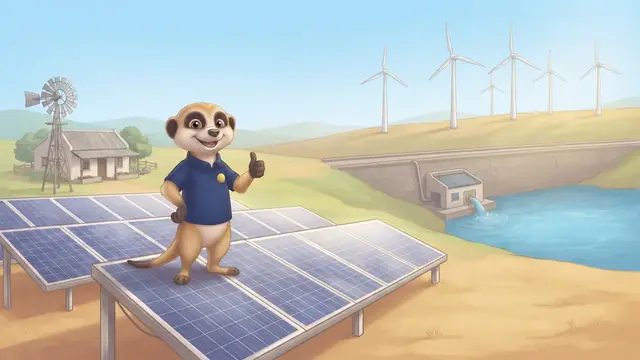
Renewable or non-renewable?
| Renewable: replaces itself | Non-renewable: runs out |
|---|---|
| Sunlight (solar power never runs out) | Coal (makes most of our electricity) |
| Wind (like a windpump on a Karoo farm) | Natural gas and oil |
| Flowing water (hydroelectricity) | Minerals such as platinum and gold |
| Trees and fish, if we do not over-use them |
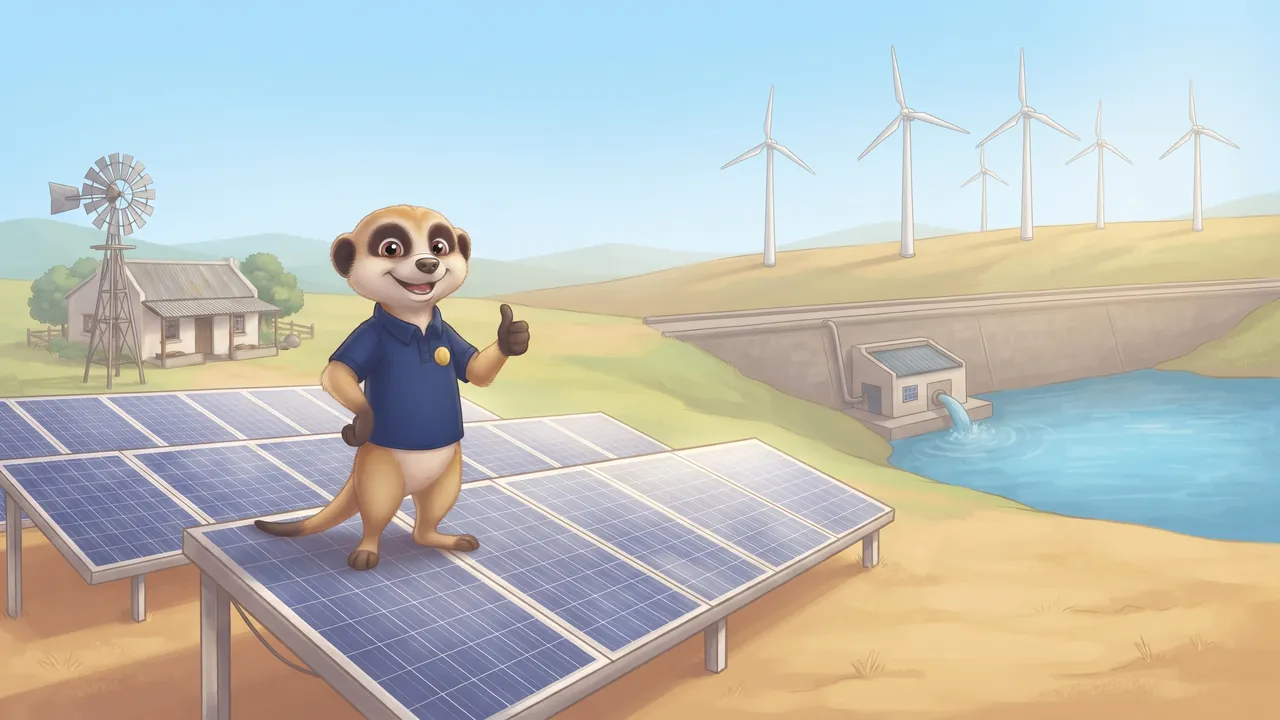
Precious resources in South Africa
- Water is precious: we get less rain than most countries. Farming (irrigation) uses the most.
- Groundwater is rainwater that has soaked into the ground and is stored in the tiny spaces and cracks in soil and rock. We reach it with boreholes and springs.
- Fertile soil: topsoil forms very slowly but washes away fast.
- Indigenous forests shelter species and hold the soil.
- South Africa produces more platinum than any other country.
Use it sustainably
Sustainable use means using a resource so that enough is left later. Over-exploitation is using it faster than it is replaced, such as overfishing or a forest that is over-harvested.
- Recycle: then less new raw material is needed.
- Conservation areas protect soil and species.
- At home: fix leaks and shower briefly.
- Share resources fairly, so everyone has what they need.
Remember this and test yourself
- A natural resource is something from nature that we use.
- Renewable (replaces itself): sunlight, wind, flowing water. Non-renewable (runs out): coal, natural gas.
- Sustainable use leaves enough for later; over-exploitation uses it faster than it is replaced.
- Topsoil forms slowly but washes away fast; overfishing empties the sea.
- Recycling means less new raw material is needed.
Write these points in your book. Read them again the night before the test.

Renewable = returns (sun, wind, water). Non-renewable = not again (coal, oil).
Important words
First say what the word means, then turn the card over.
Match column A to column B
Tap a word in column A, then its meaning in column B. You can also start in column B.
True or false?
Read the question and the answer. Is the answer right? Tap True or False.

Now the real quiz!
The quiz has many more questions on this topic. Every question shows straight away whether you are right and explains why.
Take the quiz: Natural resources- Read one part together and ask your child to tell it back in their own words.
- The ticks (“I know this”) are saved on this device only. We never ask for names or emails.
Follows CAPS for Grade 6 Social Sciences (Geography). Always check your teacher’s notes and textbook too.