
Strengthening and processing materials
How we make materials stronger, and the properties of metals and non-metals. Read one part at a time and tap “I know this”. Then test yourself in the quiz.
Know it already? Jump straight to the quiz
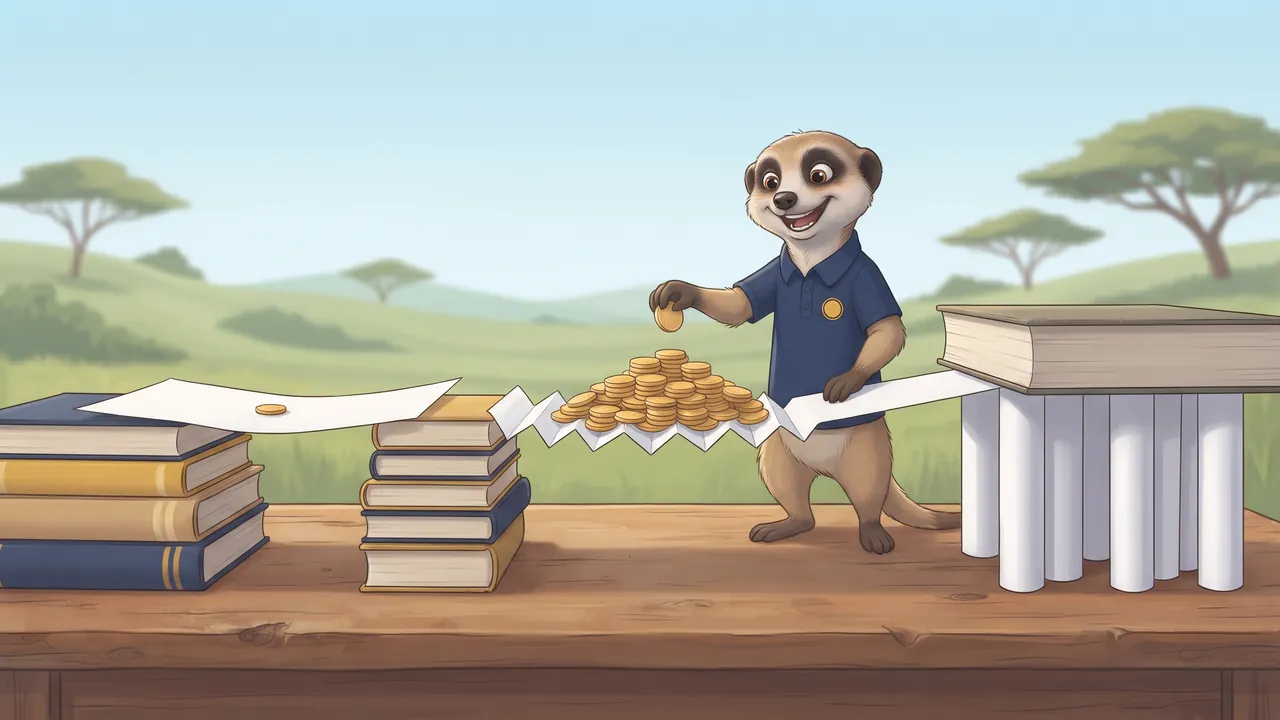
Making it stronger
- Fold: a concertina paper carries much more.
- Corrugate: a roof’s corrugated sheets are stiff.
- Roll: a hollow tube is stiffer, because the material sits further from the centre.
- Twist: thin threads twisted together make a strong rope.
- Laminate: wood layers glued crosswise are stronger.
- Combine: steel inside concrete makes a bridge strong.
A tin has round sides: the round shape spreads the pressure evenly.
Metals and non-metals
| Metals | Non-metals |
|---|---|
| Shiny | Dull |
| Conduct heat and electricity well | Conduct poorly (good insulators) |
| Malleable; can be drawn into wire (ductile) | Often brittle or flexible |
| Copper, iron, aluminium | Plastic, wood, glass |
Pots are metal, because metal conducts heat to the food; the handle is plastic or wood, because it conducts heat poorly. Iron and steel (also nickel) are attracted to a magnet; copper and aluminium are not.
The right choice
- Ask first: what must the product do?
- Aircraft use light materials: less weight, less fuel.
- Paint an iron gate so it does not rust. Iron and steel rust when they are exposed to both water and air (oxygen). Rust is a flaky brown layer that makes the metal weak. Stop rust by keeping water and air away: paint, oil or grease, a plastic coating, or a layer of zinc (galvanising).
- A good heat insulator traps lots of small air pockets.
- Recyclable: it can be processed and used again.
Where metals come from and what we use them for
Metals are mined from the Earth. They are malleable (you can hammer them into shape) and ductile (you can make thin wires), and most of them only melt at very high temperatures.
| Metal | Use |
|---|---|
| Copper | Electrical wire |
| Iron and steel | Bridges, buildings, cars, nails |
| Aluminium | Pots, cans, roof sheets |
| Gold and silver | Jewellery and coins |
Only iron (and steel) rusts. Other metals, such as silver and copper, tarnish: they become dull and dark, but you can polish them shiny again.
Remember this and test yourself
- Make paper stronger without adding anything: fold it like a concertina.
- A composite material is made of two or more materials: concrete with steel inside.
- Corrugated sheets are stiff because of their waves; a tube is stiffer than a solid rod of the same mass.
- Metals are shiny and conduct heat well; non-metals are dull and conduct poorly.
- Malleable: can be hammered into shapes. Brittle: breaks without bending first.
Write these points in your book. Read them again the night before the test.

Paper stronger with nothing extra: Fold, Corrugate, Roll, Twist. And metals: shiny, conduct, hammer.
Important words
First say what the word means, then turn the card over.
Match column A to column B
Tap a word in column A, then its meaning in column B. You can also start in column B.
True or false?
Read the question and the answer. Is the answer right? Tap True or False.

Now the real quiz!
The quiz has many more questions on this topic. Every question shows straight away whether you are right and explains why.
Take the quiz: Strengthening and processing materials- Read one part together and ask your child to tell it back in their own words.
- The ticks (“I know this”) are saved on this device only. We never ask for names or emails.
Follows CAPS for Grade 5 Natural Sciences and Technology. Always check your teacher’s notes and textbook too.