
Electricity supply and the Earth’s movement
How electricity is generated and reaches your home, input and output energy, and the Earth’s movement. Read one part at a time and tap “I know this”. Then test yourself in the quiz.
Know it already? Jump straight to the quiz
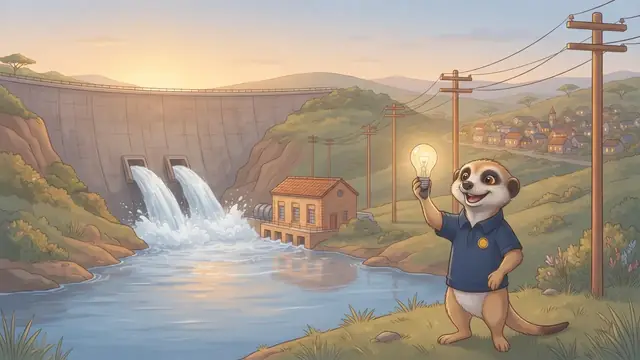
From power station to home
Hydropower is renewable and makes no smoke or pollution. A battery stores chemical energy.
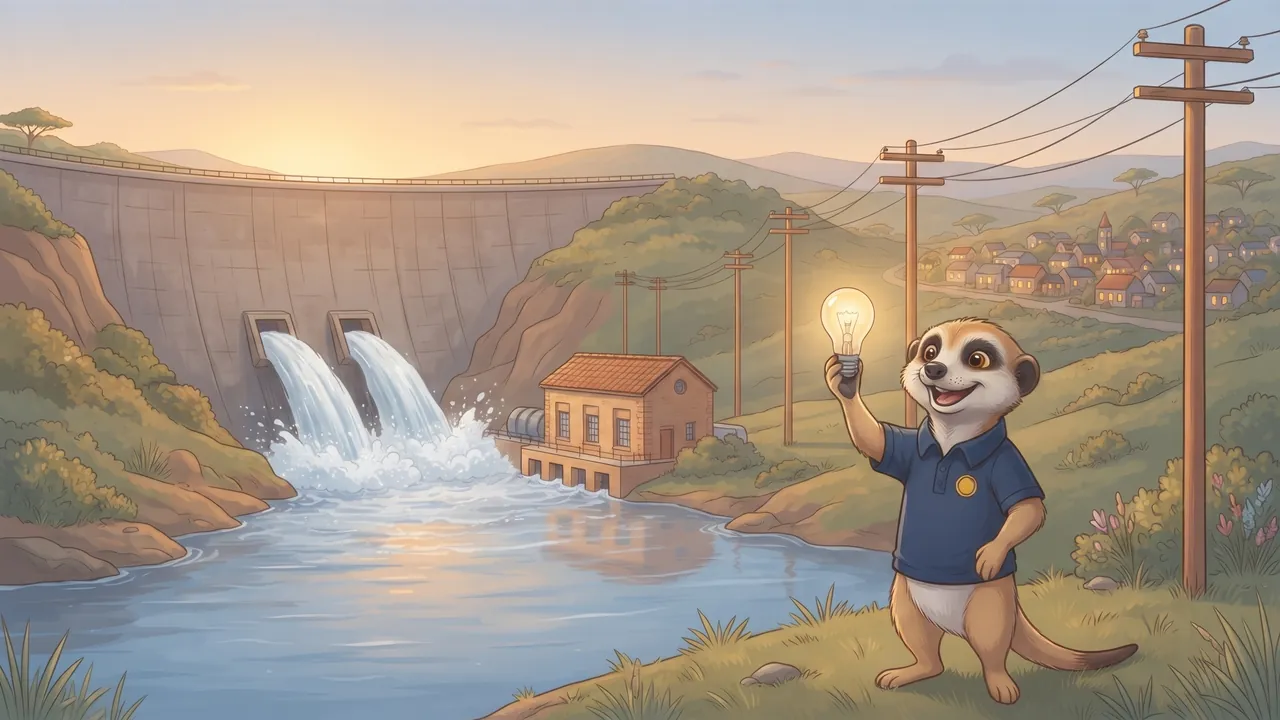
Input and output
| Device | Input | Useful output | Wasted |
|---|---|---|---|
| Light bulb | Electrical | Light | Heat |
| LED lamp | Electrical | Light | Very little heat |
An investigation answers a question. Keep everything the same except one thing, so you know what caused the difference.
The Earth moves
- The Earth’s axis is the imaginary line it turns around.
- The axis is tilted: when the southern hemisphere tilts towards the Sun, it is summer here and winter in Europe.
- If the axis were upright, there would be almost no seasons.
The path of the electricity
- The power station generates electricity, usually with coal.
- Tall pylons carry the cables over long distances.
- At a substation the power is made safer for our homes.
- It goes through the electricity box and the wiring to the wall sockets.
- You plug in an appliance, and it works.
The current flows in a circuit to our homes and back to the power station.
In a coal power station, coal is burned to boil water. The steam turns a turbine, and the turbine turns a generator that makes electricity. Most of South Africa’s electricity comes from Eskom’s coal power stations.
Illegal connections (wires joined to the power supply without permission) are very dangerous: they cause electric shocks and fires. Never touch them.
Remember this and test yourself
- At a power station electricity is generated; with hydroelectricity falling water turns the turbine.
- Electricity travels through power lines and transformers; a transformer changes the voltage.
- High voltage over long distances: less energy is lost on the way.
- Input energy goes into a device; output energy comes out. An LED lamp wastes the least.
- Rotation (24 hours, on the axis) gives day and night; revolution (365 days, around the Sun) gives the year.
Write these points in your book. Read them again the night before the test.

Rotation = rotate on the spot (day and night). Revolution = go around the Sun (the year).
Important words
First say what the word means, then turn the card over.
Match column A to column B
Tap a word in column A, then its meaning in column B. You can also start in column B.
True or false?
Read the question and the answer. Is the answer right? Tap True or False.

Now the real quiz!
The quiz has many more questions on this topic. Every question shows straight away whether you are right and explains why.
Take the quiz: Electricity supply and the Earth’s movement- Read one part together and ask your child to tell it back in their own words.
- The ticks (“I know this”) are saved on this device only. We never ask for names or emails.
Follows CAPS for Grade 5 Natural Sciences and Technology. Always check your teacher’s notes and textbook too.