
Environmental health
Environmental health: waste, clean water, pollution and wise water use. Read one part at a time and tap “I know this”. Then test yourself in the quiz.
Know it already? Jump straight to the quiz
Please note: this summary follows CAPS for schoolwork and is not medical advice. For questions about your own or your child’s health, speak to a doctor, nurse or pharmacist.
Waste and pollution
- A glass jar for pencils is reusing; recycling turns waste into new products.
- Litter washes into rivers and the sea; sea animals eat plastic or get caught in it. Keep rivers clean: people and animals use that water.
- Never pour paint or oil down the drain. Factory smoke is air pollution and causes breathing problems.
- Coal pollutes when burned; solar power is renewable. Saving energy means using less electricity.
Water-wise
| Situation | Water-wise choice |
|---|---|
| Shower | A short four-minute shower |
| Watering the garden | Early morning or evening |
| Washing machine | Only with a full load |
| Washing the bakkie | A bucket and sponge, not a hose |
| Drinking cold water | Keep a jug of water in the fridge instead of letting the tap run until the water is cold |
Cities sometimes set water restrictions to make water last through a drought. A school can make its environment healthier by separating waste and planting trees.
Water is a basic need: we need it to drink, cook, wash, keep clean and grow food, and the Constitution gives everyone the right to enough water. Protect water quality: never throw rubbish, chemicals or oil into rivers or drains, keep toilets and animals away from water sources, and keep stored water covered. Not sure the water is safe? Boil it for at least one minute before you drink it.
Remember this and test yourself
- Environmental health: how the environment affects our health. Dirty water causes stomach illness.
- Waste piles up: rats and flies. A town’s waste goes to a landfill site.
- Biodegradable: material that breaks down naturally.
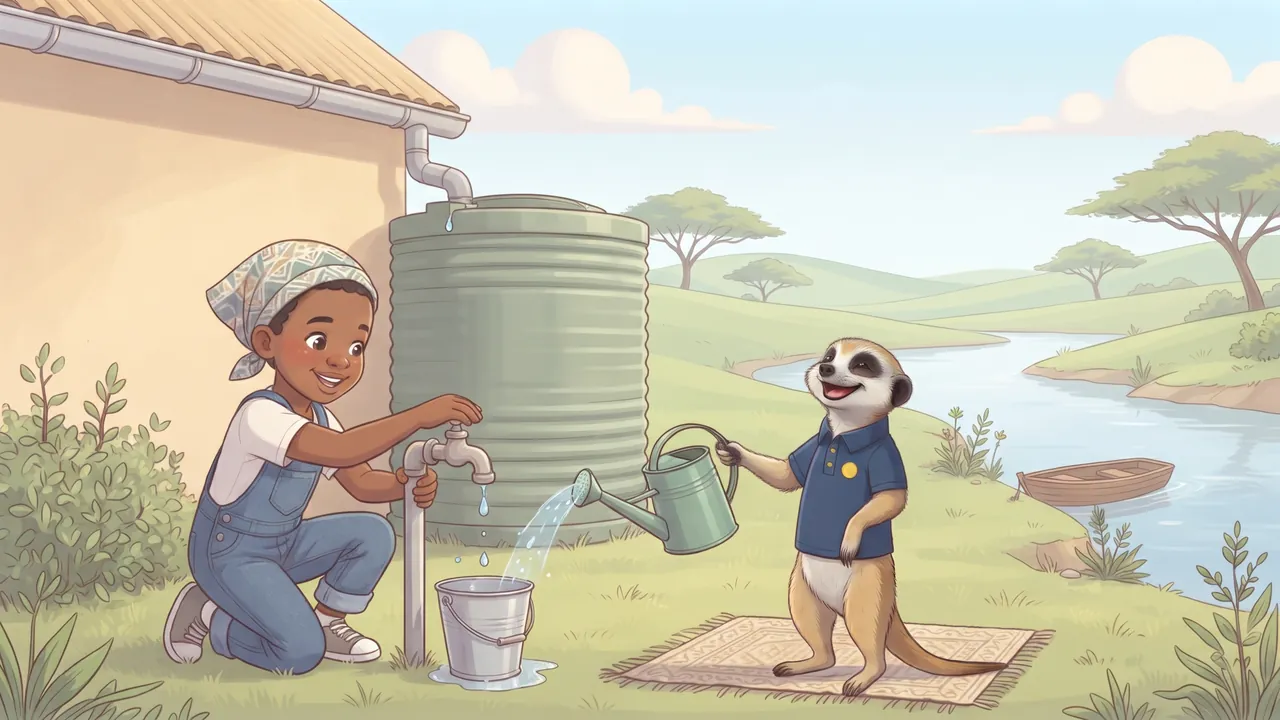
- Greywater is used washing water that can water plants; a tank under the gutter catches rainwater.
- Indigenous plants (aloes, vygies) need less water.
Write these points in your book. Read them again the night before the test.

Greywater isn’t dirty, just used: give it to the plants.
Important words
First say what the word means, then turn the card over.
Match column A to column B
Tap a word in column A, then its meaning in column B. You can also start in column B.
True or false?
Read the question and the answer. Is the answer right? Tap True or False.

Now the real quiz!
The quiz has many more questions on this topic. Every question shows straight away whether you are right and explains why.
Take the quiz: Environmental health- Read one part together and ask your child to tell it back in their own words.
- The ticks (“I know this”) are saved on this device only. We never ask for names or emails.
Follows CAPS for Grade 5 Life Skills. Always check your teacher’s notes and textbook too.