
Metals and what they changed
How people learnt to use metals: copper, bronze, iron and gold, smelting and what it changed. Read one part at a time and tap “I know this”. Then test yourself in the quiz.
Know it already? Jump straight to the quiz
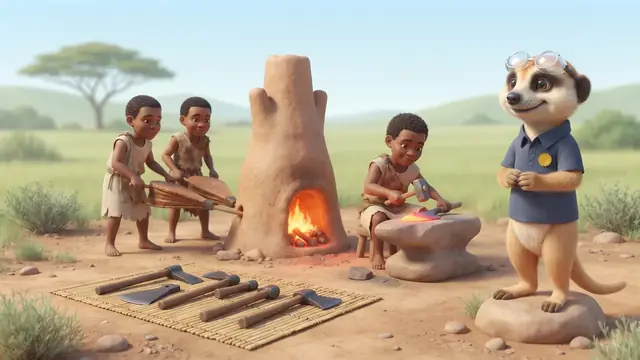
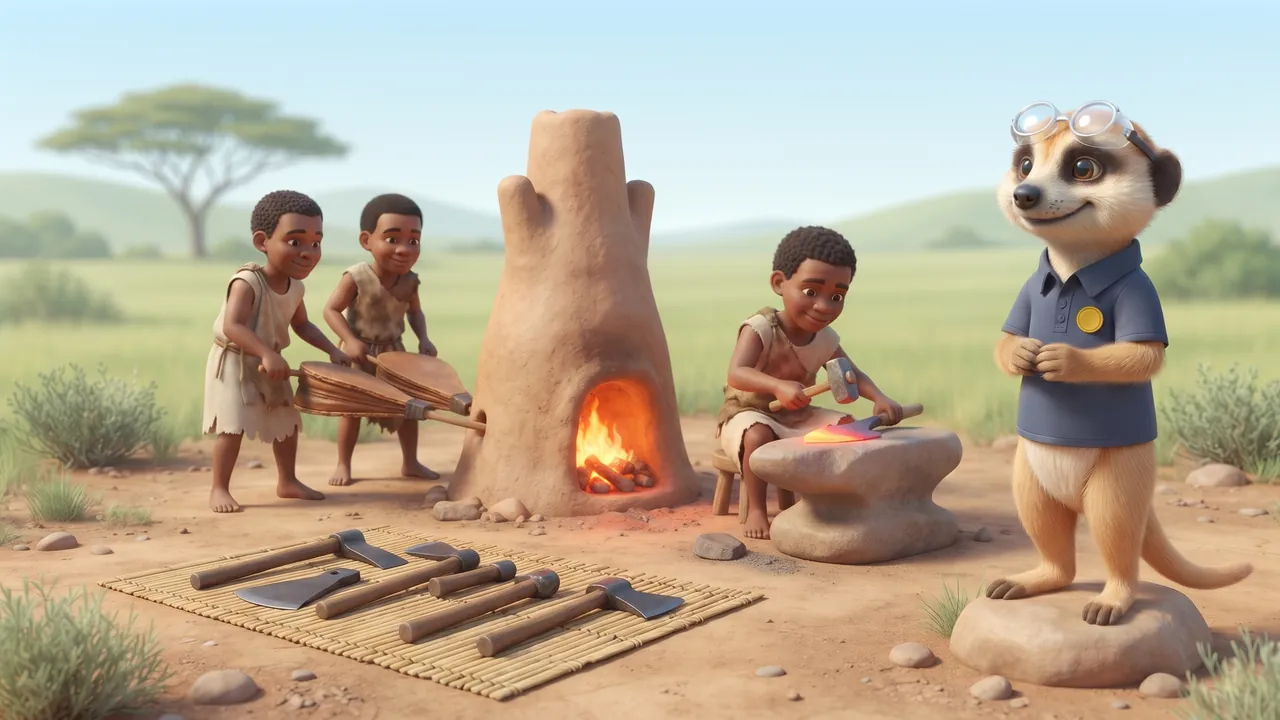
Smelting
- A smith shapes hot metal. Ironworking was often secret or special, because smiths had rare knowledge; songs and stories tell of smiths.
- A metal tool can be sharpened and rarely shatters; iron points made hunting tools sharper and stronger.
- An old furnace site shows how and when people smelted.
Gold and trade
Gold is rare and does not rust; gold and silver were valued as money. The golden rhinoceros in a grave at Mapungubwe shows some people had higher rank. Metal and ivory were traded for glass beads and cloth. Mining today can cause dust, pollution and scarred land.
Remember this and test yourself
- Copper was the first metal; bronze is an alloy of copper and tin.
- Order around the Mediterranean: stone and bone, then copper, then bronze, then iron. In southern Africa people went straight from stone to iron (and copper), with no Bronze Age.
- Ore is rock with metal; a smelter needs a furnace, charcoal and a strong draught (bellows); slag is the waste.
- In southern Africa smelting began about 1 700 years ago; much evidence in Mpumalanga and Limpopo.
- The iron hoe changed farming most.
Write these points in your book. Read them again the night before the test.

C-B-I: Copper, Bronze, Iron — “Cats Before Ice.”
Important words
First say what the word means, then turn the card over.
Match column A to column B
Tap a word in column A, then its meaning in column B. You can also start in column B.
True or false?
Read the question and the answer. Is the answer right? Tap True or False.

Now the real quiz!
The quiz has many more questions on this topic. Every question shows straight away whether you are right and explains why.
Take the quiz: Metals and what they changed- Read one part together and ask your child to tell it back in their own words.
- The ticks (“I know this”) are saved on this device only. We never ask for names or emails.
Follows CAPS for Grade 5 Social Sciences (History). Always check your teacher’s notes and textbook too.