
Hunter-gatherers
How hunter-gatherers lived, their tools and rock art, and how we know about them. Read one part at a time and tap “I know this”. Then test yourself in the quiz.
Know it already? Jump straight to the quiz
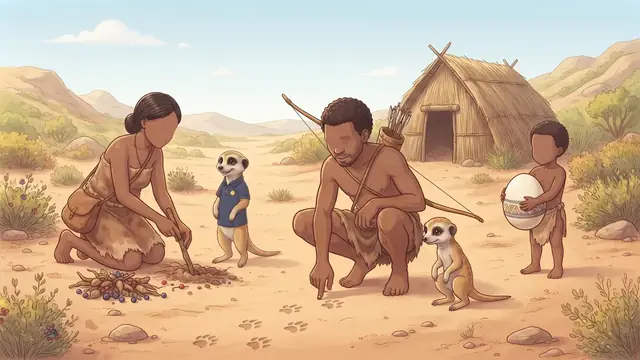
Their life
- Shelter: caves and temporary shelters. Few possessions, because they carried everything.
- Women gathered most of the food; they knew which plants were food and which medicine.
- Water in dry times in ostrich eggshells. Fire gave heat and safety.
- Advantage: a varied, healthy diet.
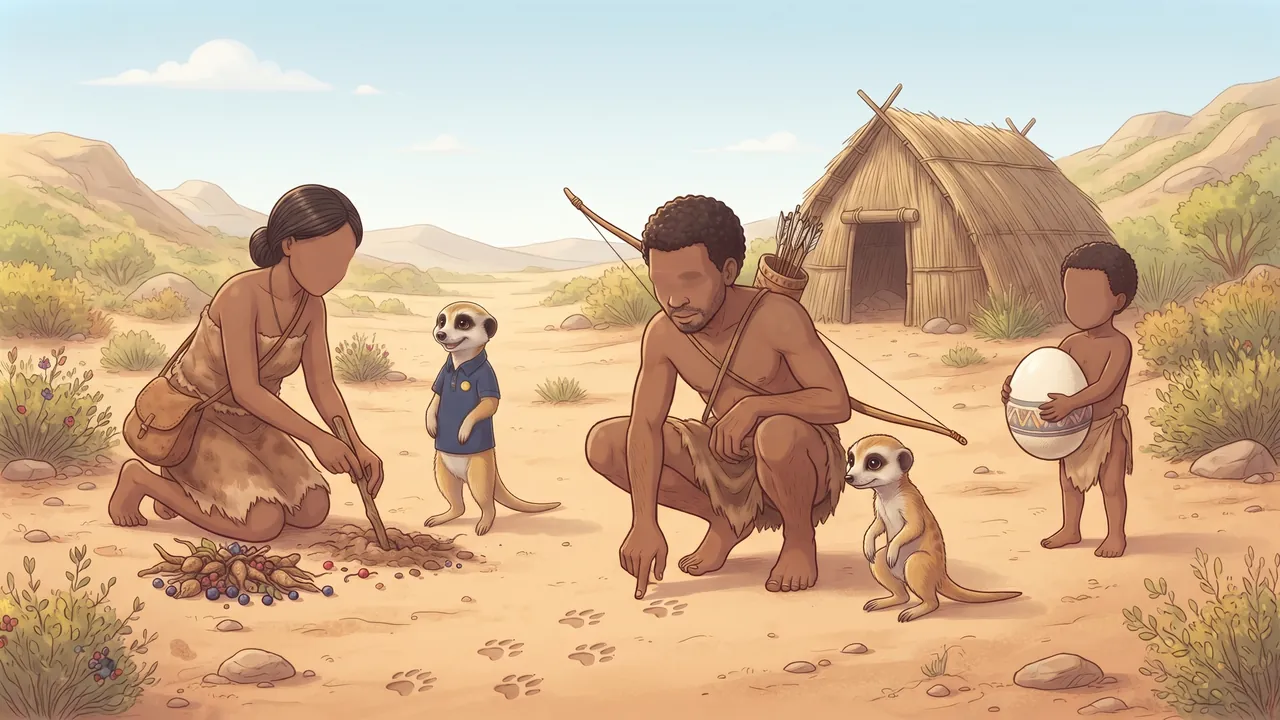
How we know
Rock art tells of people who left no writing. Archaeologists find stone tools, bones and remains. A midden is a heap where waste built up over years.
How the San lived
- The San knew their environment very well. They moved with the seasons, to places where veld food was ripe and game was grazing.
- The bow and arrow was an important invention: hunters could shoot from far away, and hunting succeeded more often.
- Everything was shared equally in the group: the meat from a hunt belonged to everyone.
- A San band was small: about 20 to 50 people, mostly relatives. There was no chief: the group talked important decisions through together, and older, experienced people were listened to. Men usually hunted and women gathered.
- They used plants as medicine, and showed their beliefs in rock art.
The figures on South Africa’s coat of arms come from the Linton panel, a famous rock art stone from the Eastern Cape that is now in a museum in Cape Town. We also learn about the past by studying living communities today: this is called ethnography.
Rock art: where, when, how and why
- Where: San rock paintings are found in caves and rock shelters in the mountains, e.g. the Drakensberg and the Cederberg. Rock engravings (pictures scratched or chipped into rock) are found on open rocks in the dry interior, e.g. the Northern Cape.
- When: some rock art in southern Africa is thousands of years old; some is much younger and even shows the horses and wagons of settlers.
- How: paint was made from ochre (coloured earth), charcoal or white clay, mixed with animal fat or plant juice. Artists painted with feathers, fingers, sticks or fine brushes of animal hair.
- Why: much of the art is about the San’s beliefs. San healers (shamans) danced a trance dance to heal sick people, to make rain and to reach the spirit world, and they painted what they saw and felt. The eland was seen as a powerful, special animal, which is why it appears so often.
Remember this and test yourself
- They hunted animals and gathered plants, and moved around to follow food and water (nomads).
- The San lived and moved in small groups called bands; they worked together and shared food.
- Tools of stone, bone and wood; the bow and arrow to hunt from far. This was the Stone Age.
- The San’s rock art shows animals and hunters; the eland appears most; paint from ochre.
- When farmers arrived, hunter-gatherers lived alongside them for many centuries, trading and sometimes marrying into farming communities. They lost most of their hunting land much later, when colonial settlers and their herds spread into the interior.
Write these points in your book. Read them again the night before the test.

Hunter-gatherers lived a backpack life: what you can’t carry, you don’t own.
Important words
First say what the word means, then turn the card over.
Match column A to column B
Tap a word in column A, then its meaning in column B. You can also start in column B.
True or false?
Read the question and the answer. Is the answer right? Tap True or False.

Now the real quiz!
The quiz has many more questions on this topic. Every question shows straight away whether you are right and explains why.
Take the quiz: Hunter-gatherers- Read one part together and ask your child to tell it back in their own words.
- The ticks (“I know this”) are saved on this device only. We never ask for names or emails.
Follows CAPS for Grade 5 Social Sciences (History). Always check your teacher’s notes and textbook too.