
Food: evidence, sharing and rules
How archaeologists know what people ate, storing and sharing food, and rules and stories about food. Read one part at a time and tap “I know this”. Then test yourself in the quiz.
Know it already? Jump straight to the quiz
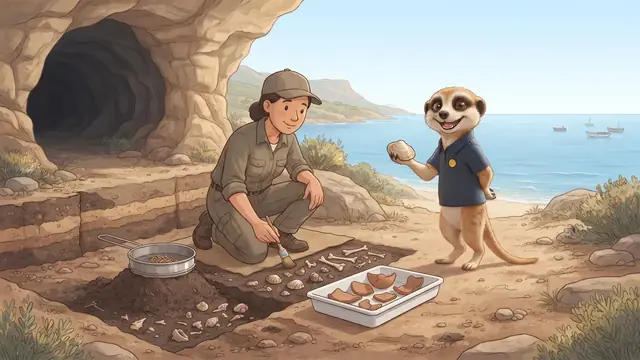
Evidence
| Find | What it shows |
|---|---|
| Animal bones | Which animals people ate |
| Shells | People gathered food from water |
| Seeds and charcoal in a hearth | Which plants were used |
| Traces in a clay pot | The food cooked in it |
| Fish traps and hooks | Early fishing |
Food and culture
- Sharing food with a visitor shows welcome and hospitality; rules about who eats what carry beliefs and respect.
- A trickster, like Jackal in the Jackal and Wolf stories, is a clever animal in folktales that outwits others; food stories teach about greed and sharing.
- Indigenous knowledge about food is passed down locally; veldkos like roots and berries. People moved camp because plants ripen at different times.
- Spices travelled far because they were tasty and valuable. Maize meal is a staple in most homes today.
Remember this and test yourself
- Archaeologists study bones, shells and seeds; coprolites are fossilised droppings.
- Food remains lie near old fireplaces, because people cooked and ate there.
- A grindstone grinds grain into flour; a winnowing basket separates grain from chaff; the calabash served food and drink.
- Food was dried or salted to keep; storing food made people settle and share.
- Maize came from the Americas; sorghum and millet were grown long before.
Write these points in your book. Read them again the night before the test.

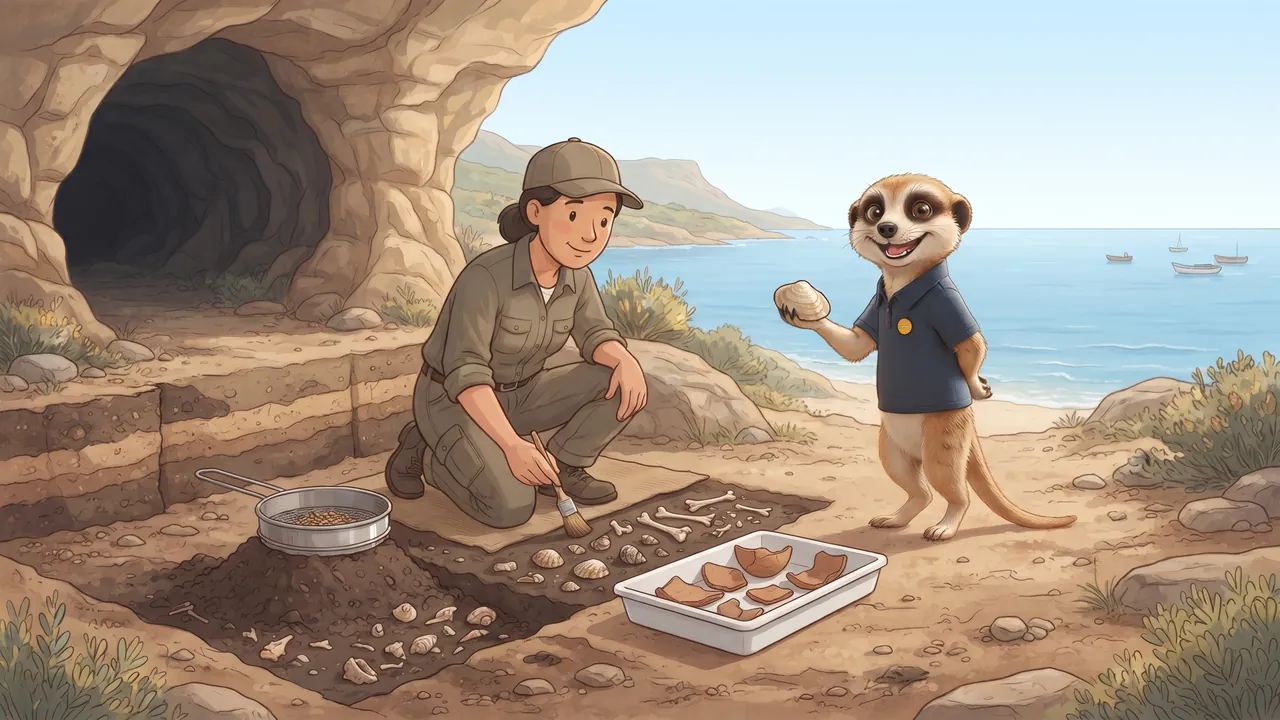
Archaeologists are food detectives: bones, shells, seeds and even droppings tell what was on the menu.
Important words
First say what the word means, then turn the card over.
Match column A to column B
Tap a word in column A, then its meaning in column B. You can also start in column B.
True or false?
Read the question and the answer. Is the answer right? Tap True or False.

Now the real quiz!
The quiz has many more questions on this topic. Every question shows straight away whether you are right and explains why.
Take the quiz: Food: evidence, sharing and rules- Read one part together and ask your child to tell it back in their own words.
- The ticks (“I know this”) are saved on this device only. We never ask for names or emails.
Follows CAPS for Grade 5 Social Sciences (History). Always check your teacher’s notes and textbook too.