
Weather and climate
The difference between weather and climate, weather instruments, seasons and clouds. Read one part at a time and tap “I know this”. Then test yourself in the quiz.
Know it already? Jump straight to the quiz

Weather or climate?
Weather is what the air is like today or this week: hot or cold, wet or dry, calm or windy. Climate is the average weather pattern of a place over many years. A climate zone is an area with a similar weather pattern.
We describe a place’s climate with words like hot, warm, cool, cold, wet, dry and humid. Humid means the air holds a lot of water vapour, so it feels sticky.
- Durban (east coast): hot, humid summers with lots of rain; mild, dry winters.
- Cape Town (south-west): warm, dry summers; cool, wet winters.
- Johannesburg (Highveld): warm, wet summers with thunderstorms; cold, dry winters with frost.
- Upington (Northern Cape): very hot summers, cold winter nights and little rain all year.

Soil type is not an element of weather. Temperature, rain, wind, clouds and air pressure are.
Weather instruments
| Instrument | What it measures |
|---|---|
| Thermometer | Temperature (°C) |
| Rain gauge | How much rain has fallen (mm) |
| Wind vane | Where the wind comes from |
| Anemometer | How fast the wind blows |
| Barometer | Air pressure |
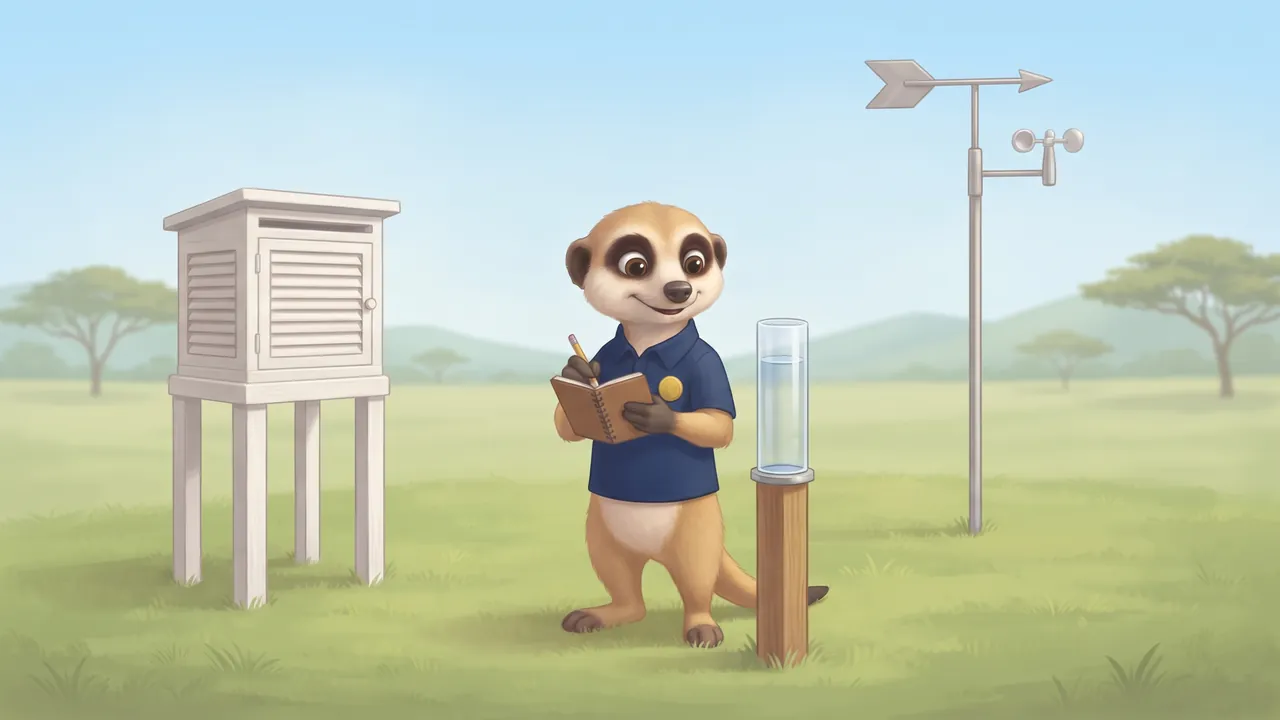
Clouds, rain and storms
- Wind is air moving from place to place.
- Dark, towering clouds usually bring heavy rain. A thunderstorm forms when warm, moist air rises quickly.
- Fog is a cloud lying on the ground.
- A weather forecast is made by studying weather data.
Seasons and temperature
We have seasons because the Earth’s axis is tilted as it moves around the sun. In South Africa winter is from June to August, and January is usually the hottest month in Gauteng.
- It is warmer near the equator, because sunlight hits it more directly.
- It is cooler high on a mountain, because the thinner air holds less heat.
Precipitation and weather maps
- Precipitation is water that falls from the clouds: rain, hail (little balls of ice) and snow, which falls on high mountains such as the Drakensberg in winter.
- A weather map in the newspaper, on TV or on a phone uses symbols for sun, clouds, rain and wind, and numbers for the temperature.
- The weather affects our lives: what we wear, whether we play outside, and when farmers plant or harvest.
Remember this and test yourself
- Weather is what the air is like today; climate is the weather pattern over many years.
- Thermometer = temperature; rain gauge = rain; wind vane = wind direction; anemometer = wind speed; barometer = air pressure.
- We have seasons because the Earth’s axis is tilted. Winter in South Africa is June to August.
- Precipitation is rain, snow and hail. Humidity is the water vapour in the air.
- It is warmer near the equator and cooler high up on a mountain.
Write these points in your book. Read them again the night before the test.

Weather = what’s happening now. Climate = count over many years.
Important words
First say what the word means, then turn the card over.
Match column A to column B
Tap a word in column A, then its meaning in column B. You can also start in column B.
True or false?
Read the question and the answer. Is the answer right? Tap True or False.

Now the real quiz!
The quiz has many more questions on this topic. Every question shows straight away whether you are right and explains why.
Take the quiz: Weather and climate- Read one part together and ask your child to tell it back in their own words.
- The ticks (“I know this”) are saved on this device only. We never ask for names or emails.
Follows CAPS for Grade 5 Social Sciences (Geography). Always check your teacher’s notes and textbook too.