
Coal, mineral uses and mining towns
How coal formed, what we use minerals for, and how mining towns start and grow. Read one part at a time and tap “I know this”. Then test yourself in the quiz.
Know it already? Jump straight to the quiz
How coal formed
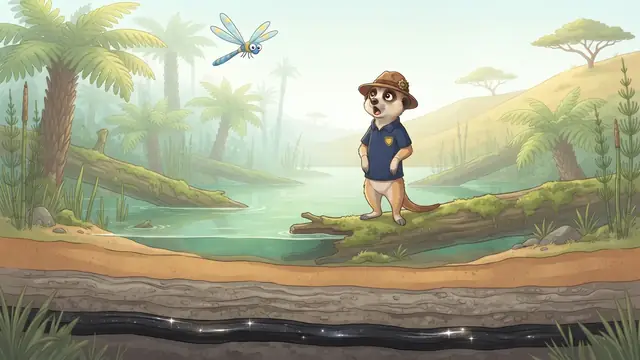
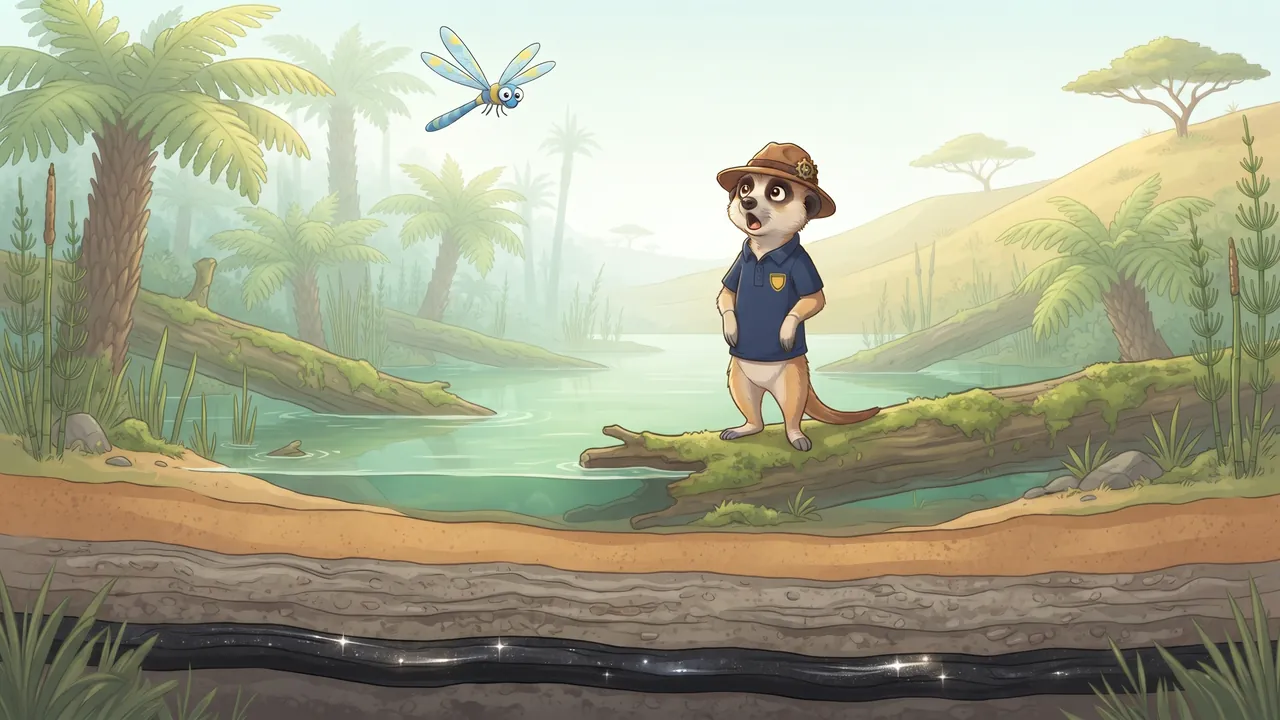
- Millions of years ago, thick plants grew in warm swamps.
- Fallen plants sank into the mud and were buried under layers of sand and mud.
- The weight of the layers on top pressed them together, and the heat inside the Earth slowly turned them into coal over millions of years.
We use coal to make electricity, to make petrol and diesel (at Secunda), for plastics and chemicals, to make steel, and for heating and cooking.
What we use minerals for
| Mineral or coal | Use |
|---|---|
| Coal | Electricity; at Secunda it becomes petrol and diesel |
| Copper | Electric wires: it conducts electricity very well |
| Chrome | Steel that does not rust |
| Manganese | Makes steel harder |
| Gold | Jewellery, and tiny amounts in cellphones and computers |
| Platinum | In car exhausts to clean the gases |
| Diamonds | Jewels, and to cut and drill hard materials |
| Silver | Jewellery and cutlery |
| Limestone | Cement (near Lichtenburg) |
| Salt | Food (from salt pans and seawater) |
Coal is not a mineral: it formed from plants, so it is a fossil fuel.
Coal power stations cause air pollution from smoke and gases.
Mining towns
Mining towns grow close to where the minerals are found. Along with the mine come houses, shops, schools and clinics.
| Town | Mineral |
|---|---|
| Johannesburg | Gold, discovered on the Witwatersrand in 1886 |
| Kimberley | Diamonds |
| Rustenburg | Platinum |
| Phalaborwa | Copper |
| eMalahleni (Witbank) | Coal |
| Kathu and Hotazel | Iron ore and manganese |

Pilgrim’s Rest was a gold-mining town. Today it earns its money from tourism. On maps, two crossed hammers show a mine.
Renewable or not?
A natural resource is something from nature that people use. A renewable resource, like trees in a forest, is replaced by nature. A non-renewable resource, like oil or coal, runs out.
Remember this and test yourself
- Coal formed over millions of years from buried swamp plants: a fossil fuel.
- Copper for wires; chrome for rust-free steel; platinum to clean exhaust gases; diamonds for cutting.
- Mining towns: Johannesburg (gold, 1886), Kimberley (diamonds), Rustenburg (platinum), Phalaborwa (copper), eMalahleni (coal).
- At Secunda coal is turned into petrol and diesel; coal goes by rail to Richards Bay.
- Renewable resources (trees, water) are replaced by nature; non-renewable resources (oil, coal) run out.
Write these points in your book. Read them again the night before the test.

Coal is a battery made by ancient plants: they stored the sun’s energy millions of years ago.
Important words
First say what the word means, then turn the card over.
Match column A to column B
Tap a word in column A, then its meaning in column B. You can also start in column B.
True or false?
Read the question and the answer. Is the answer right? Tap True or False.

Now the real quiz!
The quiz has many more questions on this topic. Every question shows straight away whether you are right and explains why.
Take the quiz: Coal, mineral uses and mining towns- Read one part together and ask your child to tell it back in their own words.
- The ticks (“I know this”) are saved on this device only. We never ask for names or emails.
Follows CAPS for Grade 5 Social Sciences (Geography). Always check your teacher’s notes and textbook too.