
Biomes and natural vegetation
What a biome is, and South Africa’s savanna, grassland, Karoo and fynbos with their plants and animals. Read one part at a time and tap “I know this”. Then test yourself in the quiz.
Know it already? Jump straight to the quiz
What is a biome?
A biome is a big area with its own climate, plants and animals. Different biomes have different plants because the climate and soil differ from place to place. The east gets the most rain; the west is drier, because it is far from the warm Indian Ocean.
| Biome | Rain | Plants and animals |
|---|---|---|
| Savanna | Summer rain | Grass, acacias, baobabs; elephants, giraffes, impala |
| Grassland | Summer rain | Mainly grass; livestock and game. On the Highveld: cold winters with frost, so few trees grow |
| Karoo | Very little | Succulents and low bushes |
| Fynbos | Winter rain | Proteas and fine bushes |
| Forest | Rain all year | Tall trees close together, such as the yellowwood (our national tree); small patches along the south and east coast, such as the Knysna forest |
| Desert | Hardly any rain | Very few plants; a small area along the lower Orange River |
The savanna
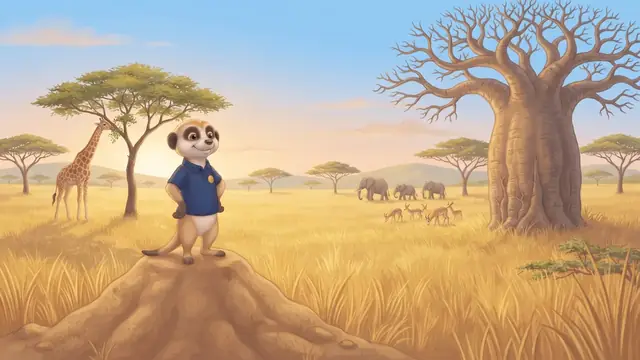
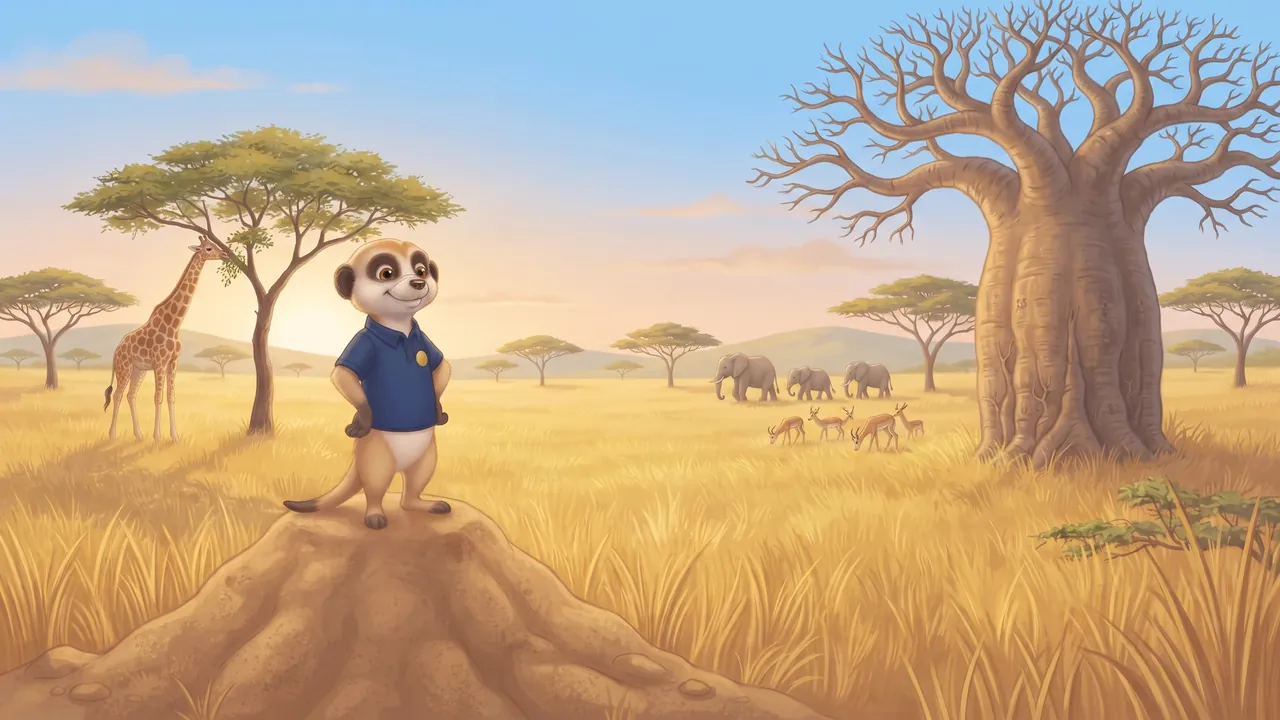
The savanna is grassland with trees standing far apart. It rains in summer. There is food for many kinds of animals: elephants and giraffes eat the leaves of the thorny acacia. The baobab has a very thick trunk; its bare branches look like roots, so it is called the “upside-down tree”.
- Where: in the north and east of South Africa: Limpopo, the Mpumalanga Lowveld (the Kruger National Park), North West and northern KwaZulu-Natal. It is South Africa’s largest biome.
- Climate: hot, wet summers and warm, dry winters.
- Adaptations: the grass grows fast after the summer rain and dries out in winter; acacias have thorns to protect their leaves and long roots that reach deep water; the baobab stores water in its thick trunk; many trees lose their leaves in the dry season.
- Animals: giraffes eat high leaves, zebras and wildebeest graze on the grass, and lions and cheetahs hunt the grazers.
The dry Karoo and the fynbos
The Karoo is a very dry semi-desert with little rain. A succulent stores water inside its thick leaves and stem, and has small leaves so it loses little water. Fynbos grows in the Western Cape, where it rains in winter. The protea is a hardy fynbos flower that can cope with heat and wind.
Too much livestock in one place eats the plants bare, and then the soil erodes.
Climate over many years
Climate is measured over many years. A place’s annual rainfall is all the rain it gets in a year. And yes, it sometimes snows in South Africa, on the high mountains.
Remember this and test yourself
- A biome is a big area with its own climate, plants and animals. Natural vegetation grows there on its own.
- Savanna: grassland with scattered trees (acacias, baobabs), summer rain, elephants and giraffes.
- Grassland: mainly grass; good grazing for livestock and game.
- Karoo: very dry (semi-desert); succulents store water in their leaves and stems.
- Fynbos: Western Cape, winter rain, proteas.
Write these points in your book. Read them again the night before the test.

Savanna = scattered trees. Grassland = grass. Karoo = bare and dry. Fynbos = fine bushes and winter rain.
Important words
First say what the word means, then turn the card over.
Match column A to column B
Tap a word in column A, then its meaning in column B. You can also start in column B.
True or false?
Read the question and the answer. Is the answer right? Tap True or False.

Now the real quiz!
The quiz has many more questions on this topic. Every question shows straight away whether you are right and explains why.
Take the quiz: Biomes and natural vegetation- Read one part together and ask your child to tell it back in their own words.
- The ticks (“I know this”) are saved on this device only. We never ask for names or emails.
Follows CAPS for Grade 5 Social Sciences (Geography). Always check your teacher’s notes and textbook too.