
Choosing materials
How the properties of a material decide what we use it for. Read one part at a time and tap “I know this”. Then test yourself in the quiz.
Know it already? Jump straight to the quiz
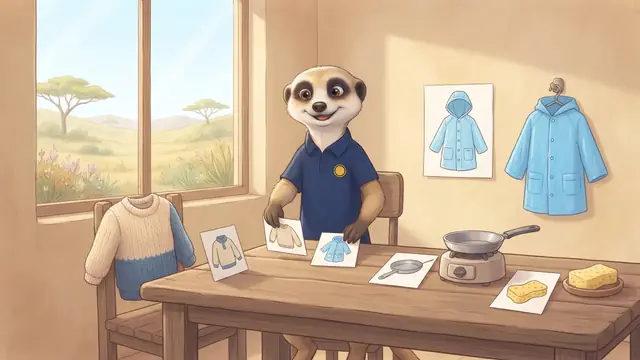
Properties
| Property | Meaning | Example |
|---|---|---|
| Transparent | Light goes through | Window glass |
| Opaque | No light goes through | Wooden door |
| Waterproof | Water cannot pass through | Plastic raincoat |
| Absorbent | Soaks up water | Sponge |
| Flexible | Bends easily | Elastic band |
| Rigid | Does not bend | Steel beam |
| Hard | Hard to scratch or dent | Stone, steel |
| Soft | Easy to press in | Cushion, wool |
| Tough | Does not break easily when hit or dropped | Rubber, plastic |
| Fragile (brittle) | Breaks or cracks easily | Glass, a dry biscuit |
| Strong in tension | Does not snap when you pull it | Rope, a steel cable |
The right material for the job
- Cooldrink cans are made of aluminium: it is light and does not rust.
- A bridge is steel and concrete: very strong.
- A summer T-shirt is cotton: soft and lets air through.
- A pan’s bottom is metal, because metal conducts heat.
- Soft curtains soften sound in a room.

Iron left outside in the rain rusts and becomes weaker.
Natural or man-made
Natural materials come from nature, such as wood, wool and cotton. Man-made (synthetic) materials such as plastic are made in factories.
Remember this and test yourself
- Choose a material first by what the object must do.
- Transparent: light goes through (glass). Opaque: no light (wood).
- Waterproof: water cannot get through (plastic). Absorbent: soaks up water (sponge).
- Flexible bends easily (rubber); rigid does not bend (steel, concrete).
- Copper conducts electricity; rubber and plastic are insulators.
Write these points in your book. Read them again the night before the test.

Ask first: what must it do? Then: which property do I need? Only then: which material?
Important words
First say what the word means, then turn the card over.
Match column A to column B
Tap a word in column A, then its meaning in column B. You can also start in column B.
True or false?
Read the question and the answer. Is the answer right? Tap True or False.

Now the real quiz!
The quiz has many more questions on this topic. Every question shows straight away whether you are right and explains why.
Take the quiz: Choosing materials- Read one part together and ask your child to tell it back in their own words.
- The ticks (“I know this”) are saved on this device only. We never ask for names or emails.
Follows CAPS for Grade 4 Natural Sciences and Technology. Always check your teacher’s notes and textbook too.