
Sender, receiver and the postal system
The parts of a message (sender, medium, receiver, feedback) and how the postal system works. Read one part at a time and tap “I know this”. Then test yourself in the quiz.
Know it already? Jump straight to the quiz
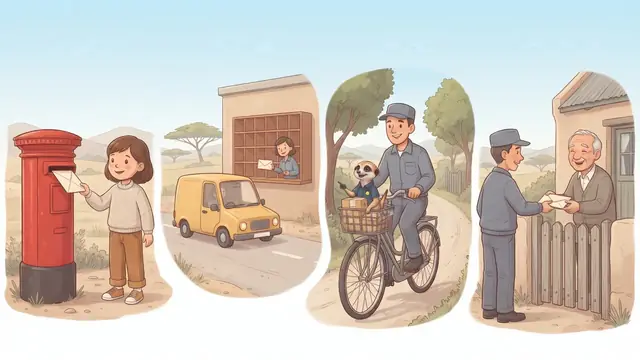
The parts of a message
A national TV programme has the most receivers at once. A radio station in George has its listeners as receivers.
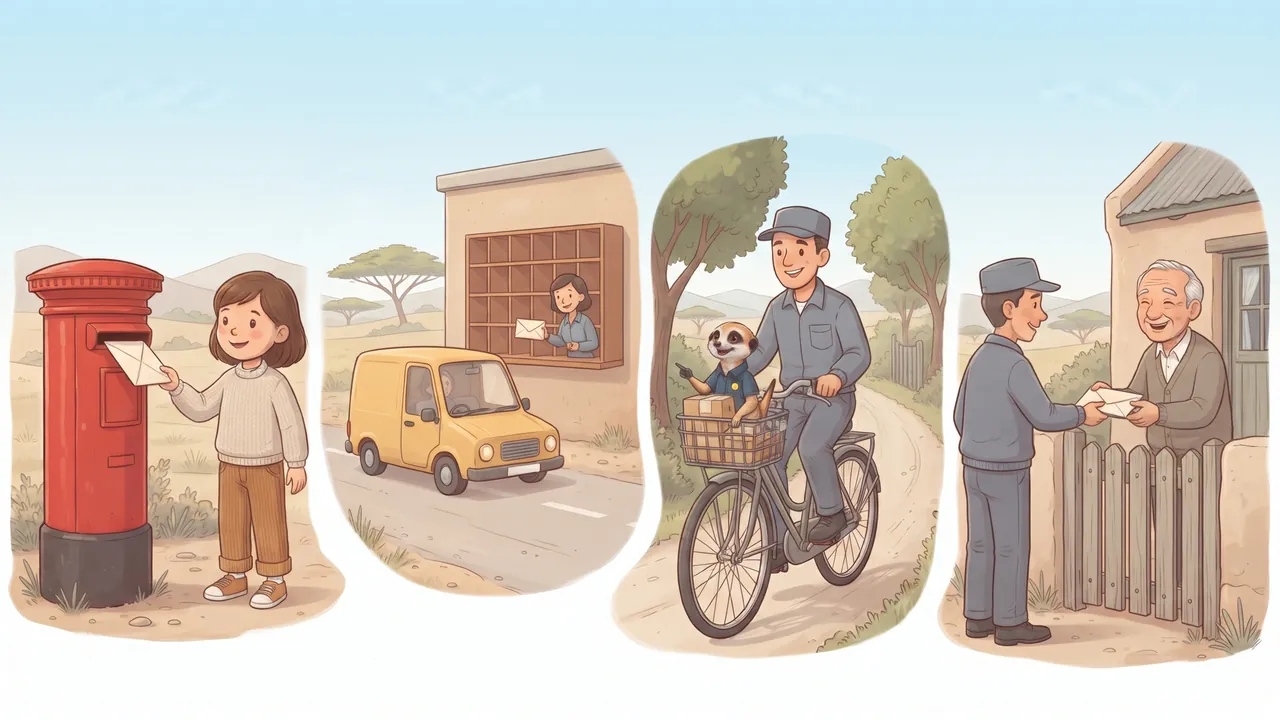
The postal system
- The receiver’s address goes in the middle of the front of the envelope, with the postal code last. The stamp goes in the top right corner, and the sender’s return address goes on the back. A postmark shows when and where it was posted. A PO Box is a rented locker where your mail waits.
- In 1500 a sailor left a letter at a milkwood tree in Mossel Bay: today the Post Office Tree.
- A hundred years ago mail travelled by train between Cape Town and Johannesburg; long ago letters took weeks or months. Today email is faster and cheaper.
Remember this and test yourself
- The sender sends the message; the receiver gets it; the medium (channel) is how it travels.
- The receiver’s response is feedback. Noise (a train) can interfere with a message.
- A receiver must understand the code: Morse code doesn’t help if you don’t know it.
- A stamp shows the postage is paid; the postal code helps sort the letter to the right area.
- The first sticky stamp, the Penny Black, was used in Britain in 1840.
Write these points in your book. Read them again the night before the test.

S-M-M-R: Sender, Message, Medium, Receiver — and feedback comes back.
Important words
First say what the word means, then turn the card over.
Match column A to column B
Tap a word in column A, then its meaning in column B. You can also start in column B.
True or false?
Read the question and the answer. Is the answer right? Tap True or False.

Now the real quiz!
The quiz has many more questions on this topic. Every question shows straight away whether you are right and explains why.
Take the quiz: Sender, receiver and the postal system- Read one part together and ask your child to tell it back in their own words.
- The ticks (“I know this”) are saved on this device only. We never ask for names or emails.
Follows CAPS for Grade 4 Social Sciences (History). Always check your teacher’s notes and textbook too.