
Water in South Africa
South Africa is a dry country, so we need to know where our water comes from and how to look after it. Read one part at a time and tap “I know this”. Then test yourself in the quiz.
Know it already? Jump straight to the quiz
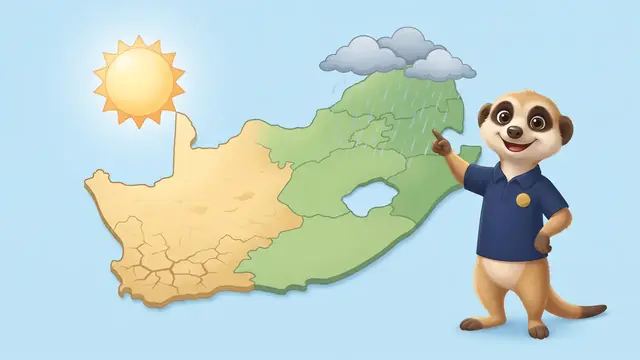
South Africa is a dry country
South Africa gets less rain than most countries in the world. The rain also does not fall evenly: the east is wetter, and the west is very dry.

Water is scarce in South Africa. Every drop counts.
Where do we get water?
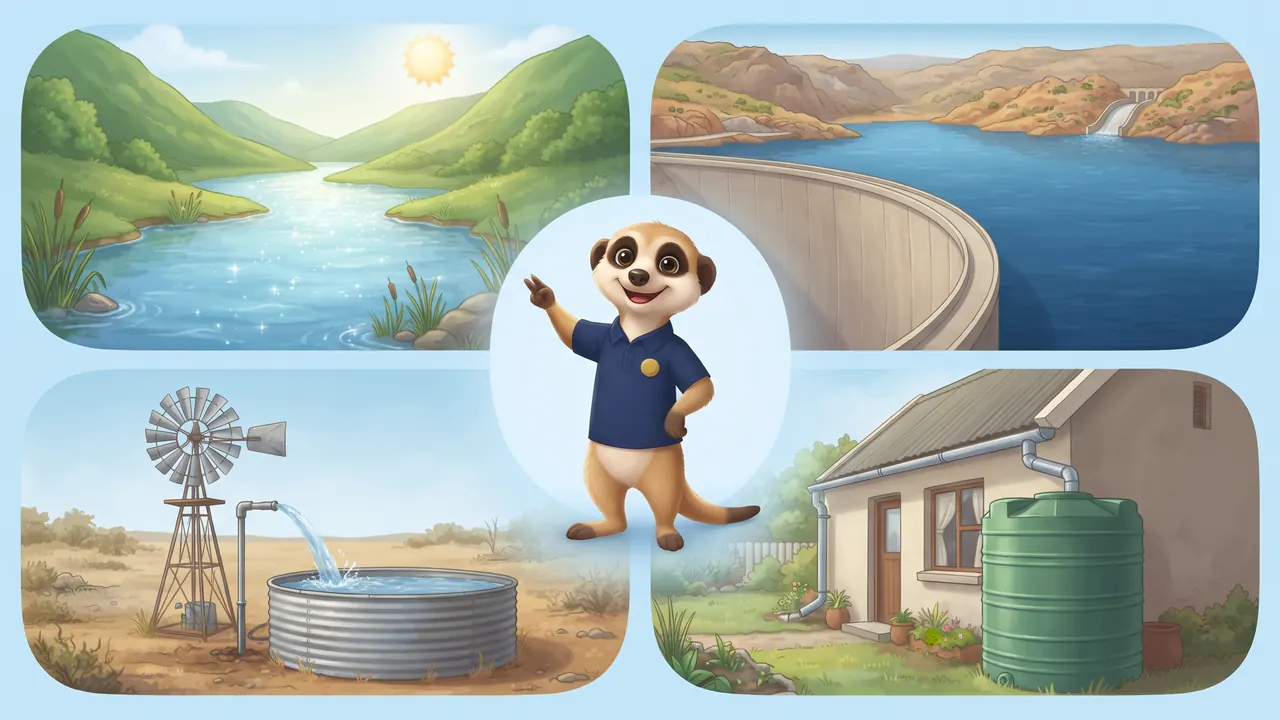
Our water comes from different places:
- Rivers that flow down from the mountains.
- Dams that store the water of rivers.
- Groundwater under the ground, which we pump up with a borehole, and springs.
- Rainwater that we catch in a tank.
In towns and cities most people have a tap inside the house or in the yard. In many rural areas people share a communal tap, pump water from a well or borehole, or fetch water from a river or stream and carry it home in buckets. River water can be dirty, it can dry up in a drought, and people often have to walk far to fetch it.
Our big rivers and dams
The Orange River is South Africa’s longest river. It flows from the mountains of Lesotho to the Atlantic Ocean. The Vaal River flows into the Orange River.
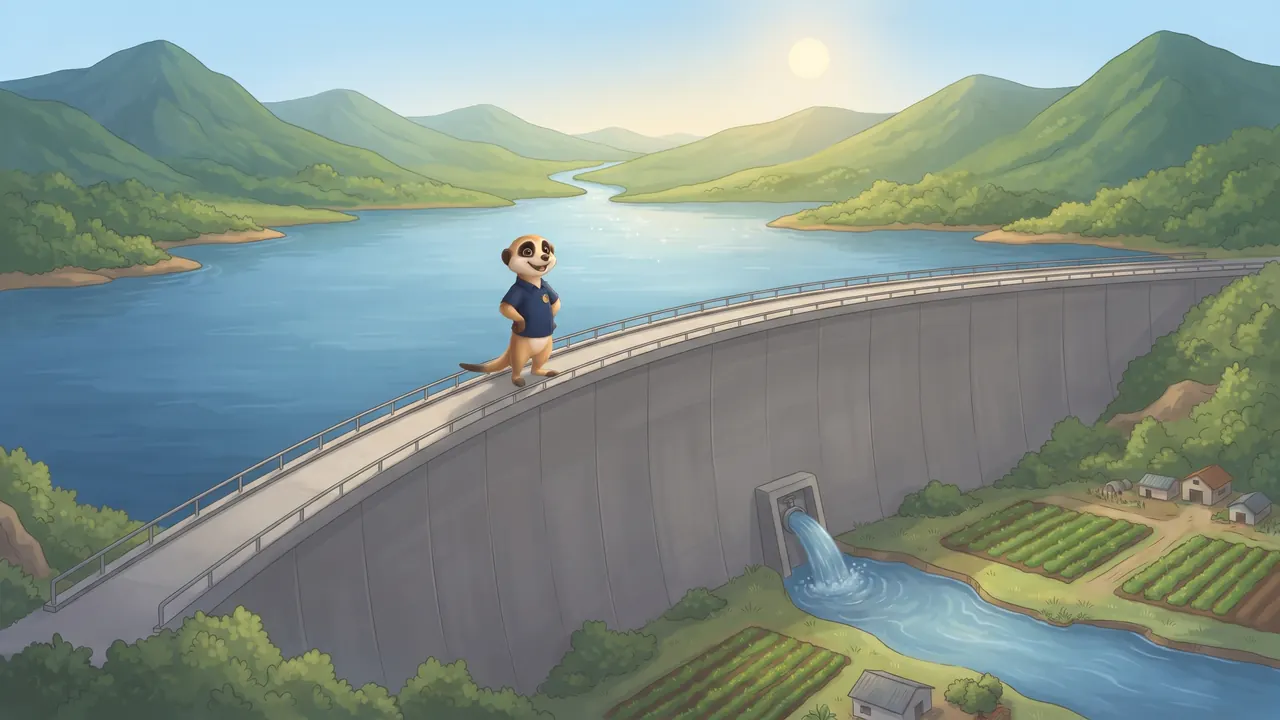
A dam is a wall across a river that holds back the water and stores it for dry times. The Gariep Dam on the Orange River is our biggest dam.
How does water reach your tap?
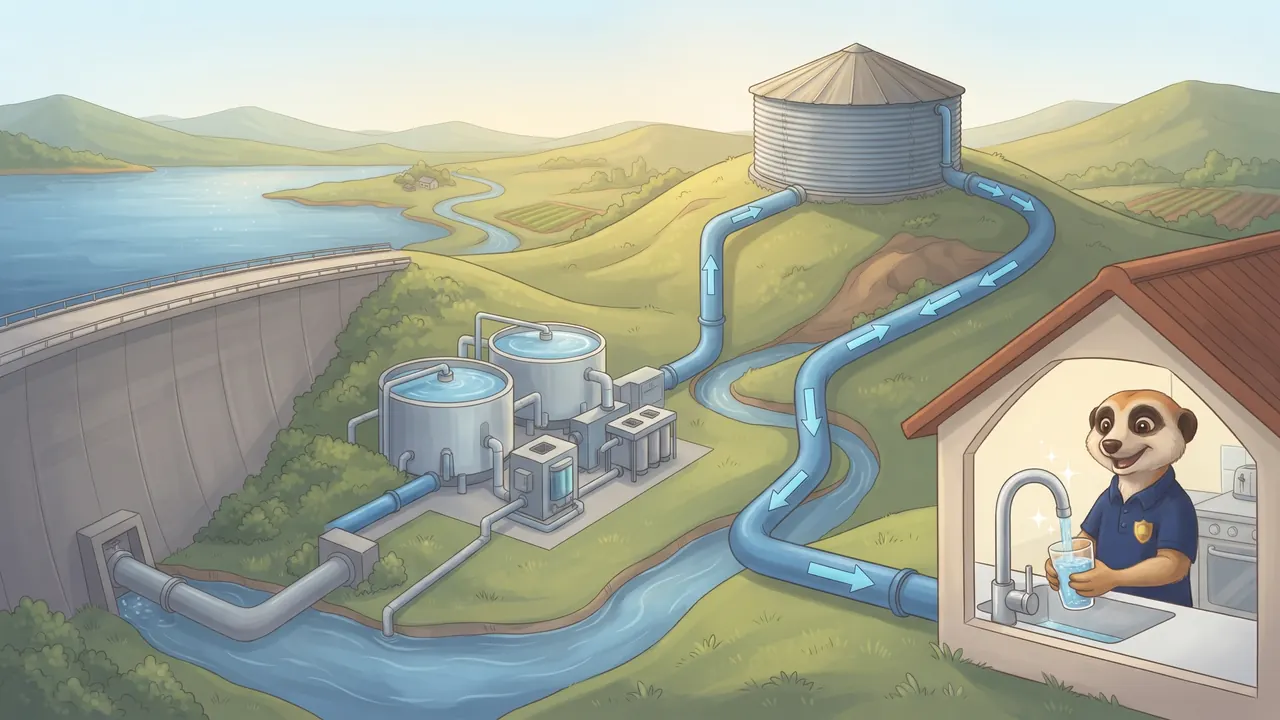
The water in your tap has travelled a long way:
- It is stored in a dam.
- A purification plant makes it clean and safe.
- Pipes carry it to a storage tank (reservoir) on a hill.
- From there it flows through pipes to your tap.
Save water
Because we have little water, everyone must help to save it:
- Take a short shower instead of a bath.
- Turn off the tap while you brush your teeth.
- Have leaking taps and pipes fixed.
- Use rainwater for the garden.
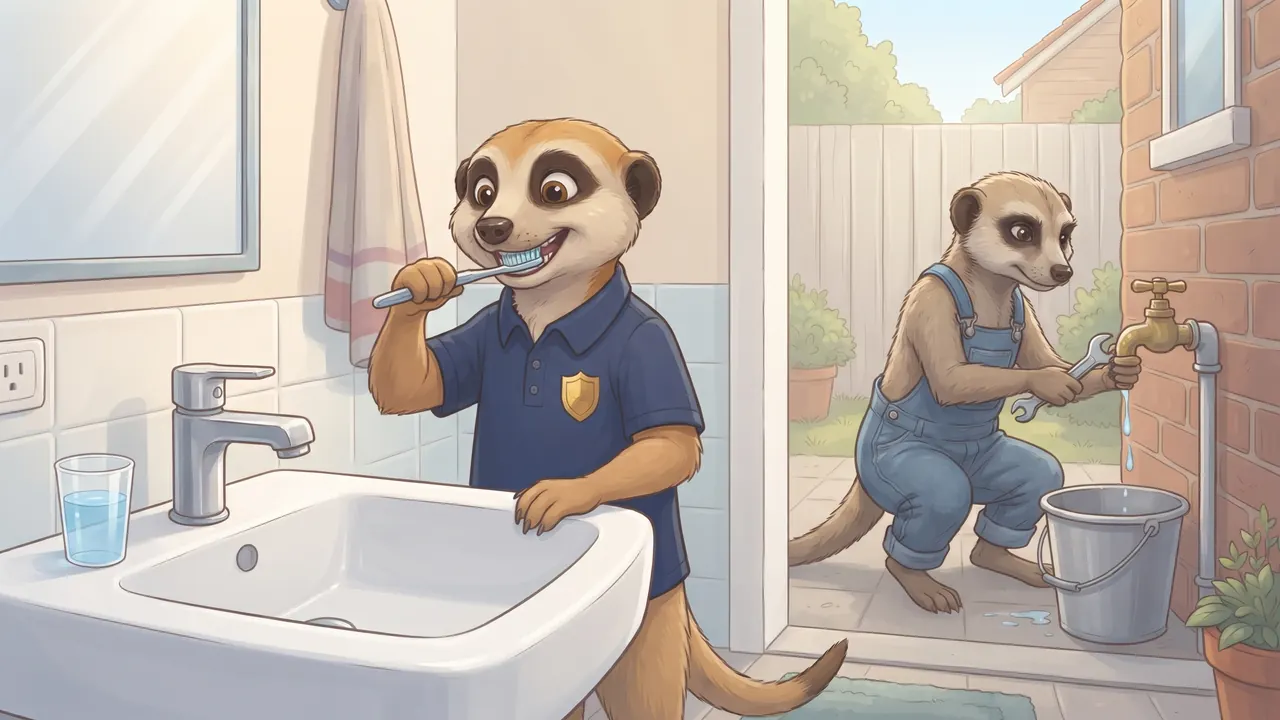

One leaking tap can waste a whole bucket of water in a day!
Remember this and test yourself
- South Africa is a dry country: the east gets more rain than the west.
- We get water from rivers, dams, groundwater (boreholes and springs) and rainwater.
- The Orange River is our longest river; the Gariep Dam is our biggest dam.
- Water goes from the dam to a purification plant, through pipes to your tap.
- Save water: shower short, turn off the tap and fix leaks.
Write these points in your book. Read them again the night before the test.

The Orange is the big brother (longest river); the Vaal is the little brother who joins him; the Gariep is the family’s piggy bank (biggest dam).
Important words
First say what the word means, then turn the card over.
Match column A to column B
Tap a word in column A, then its meaning in column B. You can also start in column B.
True or false?
Read the question and the answer. Is the answer right? Tap True or False.

Now the real quiz!
The quiz has many more questions on this topic. Every question shows straight away whether you are right and explains why.
Take the quiz: Water in South Africa- Read one part together and ask your child to tell it back in their own words.
- The ticks (“I know this”) are saved on this device only. We never ask for names or emails.
Follows CAPS for Grade 4 Social Sciences (Geography). Always check your teacher’s notes and textbook too.