
Water for factories, mines, power and recreation
How people use water: at home, on farms, in factories, mines and power stations and for fun, and how we keep it clean. Read one part at a time and tap “I know this”. Then test yourself in the quiz.
Know it already? Jump straight to the quiz
Water for factories and mines
Industries need lots of water. A cooldrink factory puts water into the product itself. A paper factory mixes wood and water to make pulp.
- Factories use water to clean, cool and make products.
- Mines wash the ore with water and spray water to keep the dust down. The gold mines in Gauteng use a lot of water.
Water makes power
A coal power station heats water into steam, and the steam turns big turbines that make electricity. The big round cooling towers cool the hot water so it can be used again.
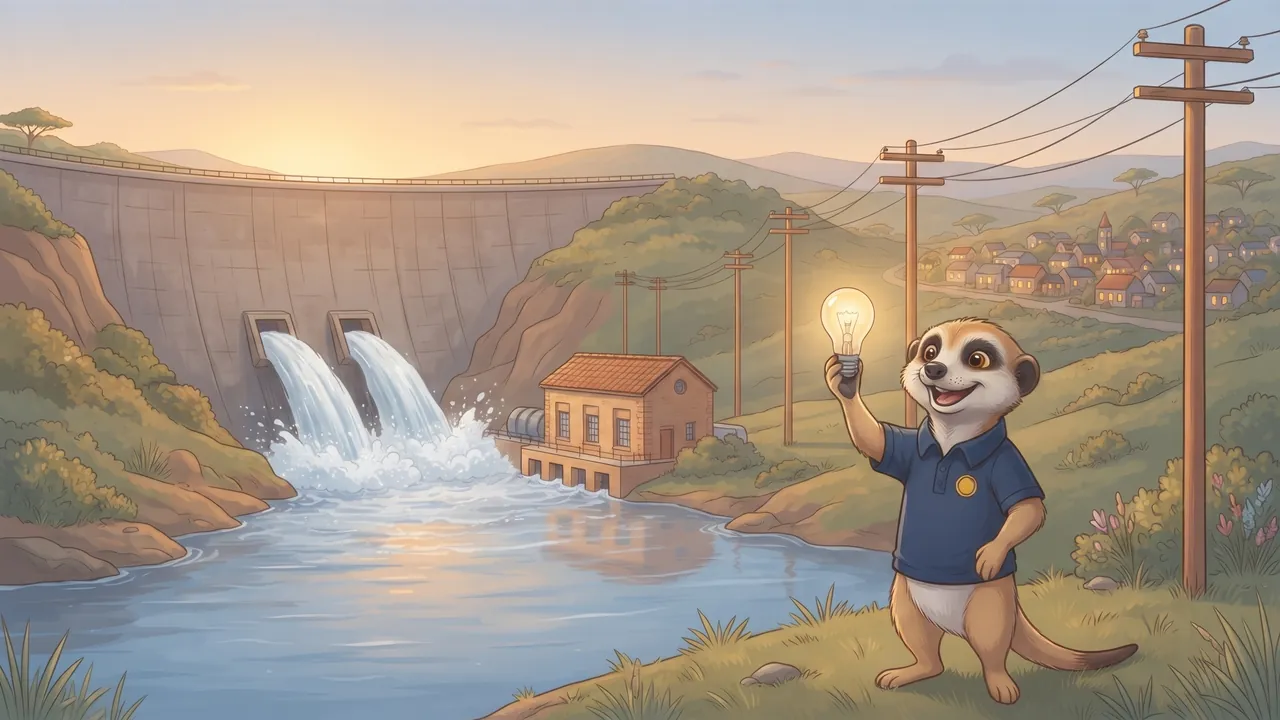
At a dam such as the Gariep Dam, the water flowing out turns turbines to make hydroelectricity.
Water for fun
People also use water for recreation: swimming, fishing, canoeing, sailing and surfing, like at Jeffreys Bay. Tourists visiting a dam such as the Vaal Dam spend money at local businesses.

Take your litter home or put it in a bin when you picnic at a dam.
Keep the water clean
If a factory lets dirty water with chemicals flow into a river, everyone downstream gets that water. Fertiliser washing off farms makes too much green algae grow, and then the fish die.
Hot water from a factory must cool down before it goes into a river: hot water harms fish and plants.
Water in our daily lives
No person, animal or plant can stay alive without water. We use water every day:
- At home: to drink, cook, wash ourselves and our clothes, clean the house, flush the toilet and water the garden.
- At school: to drink, wash hands, flush the toilets and clean the classrooms.
Water for farms
Farmers use water to irrigate their crops and to give their livestock water to drink. Irrigation uses more water than anything else in South Africa: about 6 out of every 10 litres of water we use.
Remember this and test yourself
- Factories use water to clean, cool and make products.
- Mines use water to wash ore and keep the dust down.
- Power stations make steam that turns turbines; flowing water from a dam can also make electricity.
- Recreation: swimming, fishing, canoeing and sailing.
- Dirty water must be cleaned before it goes back into the river. Farms use the most water in South Africa, mainly to irrigate crops.
- At home we use water every day to drink, cook, wash ourselves and our clothes, and flush the toilet.
Write these points in your book. Read them again the night before the test.

Factories use water for three things: clean, cool, create.
Important words
First say what the word means, then turn the card over.
Match column A to column B
Tap a word in column A, then its meaning in column B. You can also start in column B.
True or false?
Read the question and the answer. Is the answer right? Tap True or False.

Now the real quiz!
The quiz has many more questions on this topic. Every question shows straight away whether you are right and explains why.
Take the quiz: Water for factories, mines, power and recreation- Read one part together and ask your child to tell it back in their own words.
- The ticks (“I know this”) are saved on this device only. We never ask for names or emails.
Follows CAPS for Grade 4 Social Sciences (Geography). Always check your teacher’s notes and textbook too.