
Places where people live
Where people live: in the countryside, in towns and in cities, and how these places differ. Read one part at a time and tap “I know this”. Then test yourself in the quiz.
Know it already? Jump straight to the quiz
What is a settlement?
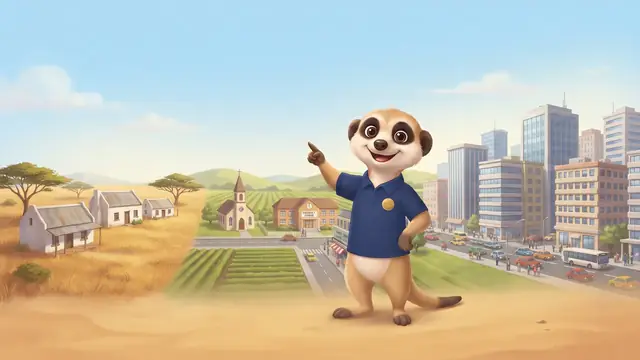
A settlement is a place where people live and work together. Settlements come in different sizes:
- A farm: one family, and sometimes farm workers, live far from other houses.
- A hamlet: only a few houses.
- A village or town: a few shops, a school and a church.
- A city: many people, tall buildings, hospitals and universities.
Countryside and city
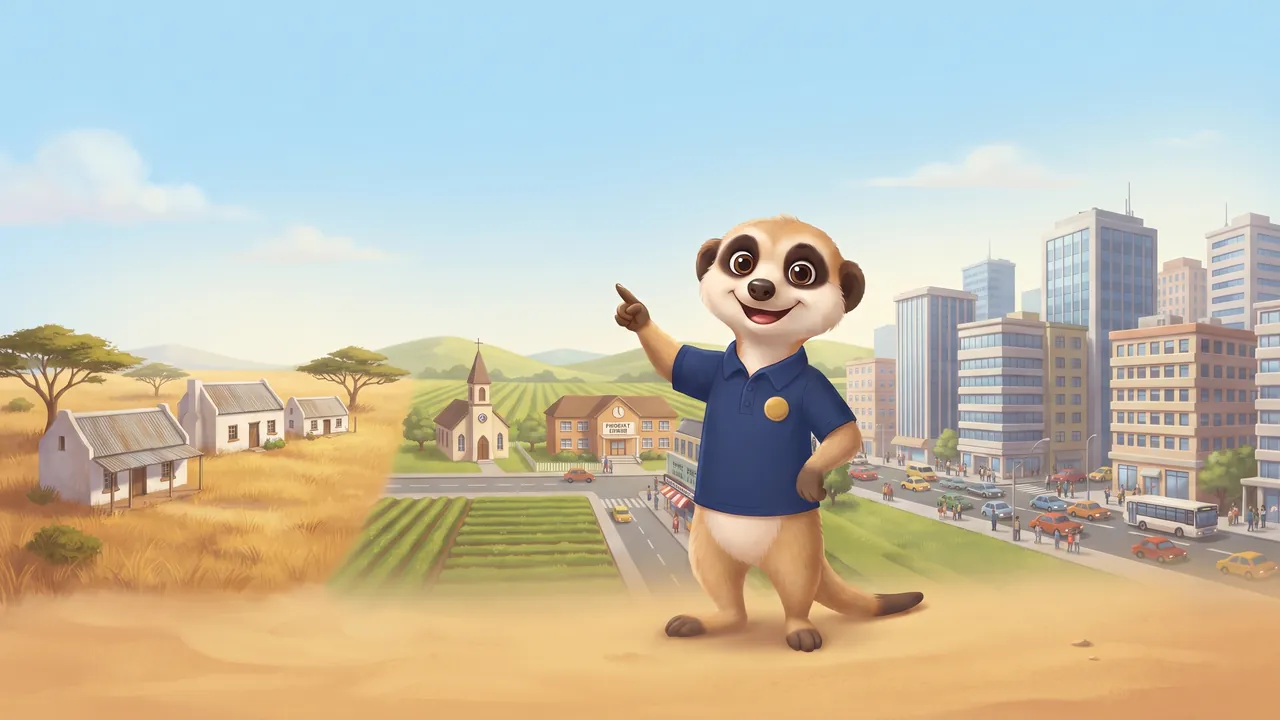
Rural areas are the countryside: farms, open land and few people living far apart. Urban areas are towns and cities, where many people live close together.
| Countryside (rural) | City (urban) | |
|---|---|---|
| Work | Farming, farm work | Shops, offices, factories |
| Life | Quiet and open | Busy and crowded |
| Services | Few and far away | Many and nearby |
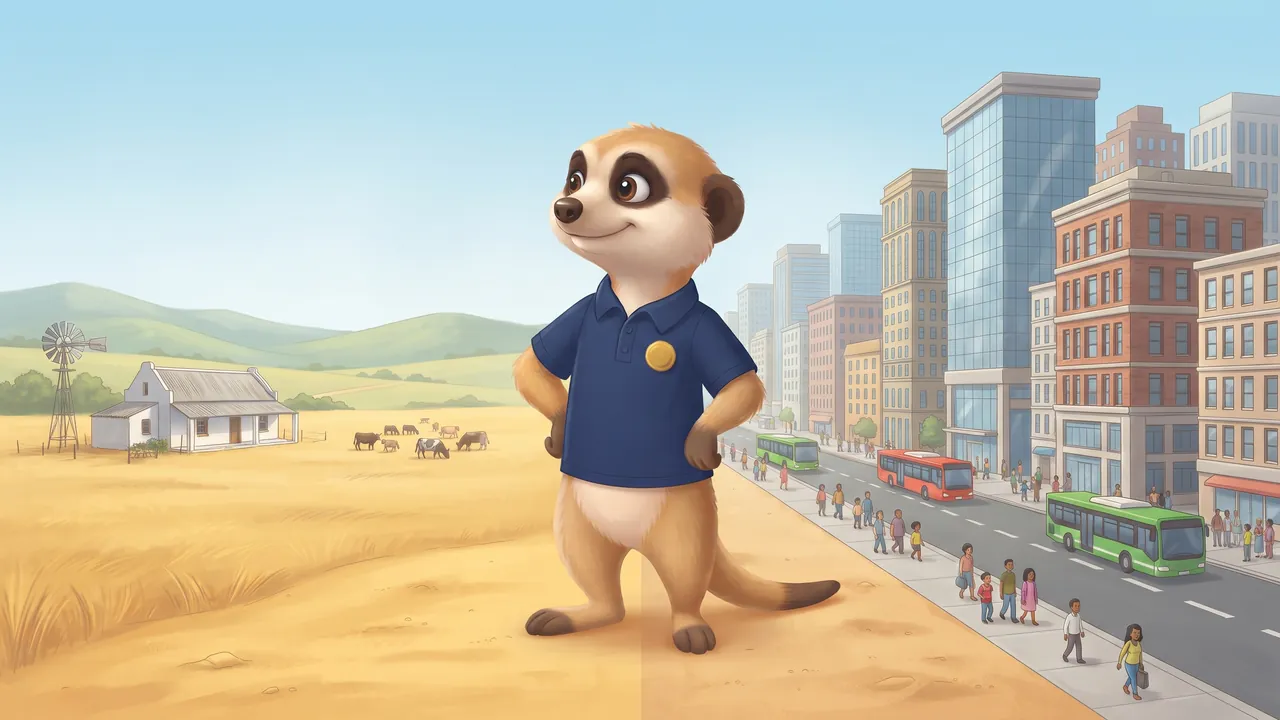

Many people move from the countryside to the city to find work and services.
Why people build in a place
People choose a place to live where they can survive and find work. They look for:
- Water: people, animals and crops need water every day. Many towns begin next to a river.
- Good soil to grow food.
- Roads: a town on a main road grows, because people and goods reach it easily.
- Work: people build homes near their work to save travel time and money.
The parts of a city
Land use means what the land in a place is used for. A city has different parts:
- The city centre: shops, banks and offices (commercial area).
- Suburbs: residential areas with houses and flats on the edge of the city.
- The industrial area: factories and warehouses.
- Open spaces: parks and sports fields.
The municipality provides services such as clean water, electricity and refuse removal.
Buildings and what people need
| Building | What it is used for |
|---|---|
| House, flat | People live there |
| Kraal, stable, pen | Shelter for animals |
| Shop, bank | Buy, sell and keep money safe |
| School, clinic | Learning and health care |
| Church, mosque, temple | Places of worship |
| Factory, office | People work there |
| Garage, railway station | Transport: vehicles and trains |
All people need water, food, shelter, health care and energy. In some places there is enough: taps, shops, a clinic and electricity nearby. In other places people must walk far for water, or a clinic is far away.
Roads and footpaths link the homes, shops, schools and workplaces in a settlement.
Remember this and test yourself
- A settlement is a place where people live together: from a few houses to a big city.
- Rural areas (the countryside) have farms and open land; urban areas are towns and cities.
- People build settlements close to water, good soil, roads and work.
- A city has a city centre (shops and offices), suburbs (homes) and an industrial area (factories).
- The municipality provides services such as water, electricity and refuse removal.
Write these points in your book. Read them again the night before the test.

Hamlet → village → town → city: like a ladder that climbs higher. The higher, the more people and services.
Important words
First say what the word means, then turn the card over.
Match column A to column B
Tap a word in column A, then its meaning in column B. You can also start in column B.
True or false?
Read the question and the answer. Is the answer right? Tap True or False.

Now the real quiz!
The quiz has many more questions on this topic. Every question shows straight away whether you are right and explains why.
Take the quiz: Places where people live- Read one part together and ask your child to tell it back in their own words.
- The ticks (“I know this”) are saved on this device only. We never ask for names or emails.
Follows CAPS for Grade 4 Social Sciences (Geography). Always check your teacher’s notes and textbook too.