
Clean water and health
Why drinking water must be clean, how a town cleans its water, and what a drought is. Read one part at a time and tap “I know this”. Then test yourself in the quiz.
Know it already? Jump straight to the quiz
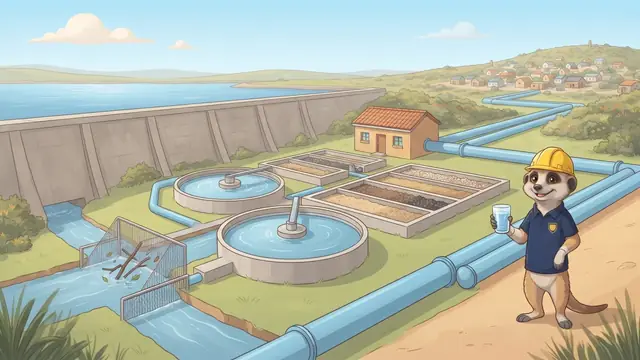
Why water must be clean
We cannot see how many germs are in water. Dirty water can make people very ill with diseases such as cholera and diarrhoea. Water from a river must first be boiled or treated before you drink it.
- Cloudy water that smells bad may not be safe.
- Wash your hands before you eat, to wash off germs.
- Sanitation is the safe removal of waste and sewage.
How a town cleans water
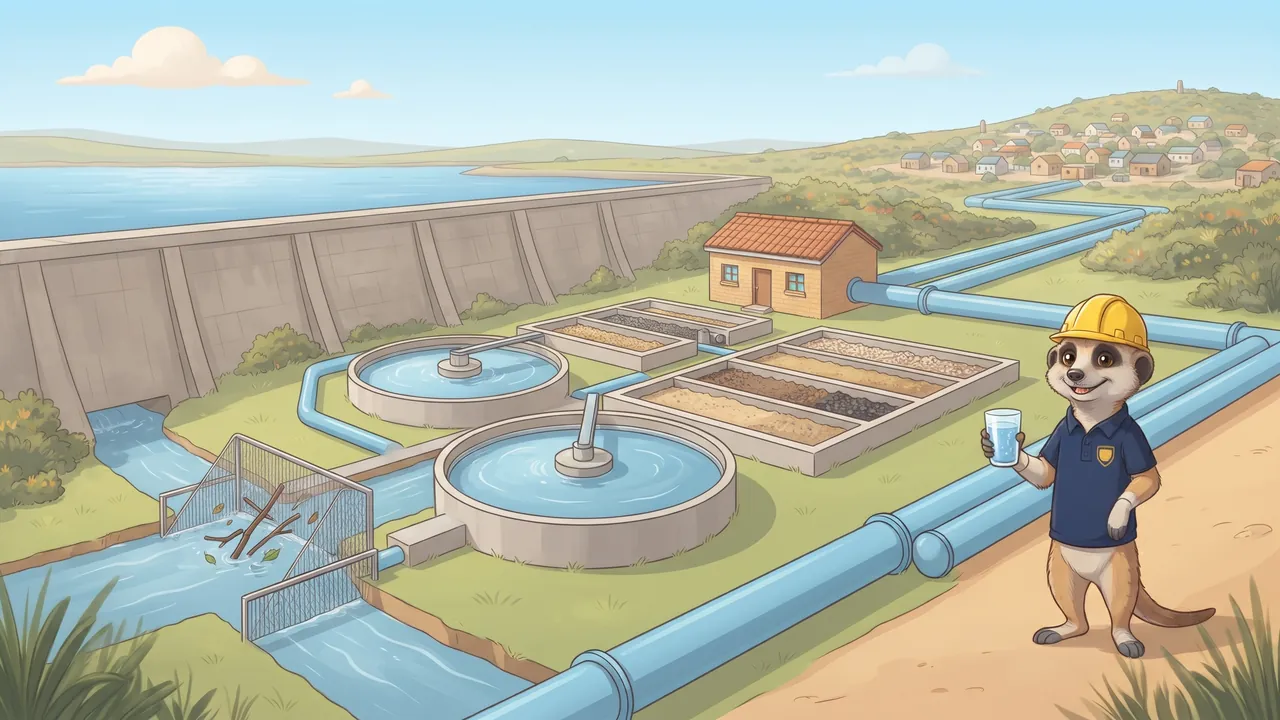
At the water treatment works the water goes through different steps:
- Screen: big sticks and leaves are taken out.
- Settle: mud and dirt sink to the bottom of a tank.
- Filter: the water runs through sand to take out tiny bits.
- Chlorine is added to kill germs.
- The water is tested every day to make sure it is safe.
Pollution: keep our water clean
Pollution is harmful material in the air, water or soil. Rubbish, oil and chemicals make rivers dirty and kill fish and animals.
- Put rubbish in a bin, never in a river.
- Never pour oil into a drain or river.
- A pit latrine must be far from a well, so waste cannot seep into the water.
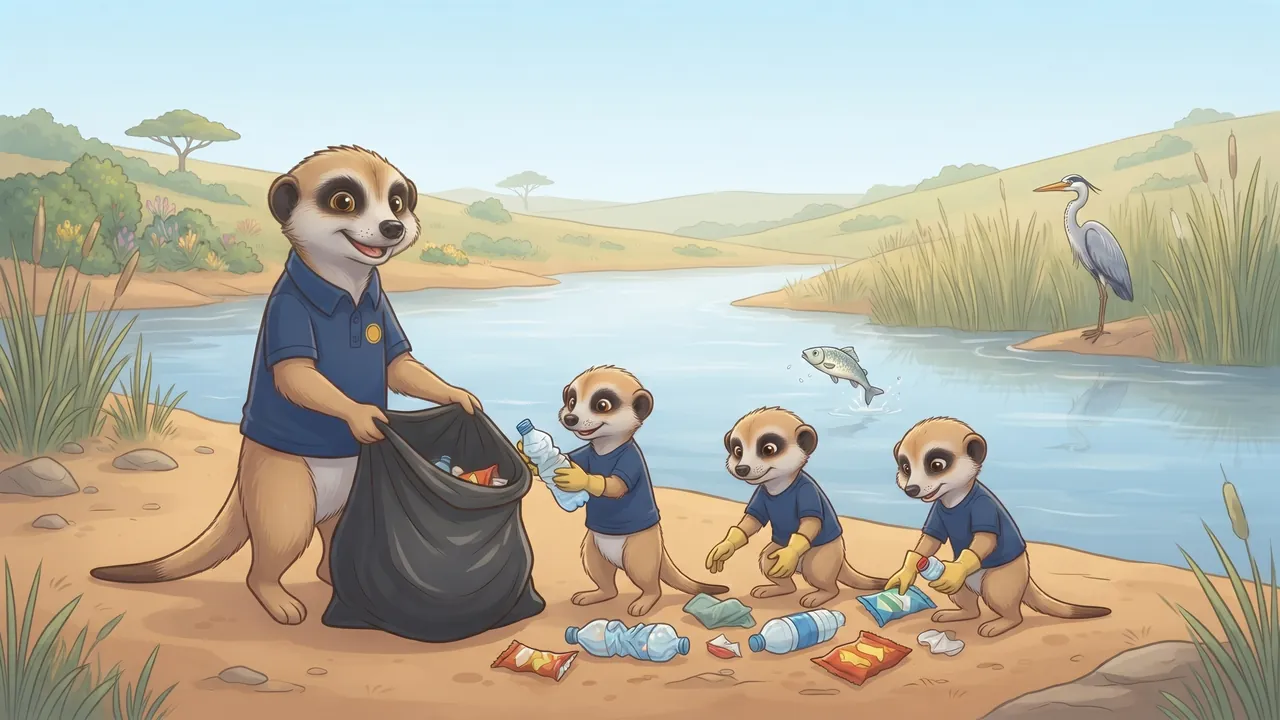
Everyone in the community is responsible for keeping a river clean.
Drought and water restrictions
A drought is a long time with very little rain. The dams get lower and lower. Then the municipality brings in water restrictions: everyone in the town must use less water.

A short shower uses much less water than a full bath. It is one of the easiest ways to save water at home.
Water on Earth and the cycle of water use
- Almost all the water on Earth is salt water in the sea. Only a small part is fresh water that we can drink: in rain, rivers, streams, wetlands, lakes and underground.
- The natural water cycle: the sun heats water in the sea, rivers and dams so that it evaporates (turns into water vapour). The vapour rises, cools and forms clouds. Water falls from the clouds as rain. It flows in rivers back to the sea or soaks into the ground, and the cycle starts again.
- Where there are no taps or boreholes, a water tanker truck brings water to the people.
- We take water from nature, use it, clean it at a sewage works, and let it flow back to the river and sea: this is the cycle of water use.
We store water in dams, water tanks, buckets and pots, so there is water in dry times.
Remember this and test yourself
- Dirty water carries germs that make people ill.
- At the water treatment works water is screened, settled, filtered and cleaned with chlorine.
- Pollution is harmful material in the air, water or soil. Never throw rubbish or oil into rivers.
- A drought is a long time with very little rain; then water restrictions come in.
- The municipality looks after a town’s water; everyone must help to save it.
Write these points in your book. Read them again the night before the test.

Five steps: Screen, Settle, Sand-filter, Sanitise (chlorine), Sample (test): from dirty to safe.
Important words
First say what the word means, then turn the card over.
Match column A to column B
Tap a word in column A, then its meaning in column B. You can also start in column B.
True or false?
Read the question and the answer. Is the answer right? Tap True or False.

Now the real quiz!
The quiz has many more questions on this topic. Every question shows straight away whether you are right and explains why.
Take the quiz: Clean water and health- Read one part together and ask your child to tell it back in their own words.
- The ticks (“I know this”) are saved on this device only. We never ask for names or emails.
Follows CAPS for Grade 4 Social Sciences (Geography). Always check your teacher’s notes and textbook too.