
The Kingdom of Mali
The Kingdom of Mali: gold and salt, caravans across the Sahara, Timbuktu and Mansa Musa. Read one part at a time and tap “I know this”. Then test yourself in the quiz.
Know it already? Jump straight to the quiz
Where and how
| Exports (going north) | Imports (from the north) |
|---|---|
| Gold and ivory | Salt from the desert mines |
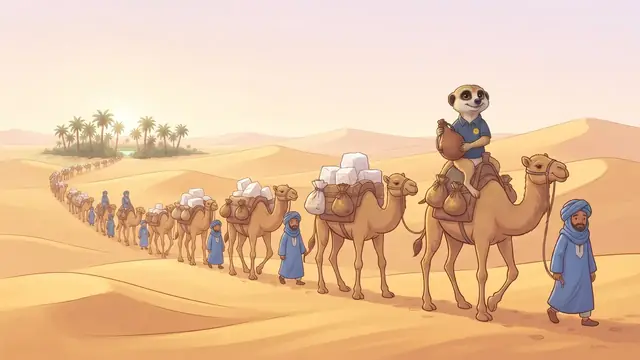
The Niger River was important for trade. Timbuktu’s great mosques were built of mud bricks and wood. Traders exchange goods at a market. We know about Mali from accounts, manuscripts and archaeology; the traveller Ibn Battuta visited Mali in the 1350s and wrote about it. We study Mali to show Africa had rich empires.
Remember this and test yourself
- Mali (West Africa) built its wealth on gold and salt trade; salt preserves food and the body needs it.
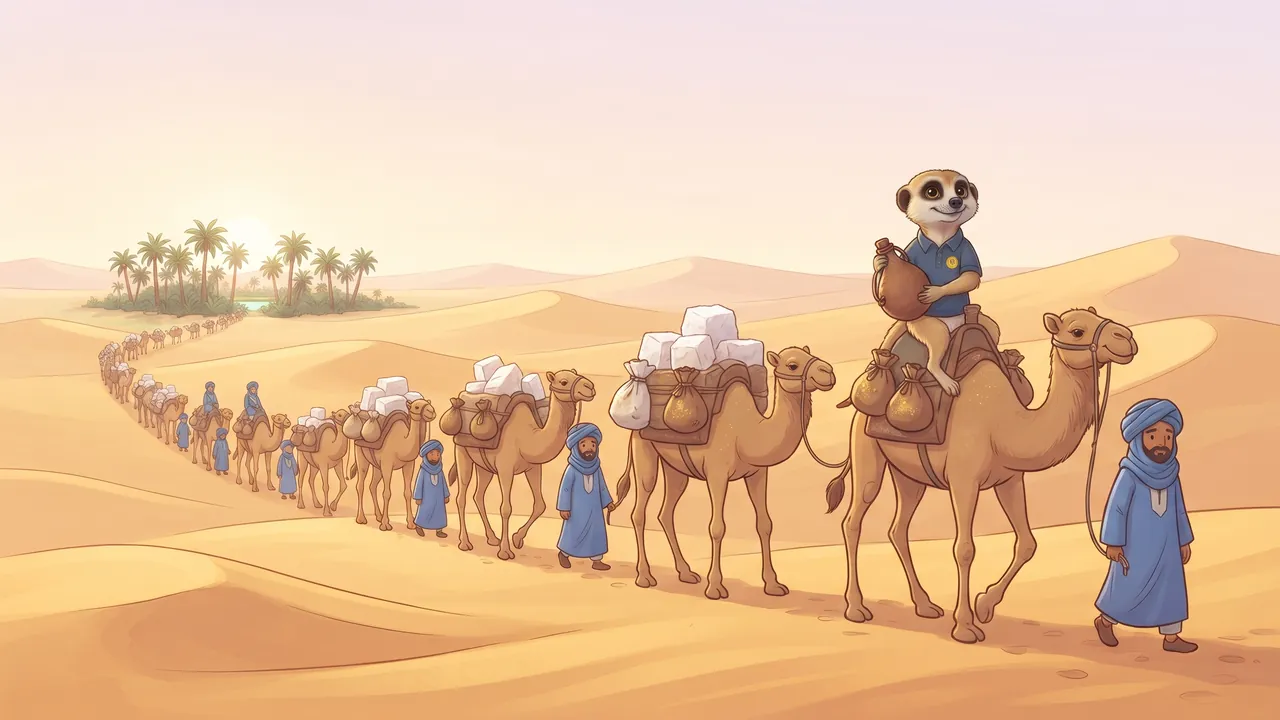
- Camel caravans carried goods across the Sahara; an oasis gave water; numbers and guards protected against robbers.
- Founded by Sundiata Keita; a king is a mansa. Mansa Musa was very rich; his pilgrimage was famous for the gold he gave away.
- Timbuktu was a centre of learning and books; its manuscripts are mostly in Arabic; Islam was important.
- When sea routes replaced the desert routes, Mali and Timbuktu weakened.
Write these points in your book. Read them again the night before the test.

Gold goes north, Salt comes south: Mali ran the desert’s gold-salt swap.
Important words
First say what the word means, then turn the card over.
Match column A to column B
Tap a word in column A, then its meaning in column B. You can also start in column B.
True or false?
Read the question and the answer. Is the answer right? Tap True or False.

Now the real quiz!
The quiz has many more questions on this topic. Every question shows straight away whether you are right and explains why.
Take the quiz: The Kingdom of Mali- Read one part together and ask your child to tell it back in their own words.
- The ticks (“I know this”) are saved on this device only. We never ask for names or emails.
Follows CAPS for Grade 6 Social Sciences (History). Always check your teacher’s notes and textbook too.