
The surface of the Earth
How rock becomes soil, weathering and erosion, rocks and fossils. Read one part at a time and tap “I know this”. Then test yourself in the quiz.
Know it already? Jump straight to the quiz
From rock to soil
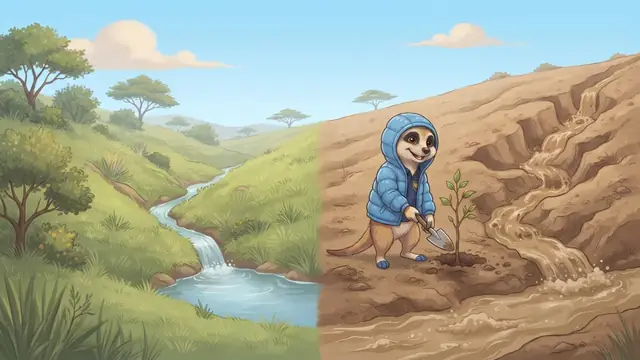
Water seeps into cracks and freezes; ice expands and splits the rock open. Wind and water slowly wear rock away. Plant roots grow into cracks and push them apart. Heating and cooling break rock too: it expands in the hot sun and shrinks on cold nights, until pieces crack off. Burrowing animals help as well. All of this is weathering. Over time the small pieces mix with humus and become soil. Soil takes centuries to form, so it is precious.
Stopping erosion
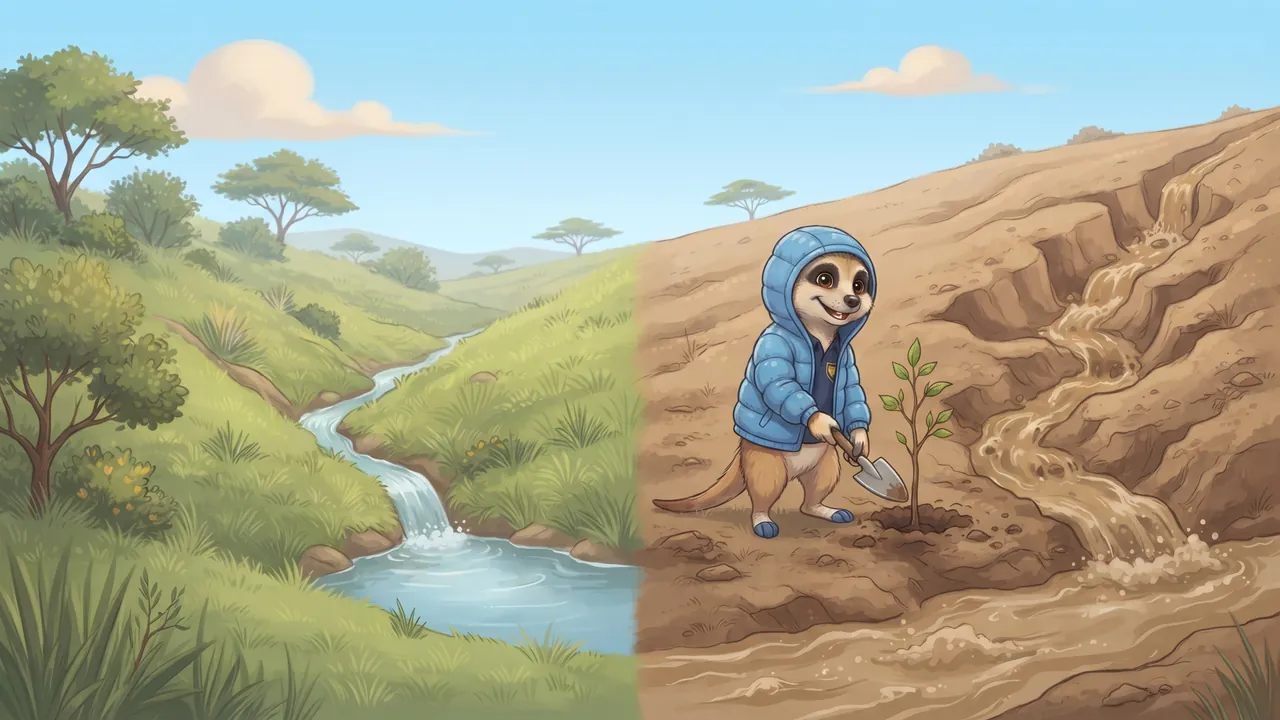
- On a steep slope with no plants, the soil washes away easily.
- Farmers let plants grow to hold the soil, and plant trees along a field to slow down the wind.
- Sand and mud that a river carries to the sea settle on the bottom and form new layers.
Rocks and fossils
| Rock | How it forms |
|---|---|
| Sedimentary | Layers of sand and mud are pressed together |
| Igneous | Lava or magma cools |
| Metamorphic | Heat and pressure change a rock |
- A fossil is the remains of a living thing from the past.
- A seashell fossil on top of a mountain: that place was once under the sea. A fern fossil in a desert: it was once wet and warm.
- A rock layer that holds water is an aquifer.
Remember this and test yourself
- Weathering: wind, water, ice, plant roots, and heating and cooling slowly break down rock where it lies.
- Erosion: rain and wind carry the soil away; plant roots hold the soil in place.
- Soil is weathered rock plus humus (decayed plants and animals).
- Sedimentary rock forms from layers of sand and mud; we find fossils mostly in it.
- Igneous rock forms from cooled lava; heat and pressure make metamorphic rock.
Write these points in your book. Read them again the night before the test.

Weathering = Wears down where it lies. Erosion = Exits, carried away.
Important words
First say what the word means, then turn the card over.
Match column A to column B
Tap a word in column A, then its meaning in column B. You can also start in column B.
True or false?
Read the question and the answer. Is the answer right? Tap True or False.

Now the real quiz!
The quiz has many more questions on this topic. Every question shows straight away whether you are right and explains why.
Take the quiz: The surface of the Earth- Read one part together and ask your child to tell it back in their own words.
- The ticks (“I know this”) are saved on this device only. We never ask for names or emails.
Follows CAPS for Grade 5 Natural Sciences and Technology. Always check your teacher’s notes and textbook too.