
Electric circuits
Series and parallel circuits, conductors and insulators, and electrical safety. Read one part at a time and tap “I know this”. Then test yourself in the quiz.
Know it already? Jump straight to the quiz

The circuit
| Series | Parallel |
|---|---|
| One path for the current | Each bulb has its own path |
| More bulbs = dimmer | Bulbs stay bright |
| One burns out: they all go off | One burns out: the others stay on |
Conductors and insulators
Copper is a good conductor. Glass, rubber and plastic are insulators: put a plastic ruler in place of a wire and the bulb does not light. The cells in a torch must all face the same way, otherwise they push against each other. A cell stores chemical energy and pushes electricity around the circuit. A battery is two or more cells joined together; in everyday speech we often call a single cell a ‘battery’.
A wire straight across a cell, with no bulb: the wire and cell get very hot. Never do this.
Safety
- The body conducts electricity: that is why a shock is dangerous.
- Switch an appliance off before you clean it.
- The wires in the walls are protected against shocks and fires; too strong a current makes a wire heat up and burn.
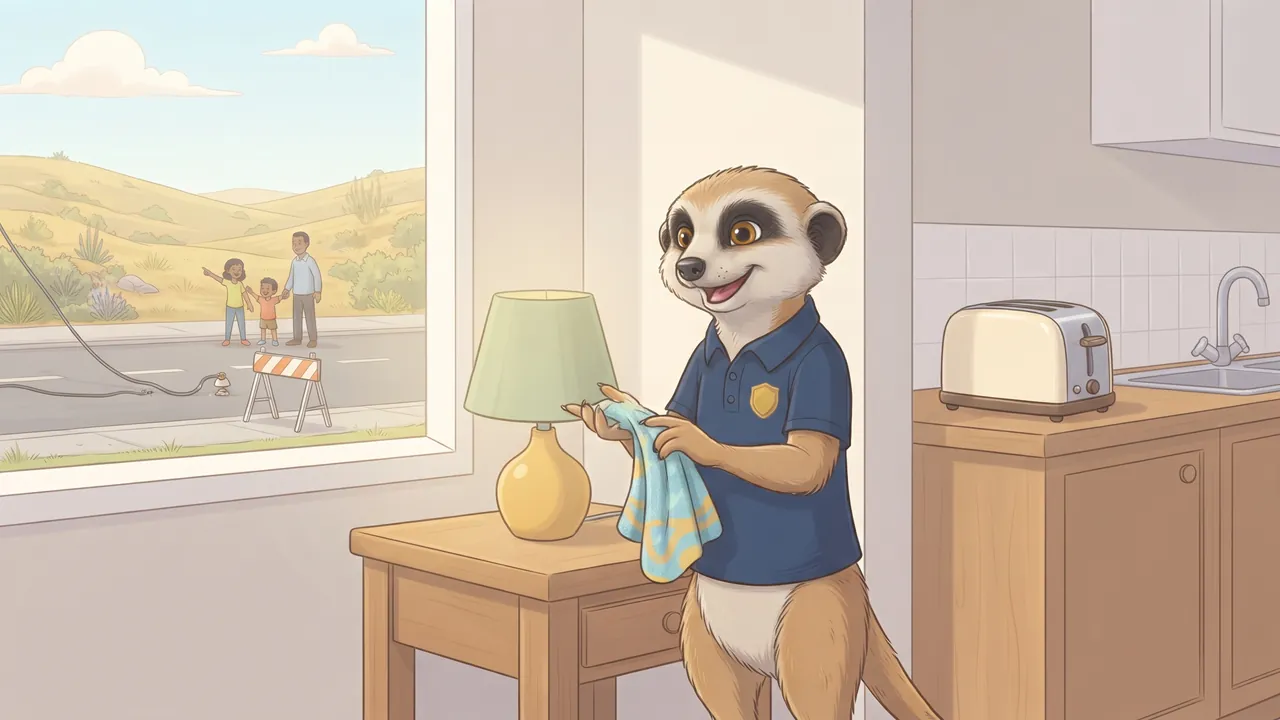
- Stay away from a fallen power line and let an adult help.
Remember this and test yourself
- A circuit is the complete path electricity flows along; a gap makes it an open circuit.
- Series: one path. Another bulb makes them all dimmer; if one burns out, they all go off.
- Parallel: each bulb has its own path.
- The cell’s ‘push’ is the voltage (volts); current is measured in amperes; a resistor limits the current.
- A fuse cuts the power if too much current flows; electricians wear rubber gloves.
Write these points in your book. Read them again the night before the test.

Series = a Single string: one bulb breaks, all go dark. Parallel = each bulb its own Path.
Important words
First say what the word means, then turn the card over.
Match column A to column B
Tap a word in column A, then its meaning in column B. You can also start in column B.
True or false?
Read the question and the answer. Is the answer right? Tap True or False.

Now the real quiz!
The quiz has many more questions on this topic. Every question shows straight away whether you are right and explains why.
Take the quiz: Electric circuits- Read one part together and ask your child to tell it back in their own words.
- The ticks (“I know this”) are saved on this device only. We never ask for names or emails.
Follows CAPS for Grade 5 Natural Sciences and Technology. Always check your teacher’s notes and textbook too.