
Tutankhamun and Egyptian knowledge
Tutankhamun’s tomb: the discovery, the treasures, and what it teaches us about Egypt. Read one part at a time and tap “I know this”. Then test yourself in the quiz.
Know it already? Jump straight to the quiz
What we learn
- Archaeologists study his mummy and tomb; a chariot from his tomb is a primary source.
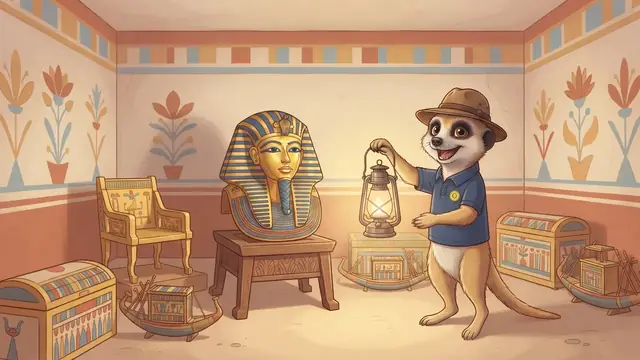
- Food, furniture and treasures were put in tombs, because the dead would need them later.
- Carter searched the Valley of the Kings for years, because he believed Tutankhamun’s tomb was still hidden and had not been robbed. In November 1922 his workers found the first step leading down to it.
- A case study shows one real example closely.
Egyptian knowledge
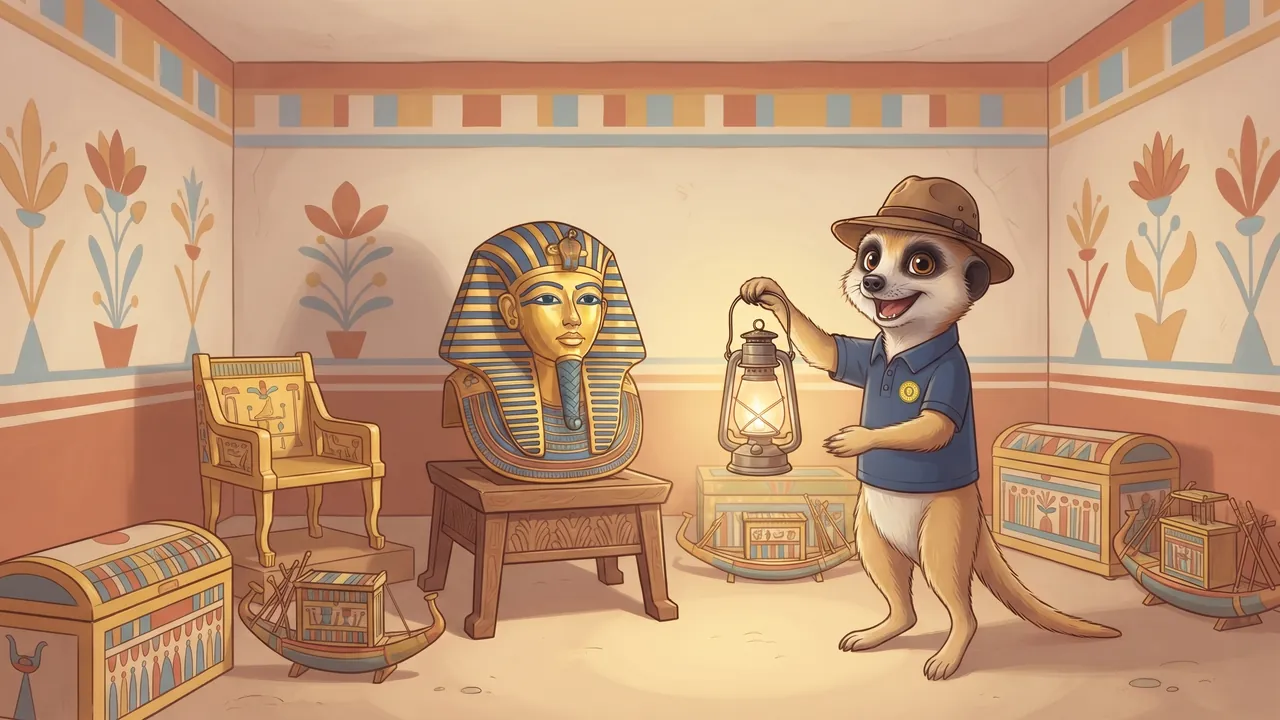
Our word “paper” comes from papyrus. They measured the Nile flood with nilometers, re-measured land boundaries after floods, made a 365-day calendar and set broken bones. Their maths and medicine later spread to the Greeks.
Remember this and test yourself
- Tutankhamun became pharaoh at about nine; advisers like his vizier helped him rule. He died at 18 or 19.
- Howard Carter discovered the tomb in 1922 in the Valley of the Kings; Lord Carnarvon paid.
- The tomb was almost untouched, because rubble covered the entrance; more than 5 000 objects were found.
- A gold death mask covered the mummy’s head; the mummy lay in coffins one inside another.
- Most of the treasures are in a museum in Egypt today.
Write these points in your book. Read them again the night before the test.

Carter 1922: a “cart” full of treasure (more than 5 000 objects).
Important words
First say what the word means, then turn the card over.
Match column A to column B
Tap a word in column A, then its meaning in column B. You can also start in column B.
True or false?
Read the question and the answer. Is the answer right? Tap True or False.

Now the real quiz!
The quiz has many more questions on this topic. Every question shows straight away whether you are right and explains why.
Take the quiz: Tutankhamun and Egyptian knowledge- Read one part together and ask your child to tell it back in their own words.
- The ticks (“I know this”) are saved on this device only. We never ask for names or emails.
Follows CAPS for Grade 5 Social Sciences (History). Always check your teacher’s notes and textbook too.