
Cultures, food and moral lessons
Culture, South African food, tolerance and the moral lessons in stories. Read one part at a time and tap “I know this”. Then test yourself in the quiz.
Know it already? Jump straight to the quiz
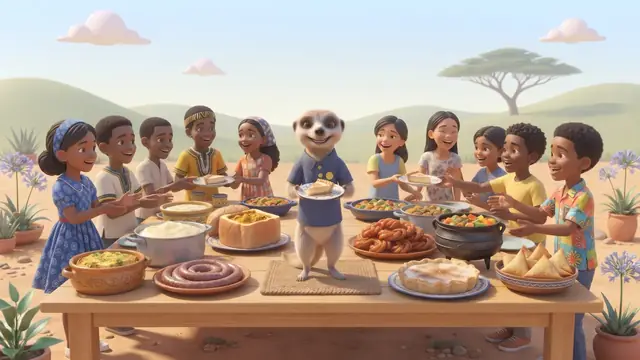
Culture and food
Many cultures share food at celebrations, because it brings people together. A friend shares food from her culture? Say thank you and politely try a little. Don’t understand a custom? Ask politely and listen. A culture’s typical dishes make up its menu.
- Singing and dancing are part of many celebrations; traditional clothes at a wedding are a cultural custom.
- Ubuntu: I am because we are.
- South Africa has many cultural groups, for example Zulu, Xhosa, Sotho, Tswana, Pedi, Venda, Tsonga, Swazi, Ndebele, Afrikaners, English-speaking South Africans, Indian South Africans, Cape Malays, and the Khoi and San. Each has its own food, clothes, language, music and customs.
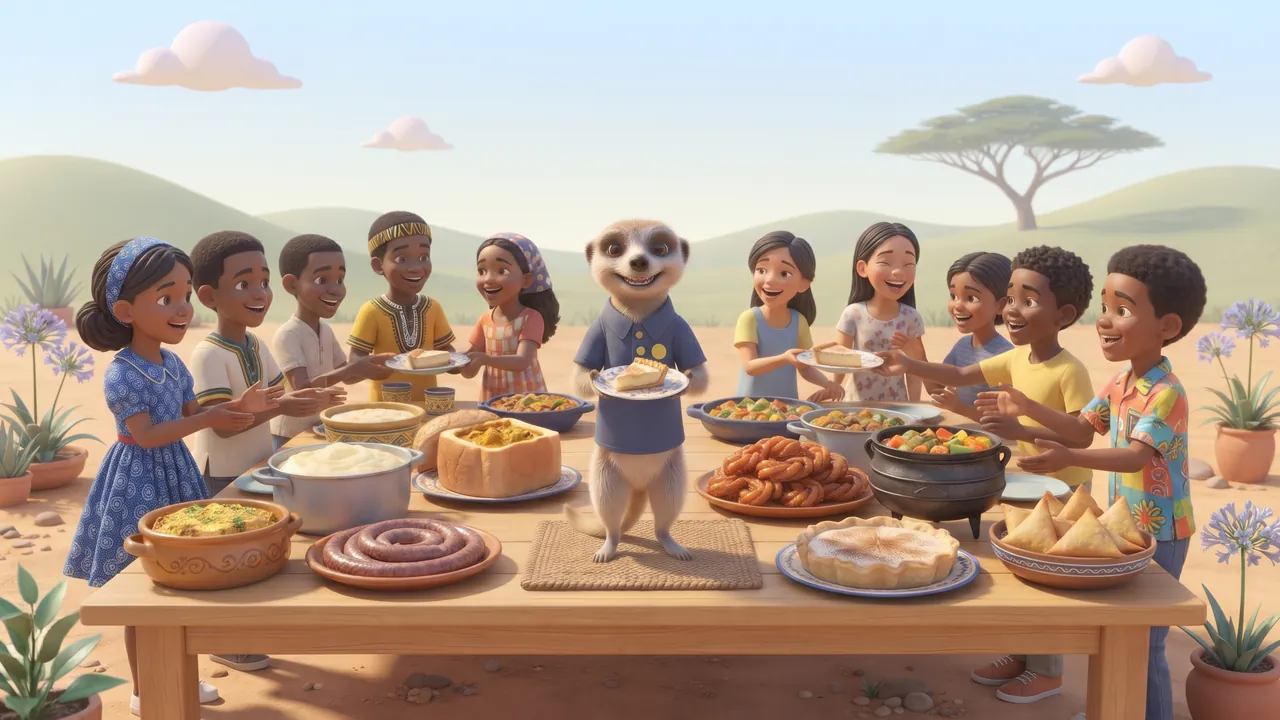
Lessons from stories
| Story | Lesson |
|---|---|
| A tortoise beats a boastful hare in a race (a fable by Aesop from ancient Greece) | Slow and steady effort wins |
| A small clever animal tricks a big one, as in the South African Jakkals and Wolf stories or the clever hare in many African folk tales | Brains can beat size |
| A greedy person takes everything and ends with nothing | Sharing is better than greed |
| A child who always lies is no longer believed | Honesty builds trust |
Long ago elders told stories aloud to children to pass them on.
Remember this and test yourself
- Culture is a group’s whole way of life: food, clothes, language, music and customs.
- Food: bobotie (Cape Malay), bunny chow and roti with curry (Indian South Africans, Durban), amasi (sour milk) and pap (Zulu, Xhosa and other African cultures), potjiekos and melktert (Afrikaners).
- Tolerance: accepting other cultures. We are the rainbow nation.
- A moral lesson teaches what is right and wrong.
- Heritage Day is on 24 September.
Write these points in your book. Read them again the night before the test.

Our country is a rainbow: every colour is different, and together they are more beautiful.
Important words
First say what the word means, then turn the card over.
Match column A to column B
Tap a word in column A, then its meaning in column B. You can also start in column B.
True or false?
Read the question and the answer. Is the answer right? Tap True or False.

Now the real quiz!
The quiz has many more questions on this topic. Every question shows straight away whether you are right and explains why.
Take the quiz: Cultures, food and moral lessons- Read one part together and ask your child to tell it back in their own words.
- The ticks (“I know this”) are saved on this device only. We never ask for names or emails.
Follows CAPS for Grade 4 Life Skills. Always check your teacher’s notes and textbook too.